Archive for 2011

The Blind Assassin (Book Review)

The Blind Assassin

It’s always strange to see how genre literature is filtered through the sensibilities of other writers. Margaret Atwood’s Booker Prize-winning The Blind Assassin tells us of the planet Zycron, culminating in the war between a superstitious barbarian tribe and the advanced but corrupt city of Sakiel-Norn. However, it is presented as a story-within-a-story-within-another-story. This metafictional conceit allowed the novel to be taken seriously by the critics.

Fortunately, the three-layered story is clever: According to Atwood’s book, heiress Laura Chase wrote a novel in 1945 before driving off a bridge in an apparent suicide. That novel, which hints at a real-life affair, includes the pulp story as the bedroom talk that a coarse Marxist revolutionary uses to keep the attention of a sheltered upper-class lady. The themes of each layer (real life, the novel about the affair, and the pulp story of Zycron) are reflected cleverly in the others. Meanwhile, newspaper clippings give details about major events in the lives of Laura Chase and her family, while providing tantalizing hints of the untold stories behind the news.

By the mid-point of the novel, though, the stories-within-stories have lost steam. The fantasy about Sakiel-Norn is only ever interesting when it sets the scene, with a culture informed by real-world class struggles and a conflict that highlights the tension between the lovers in the middle story. But every time it is about to actually provide some plot or character-building, it rushes through the actual story in order to reach the next significant piece of scenery. Meanwhile, the book “written” by Laura is interesting only to the extent that it gives us a view of the real-life characters’ secrets. The idea that it could have become famous on its own, let alone remembered fifty years later, makes it harder to believe the otherwise realistic main story.

By this time, the only truly interesting story-within-a-story is the one at the outer level. Iris, the sister to novelist Laura, is recounting the events of her life for us. The jumps between the elderly Iris’ current state, with her sharp wit and bitter outlook, contrast sharply with the young self she recalls: The only children of a successful industrialist, Iris and Laura were raised in privilege and never prepared for adulthood in an unforgiving world. The tragic trajectory is obvious (the book opens on the scene of Laura’s death) but the details are a compelling mystery.

As always, Atwood’s prose is masterful. Iris’ tale finds the right turns of phrase to capture herself at all ages, bringing alive their small Canadian town, the culture of the early 20th century, and the adult world as seen through children’s eyes. The history of the Chase family is filled with mistakes and tragedy, but after a lifetime of experience, Iris’ portrayal finds compassion for all but a few villains who ruined her life directly.

The story is unique. Laura is a strange child (possibly autistic?), while Iris is quiet, distant, and seems to have no agency in the story she herself is telling. Their idillic, privileged childhood seems wrong from the beginning, and sets them on an unusual course through life. Iris’ unhappy arranged marriage dominates half of the book, but this book does not put feminism front and center in the way that Atwood’s novels like The Handmaid’s Tale did. It’s impossible to avoid a feminist angle when discussing this book, but it’s thrown into the mix along with many other elements. Chief among them is the mysteries of Iris and Laura’s lives, which are slowly revealed throughout the book. Though I complained that the inner stories (as well as the newspaper articles) aren’t very satisfying on their own, they do allow the secrets to be revealed in an interesting way: The reader receiving a high-level glimpse of the future from newspaper clippings, a few more hints from the elderly Iris’ comments and Laura’s novel, and finally the complete story when the flashback scenes catch up to that point. Even when the final pieces are obvious (as they are in the last few chapters), it is an enjoyable way to structure the novel.

In short, though, the inner stories of The Blind Assassin mainly provide an interesting hook at the start. They never become satisfying on their own. The outer one features the  interesting characters and compelling plot. Despite Atwood’s reputation as a respected author who isn’t afraid to work with science fiction and fantasy, it’s her rich vision of the real world that make this novel worth reading.

Grade: B
How I Would Handle the DC Universe Reboot

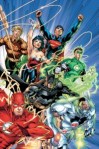
Cover for Justice League #1, this SeptemberThe major comic news of the past month has been DC’s plan to cancel every title in their line and launch 52 new titles, all starting at #1. Some of these will be titles that existed before, but with a new numbering system and a change of creators. Others are new titles, or bring a new focus to previously-minor characters. It’s still not clear exactly how much these “#1″s are restarting the stories and how much they are continuations of what went before.

Relaunching, renumbering, and other gimmicks are hardly new to superhero comics. But this is a bigger deal than normal because of how widespread it is. Also, this is the first major change since DC Comics was restructured underneath parent company Warner Entertainment, and DC will be starting a new digital distribution plan that is aimed at attracting new readers. No one knows for sure how well this digital outreach will work, but a lot of current readers are outspokenly against it. That’s not surprising; comic readers are outspokenly against almost every change that has happened in the past generation. Whether or not this new line of titles succeeds, I think that DC will hold on to most of their current customer base. However, that fanbase is slowly shrinking, and I think this is widely regarded as DC’s last real chance to stop the bleeding. If this fails, things will go on much as before, but DC probably won’t have the goodwill to allow them to try any other bold moves for the next 5-10 years. If they are shackled to the current system for that long, I doubt they’ll be in any shape to try again afterwards.

Continue reading

The Mountain Goats – All Eternals Deck (Music Review)

All Eternals Deck cover

The Mountain Goats - All Eternals Deck

Ever notice that fantasy and science fiction themes are common in movies and books, but most music is strictly limited to realistic stories? What is it that gives us such different expectations in different genres? The Mountain Goats stand alone as a “serious” indie folk band that is as comfortable with monsters and cultists as with personal, realistic characters.

The trick is to treat both extremes with the same seriousness: Deep, often inscrutable lyrics and three-dimensional characters dominate all the songs. The band’s style, with simple instrumentation putting the focus on John Darnielle’s reedy but earnest voice, makes both the complex and the emotional lyrics succeed. Their latest, All Eternals Deck, is a perfect example of this. The liner notes go into detail about the apparently-fictional Tarot deck that the album takes its name from, and the songs feature vampires and cultists prominently. A first-time listener could easily assume that the entire album dealt with the magical, but in fact quite a few songs (such as the obvious “For Charles Bronson” and “Liza Forever Minnelli”) stay firmly rooted in the real world.

Of course, the stories are deep and interesting in both cases. “Prowl Great Cain” and “Sourdoire Valley Song” provide back-to-back examples, with the first examining the guilty conscience of a grave robber who betrayed a friend, and the second expressing fascination with Neanderthal culture.

“Estate Sale Sign” is arguably an improvement on Jonathan Coulton’s formula, with an intensely nostalgic look through the eyes of an aged cultist selling off his worn-out relics and sacrificial alter. “Damn These Vampires” opens the album with possibly the perfect Mountain Goats song: Featuring a narrator recently turned to vampirism, Darnielle’s voice and the building piano perfectly convey a stark, pained character with only occasional bouts of intense passion to break up a lonely, emotionless existence. But “Never Quite Free” provides a counterpoint to this, with a simple message of hope for a better life despite past tragedies.

If All Eternals Deck has a flaw, it is the inconsistent feel throughout. It’s normal for a Mountain Goats album to feature such wide variety, but so many early songs feature a sense of building doom that it is disappointing for the second half not to offer any pay-off. Despite the hints at a theme, this ends up being a standard collection of Mountain Goats songs. I don’t want to sound ungrateful about that – there are no bad songs here, and the band continues its musical growth from the early lo-fi days, but it often feels on the edge of true greatness, and this is never quite achieved.

Grade: B

Echo (Comic Review)

Echo #2 coverTerry Moore is one of the big names among self-published cartoonists, having worked on Strangers In Paradise since the early 1990’s. But one drawback to writing, illustrating, and publishing your own comic is that you spend all your time focusing on one. Perhaps for that reason, Moore ended Strangers In Paradise in 2007 to begin a new series, Echo. Echo just finished its run as a single 30-issue story, and a new series will be taking its place soon. This is probably the right strategy to pursue in today’s comic market. At the very least, it convinced me to try out his work.

Echo is the story of Julie Martin, who finds pieces of an experimental super-suit raining down on her after they explode during a test flight. This “alloy” fuses itself to her body, and Julie must figure out how to control it while running from unscrupulous government contractors who want their suit back.

This may sound like a typical superhero origin story, but Moore’s comics have always been known for their focus on characters and strong women.This is the primarily the story of Julie herself, as well as her newfound protector Dillon, an agent tracking her down, and even Annie, the woman who had been testing the suit when it blew up.

Distinctive, believable people are Moore’s artistic strength as well. This feels like a human drama throughout, without the stilted clichés of many superhero stories. Body language, expressions, and individual appearances are all varied and support the characters as the comic’s focus. Admittedly, they are a little sexualized (Julie’s skin-tight alloy burns her clothes away when it activates, but it covers her so that she’s not technically naked), but done in the way one would expect from Moore’s reputation for empowered, realistic women. I am confident that this has at least as many female fans as male.

The art itself is black and white (plus a silvery gray for the alloy), with some cross-hatching and filled blacks. The simple inking and lack of color is what allows Moore to produce comics on a near-monthly schedule, and while it does feel a little slight at times, it complements the story. Unfortunately, the story could stand to be a little less slight. Bad guys act with barely more subtlety than Saturday morning cartoon villains, and the pseudo-science behind the alloy involves metaphysics, emotions, and souls. The plot never becomes as interesting as the relationships between the characters, and while it flows well in monthly serialization, some plot threads never feel resolved in retrospect.

Though Echo could be made into a big-budget action movie without much tweaking, the current implementation is definitely aimed at a comic-size niche audience. It needs to be appreciated by someone who cares primarily about the character-driven drama, but enjoys the trappings of a superpowered story. Further, the series does have several scenes of shocking violence that even verge on horror, which most people will find at odds with the light, occasionally comedic, interactions that dominate the story.

Overall, Echo feels like a disposable work by a talented creator capable of doing much more. Whether the demands of the periodical schedule kept Moore from reaching any interesting depths with the story, or whether he just wasn’t interested in more than he created here, this never quite achieved anything memorable. I’ll be watching him in the hopes that he reaches greater heights on his next title, though; At the very least, Moore can guarantee a reliable, timely story. There aren’t many talented comic creators who have chosen to do their own thing outside of the auspices of Marvel and DC, and I’m eager to see what he can accomplish.

Grade: C+

Origins 2011 Wrap-Up

I just got back from five days at Origins, the annual gaming convention in Columbus. I had a great time as always. While the convention encompasses non-computer gaming of all sorts (minis, CCGs, role playing, and so on), I always go for the board games. Specifically, I go to check out new games I haven’t played before. Here is my report of the convention from that point of view.

(Sorry, I didn’t have a camera with me. I’m still relatively new to blogging, and I didn’t think to bring one until it was too late. I’ll remember next year!)

I think that three main themes dominated the convention this year:

  1. Pretty much everyone I talked to, from friends to vendors to people on Twitter, agreed that the convention was slower this year than last year. Whether that meant fewer new good games, fewer attendees, or less money spent, everyone says it’s going downhill. I agreed that it felt a lot slower, but I’m not so sure now that I look back. I remember people complaining about how there were not enough good games last year, but I still found a lot of good ones then. I thought I had a lot of downtime this year, but looking back at 2010’s notes, I played approximately the same number of games (32 last year, 31 this year). I’m not going to bother calculating the total time they took, but it does seem that I just forgot about the downtime I had last year. Admittedly, I did learn fewer new games this year (19 instead of 24), but I blame that on my own unpreparedness. I’ve been getting ready for a wedding instead of researching the games I needed to find, and I arguably shouldn’t have taken five days for this at all. (On Sunday, I discovered several games I wanted to play, but I didn’t have time for all of them. Had I known about them ahead of time, those numbers would be closer.) So while there were a few worrisome signs of cutbacks, I think that this meme grew mainly out of human nature. We’re always comparing the present to the best parts of the past.
  2. Pure Eurogames are falling out of style. Last year, the big theme I noticed were that Euro- and American elements were finally being mixed together. My theory was that Eurogames were established enough that the American designers could draw on them successfully, and that Eurogamers were now thoroughly used to the basic mechanics of their games and ready for something new. This year, that has accelerated. There were a few good Euros out there, but they weren’t the ones with buzz. The dice games, dexterity games, and battle games were what everyone wanted to talk about this year. That makes sense, as the tastemakers in the Euro scene have always been eager for the next big thing. Five years ago, every new twist on area control and resource production was interesting to us. Three years ago, Agricola was ground-breaking. Today, all those things are familiar and dull. But making a balanced, replayable space battle based on flicking tokens around the board? That’s new.This ties in to my earlier point. The general consensus always seems to be that there aren’t enough good new games, but I still can’t keep up with them. The only problem is that as we get more familiar with the options, it’s harder to make everything seem new. Given that reality, I’m amazed by how much innovation I’m still seeing.
  3. Dominion is still a big deal, and now the deck-building knock-offs have arrived in force. Thunderstone is now established as a major game, and Nightfall, Ascension, and Resident Evil are jockeying for their position next. The retailers were giving these the sort of major promotional support usually associated with collectable card games, so they must expect huge results from this genre.I’m already on record complaining that all the new games have missed the elements that made Dominion great, without finding anything worthwhile to add. Overall, I found this new crop to be just as disappointing, but there are some glimmers of hope. Most importantly, though, I could still see a lot more games of Dominion being played than every other deck-builder combined. That game still has the fanbase it deserves.

Continue reading

Frankie and Johnny (Music Review)

Frankie and Johnny cover

Various Artists - Frankie and Johnny

I’ve seen quite a few albums dedicated to murder ballads, but a CD filled with different renditions of a single one is a bold new idea. “Frankie and Johnny”, the chosen song, is unusual in that it’s about a wronged woman killing her man. It’s one of the classic murder ballads, but not nearly as well-known these days as “Stagger Lee” or “Long Black Veil”, so the tracks still feel fresh. I’d never heard of Righteous Records before this, but I’m intrigued now. Unfortunately, my impression of them after this is mixed.

To begin with, the songs are excellent. All from the first half of the 20th century, the sound and production quality is uniformly clear and rich. That’s unusual for recordings from this era, and many classic, well-written songs are done an injustice by the muddy, washed-out versions we have today. Whether Righteous was responsible for the remastering of these, or if they were just very discriminating in their selection, they deserve congratulations for putting together a compilation that retains the feeling the music must have had at the time it was performed.

Unfortunately, Righteous skimps in other ways. The same heavily-pixelated art is used repeatedly across the CD and booklet, despite having nothing obvious to do with the story, and there is at least one typo in the track list. In place of the rich, fascinating liner notes a project like this could have yielded, all we have is a short essay apparently cribbed from the internet. (Its saving grace is referring readers to Planet Slade, possibly the best website for the history of murder ballads.) There aren’t even any details about when the songs were recorded, or what makes each version notable.

Fortunately, the songs are more important than the album they came in. Despite telling the same story, they are not simply copies of each other. The elements of the songs, both musically and lyrically, are recognizable from track to track, but with constant variations. Across blues, jazz, and country roots styles, it flows together into one long but interesting performance, much like something that today’s culture of remixes might provide. The songs generally agree on some details (when Frankie found out Johnny was “doing her wrong”, she shot him three times with a .44), but constantly change up where the events occurred, what they were wearing, and who the focus should be on. (Ironically, the parts they agree on differ from the actual historical event that inspired the song: Johnny, whose real name was Albert, was shot a single time from a .38 pistol. All the songs gloss over the fact that Frankie was a prostitute and Albert her pimp.) Only Champion Jack Dupree drastically changes the story, turning Johnny into a murderous robber who survives to be captured by the law.

The frustrating part is that, out of the fifteen renditions provided here, seven are instrumentals. A few music-only tracks would add some enjoyable variety, as well as emphasizing the way a recognizable melody is adapted across multiple artists’ styles. But it borders on false advertising that almost half of the songs on this “murder ballad” compilation have no murder in them.

My ideal version of this would replace a few of those with other, more varied recordings of the songs. The perfunctory essay in the CD booklet even mentions that this has been performed by Elvis, Steve Wonder, Gene Simmons and others, but presumably those were too difficult to license. Still, it’s disappointing that they don’t include any of the seven artists they list to demonstrate that the song is a classic.

I do have some misgivings about this compilation, but it is an important document of a little-remembered song. The target audience is probably not very large, but those who like murder ballads or classic recordings will find a lot to like here.

Grade: B-

Fight Club (Book Review)

Fight Club cover

Fight Club

After reading Noise, I really wanted to try Fight Club. Both stories are nominally wish fulfillment tales about violent young men, but neither actually intends for you to root for them all the way through. Strangely, even though Fight Club is one of the best movies of the last generation, I’d never read the book. It was interesting to read something that was so familiar in some ways (almost all of the voice-overs and speeches are lifted verbatim from the novel), but new in others. I haven’t had an experience like this since I read the novel version of One Flew Over The Cuckoo’s Nest more than a decade ago. But where the Cuckoo’s Nest book immediately supplanted the movie for me, the movie version of Fight Club is still definitely my favorite. There is little if anything of import in the book that the movie didn’t also cover, and the prose never put me there in the same visceral way that the movie did. (In contrast, the text in Cuckoo’s Nest offered much that the movie was missing, and its incredible prose was even better than the movie’s acting.)

That’s not to say that the book wasn’t still good. With most of the movie’s text and plot coming from it, how could it not be?

From this point on, there are spoilers for the story.

Continue reading

Woven Bones – In And Out And Back Again (Music Review)

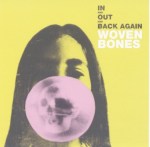
In And Out And Back Again cover

Woven Bones - In And Out And Back Again

Woven Bones have a strong ear for catchy pop hooks, but they bury these under layers of droning guitar and fuzzed-out garage vocals. The small fraction of pop aficionados who will appreciate that combination will find In And Out And Back Again enjoyable and light. That grainy, minimalistic bubble gum picture on the cover is accurate.

Despite the sloppy garage sound, Woven Bones are a tightly knit outfit. Not a beat is out of place, and the confident vocal snarl maintains a constant forward momentum. In And Out demonstrates that Woven Bones has already crafted a more distinctive sound than most bands ever achieve.

This “Woven Bones sound” is both a blessing and a curse. The songs are consistently good, without a single bad moment, but neither does any track work as an obvious standout. And though there is definite variety from track to track (check out the hooky “Your Way With My Life” followed immediately by slow, sinister “Creepy Bone”), it would wear out its welcome if it went past the album’s short 26 minutes. However, it is to the album’s credit that it doesn’t even feel like 26 minutes. It flies by with a constant succession of earworms, and no breaks at which the listener might notice the passage of time. Album-closer “Blind Conscience” does take a minute too long to fade out, but it isn’t until this wind-down that anyone would check their watch.

From what little I can find online, it looks like Woven Bones have released a series of under-the-radar EPs along with this (barely) full-length. I don’t see them breaking through to popular appeal any time soon, but I fully expect them to gain new devoted fans with each release. Their enthusiastic, high-energy twist on a slacker sound remains compelling even after the newness has worn off.

Grade: B


Andrew Jackson Jihad – Candy Cigarettes, Capguns, Issue Problems and Such (Music Review)

Candy Cigarettes, Capguns, Issue Problems and Such cover

Andrew Jackson Jihad - Candy Cigarettes, Capguns, Issue Problems and Such

What makes some jokes worth repeating, but not others? Many people will enjoy watching a funny movie over and over, but it can be almost painful to sit through the act of a comedian you’ve seen before. Funny songs can work either way. Candy Cigarettes, Capguns, Issue Problems and Such, a reissue of Andrew Jackson Jihad’s early releases, shows examples of both extremes.

The songs are stripped-down anti-folk, often nothing more than drums, an acoustic guitar, and Sean Bonnette’s high off-key voice. The music ranges from sweet and folky to an aggressive sound reminiscent of a high-school Modest Mouse cover band. The lyrics are tend towards irreverent, and often obscene, humor. And that’s where my questions about the nature of jokes arise.

Most humor comes from some element of surprise or subverted expectations. If you know what to expect, the joke doesn’t seem as funny any more. I think that comedic movies work so well because they are structured around a plot structure that could just as easily be serious. We rarely enjoy a contextless joke more than once, which is why comedians have such trouble. But when the jokes are mixed with something else, such as a plot arc, they can remain fresh. Perhaps this is because these other elements don’t grow old, so we aren’t bored even when we remember the punchlines. Or perhaps we still enjoy jokes as long as we can share them with someone new, and the unwitting characters in the movie are new to the joke each time.

Andrew Jackson Jihad’s songs work best when they are songs. A few of them are nothing more than funny lyrics, so there is no reason to listen more than once. “Little Brother” is the best example of this, as a musically-deficient song about how the narrator gave his brother fetal alcohol syndrome, but made up for it by buying him a crack whore in grade school. There’s no reason to listen to it a second time. (And without a tolerance for sick humor, many people wouldn’t even want to listen to that one once.) “Smokin'” (a song about cigarettes and being cool) and “Daddy” (about someone whose success is all due to his abusive father) just barely survive on further listens.

However, “Ladykiller” is a wonderful song to listen to over and over again, despite the horrible pun at its core. (Women are attracted to the narrator because he’s such a “lady killer”, but, you know, he also kills ladies.) This is partly because the music is so catchy and upbeat that it could work as a fun pop-folk song if it had different lyrics. But there is also an intriguing character hinted at between the lines of the song: The narrator doesn’t like to kill ladies; he just does it because that’s who he is. It’s the kind of gimmick that falls apart if examined directly, but stays funny when the singer just refers to it obliquely.

Later songs in Candy Cigarettes show a band that has gained a little more subtlety. When the songs stop telling a funny story, and instead focus on amusing but difficult to interpret lyrics, they extend their life quite a bit. As a sort of folk-punk They Might Be Giants, but with the geeky references replaced by stoner concerns, Andrew Jackson Jihad works quite well. “Survival” is an excellent song, throwing out a bunch of conflicting one-liners about “how I learned how to survive”. (Of course, that works as part of the joke, as the song specifically lists screwing with the listeners as a survival tactic. And the excellent Woody Guthrie reference is fun as well.) These elements were still there in their early days (“God Made Dirt” channels their anger very effectively), but improved as time went on.

The other tricky thing about telling jokes is that it is difficult to be serious at the same time. It is fun to hear the thoughts of a mass-murderer in “Bad Stuff” (though it’s another song that wears thin quickly) because we know the singer is not serious. But there are a couple innocently good-natured songs on the album as well, and one of them (“People”) follows “Bad Stuff” immediately. Taking the murderous lyrics with a grain of salt means that the earnest ones sound off. At least in the context of this early work, the band hadn’t yet learned how to make their points mix with the humor.

Candy Cigarettes is a very uneven album. A few songs aren’t very good, and several others only work as one-time novelties. But some of them truly are fun, and I’d even call a few of them excellent. This was my first exposure to the band (on the recommendation of a friend), and I am curious to see where they went from here.

Grade: B-

The Half-Made World (Book Review)

The Half-Made World

The Half-Made World

I’ve long argued that the “New Weird” is not a distinct genre. Its founder, China Miéville, wrote Perdido Street Station explicitly to show that the line between science fiction and fantasy was an illusion and that both genres deserved more creativity. It’s missing the point to create a separate category for these works. However, after reading Felix Gilman’s The Half-Made World, I’m starting to accept that New Weird has become its own sub-genre. Just like steampunk or High Fantasy, it definitely has its own expectations, aesthetics, and fanbase.

Fortunately, the New Weird is not likely to become a stagnant literary ghetto like High Fantasy. After all, its central tenet is wild inventiveness and the undermining of any clichéd expectations. The Half-Made World uses the American Western as a foundation for its setting, but with little-understood spirits twisting the familiar archetypes into something new. The larger-than-life outlaws are servants of a demonic cabal named The Gun. The railroads may be bringing civilization and order to the land, but under the auspices of a force called The Line, which sees humans as no more than disposable cogs in a machine. These two sides are at war, and the ordinary people who live in simple, dusty towns have no love for either of the destructive powers.

While the setting is entirely his own invention, Gilman is definitely inspired by Miéville. Not only is the world the book’s biggest selling point, but it rejects the simple answers and black-and-white morality of most fantasy. (The three main characters are an Agent of the Gun, an Agent of the Line, and a prim woman from civilized lands. Needless to say, they do not get along.) The narrative sympathies are humanistic and anti-authoritarian, but even in his fantasy the author worries that evil will triumph. And the story isn’t afraid to disrupt the status quo, no matter how the reader may want to see it continue. Unfortunately, some of Miéville’s weaknesses come through as well: The plot is slight and driven by coincidence, and the the conclusion is unsatisfying. (In fact, Gilman seems to have made a conscious effort to avoid wrapping anything up neatly.)

What truly makes this New Weird is that the setting becomes less familiar as the book progresses. Rather than doing some world-building and then moving on with the plot, it turns out that the similarities to our Old West exist on the surface only. This setting has centuries of history, and the land becomes stranger and less bound to physical laws (literally “half-made”) the further west one goes. Gilman’s prose does a masterful job of setting the scene, laying out just enough details to bring these strange elements alive, and slowly building up the concepts that underpin the world so that the reader comes to appreciate them without needing them explicitly explained. (This is also true of the characters, who remain interesting and reveal themselves through action rather than narration.)

A great environment, good characters, fair plot, and mediocre ending: That’s a pretty concise summary of the New Weird. And despite its weaknesses, The Half-Made World is a stunning and memorable book. I would love to read more stories set in this world. I may wish that innovations like this had been more integrated into standard genre writing instead of forming a new sub-category, but I can still enjoy the results that it produces.

Grade: B