Archive for the ‘ Books ’ Category

F. Scott Fitzgerald – The Great Gatsby (Book Review, Mixed with Off-Topic Rambling)

The Great Gatsby cover

F. Scott Fitzgerald – The Great Gatsby

I’m one of the few Americans to somehow make it to their mid-30s without reading The Great Gatsby. Finally trying it, though, I’m glad I waited. It’s a beautiful book, but one that I’m sure would have seemed dry and frustrating if it were forced on me as a youth. Its culture and vocabulary is a century old, while the prose is flowery and would be slightly daunting to a teenager. Why do we always insist on forcing adults’ ideas of classics onto children? Without the perspective to see the qualities that adults do, and also without the romanticism about a title that charmed previous generations, kids just find most classics off-putting. I think we’d be much better off using fun, age-appropriate novels in schools to foster a love of reading, so that the students will be motivated to seek out the classics when they’re ready.

The Great Gatsby still seems to be one of the most accessible ones, though, and that’s probably why so many people consider it to be the Great American Novel. With a light story, anger at a hypocritical society, and a short reading time, it must come as a relief to students picking this up right after The Scarlet Letter. It describes the upper-class people of the “Jazz Age” the the matter-of-factness of someone who knows no other way of life, but also with insightful criticism. Less frequently remarked upon is the fact that most of the story establishes very common tropes of romantic fiction, but the story takes an abrupt turn away from the comforting ending one would expect. It’s cynical and different, but in a way that doesn’t feel challenging.

Like many classics, Gatsby has beautiful writing, complex characters, and a weak plot. The prose has an efficiency that sets the scene and people, while leaving enough unsaid to keep them intriguing. The best parts of the story are watching them react to each other, whether it’s happily or angrily. Nick, the narrator, is amazingly passive in his own tale and usually serves as a stand-in for the similarly powerless reader, but his motivations and internal reactions to people make him surprising as well. That magic only falters when the plot has to move things along. Gatsby’s implausible rise is fortunately not shown first-hand, but the collection of people who end up around him is harder to swallow. The discoveries and misunderstandings that unravel the web of deceit near the end feel contrived, more like necessary steps to reach the climax than natural actions of these otherwise three-dimensional characters.

The Great Gatsby remains one of the rare classics that really does hold up well today. And for those students who found this page while looking for help on an essay, I’m just going to say: Don’t bother. I’m writing an intentionally vague, spoiler-free review, which is not what your teacher wants to see. But take heart in what I said in the first paragraph: If you didn’t like Gatsby, go find whatever sort of story you would like to read, whether or not it’s “low art”. Stories you’ll like are out there for you. Then try this book again in five or ten years for your own sake, and you’ll probably like it. And that is an idea you can take from this webpage to your teacher.

Grade: B


Sherman Alexie – Blasphemy (Book Review)

Blasphemy cover

Sherman Alexie – Blasphemy

Blasphemy is a short story collection about the Native American experience. Or at least, it’s about the experience of being Sherman Alexie. There is so much commonality between them, from pickup basketball games to 7-Elevens to classic Country Western, that it feels strongly filtered through the author’s own interests. Almost every single story takes place in Spokane, Washington, or occasionally with a Spokane Indian living elsewhere. By the time a later story mentions that there are only three thousand people with Spokane blood in the world, it feels like you’ve already read about half of them.

I recommend spacing these stories out over a several-month span, though, because as long as you can keep them from feeling repetitive, some are really good. Alexie writes painfully honest stories about life, and while the Native American perspective provides an interesting angle, most of it is universal. Still, Alexie’s loving but irreverent explanation of Indian culture is part of the draw. The protagonists are unromantic and sometimes sarcastic about their heritage. In the opening of the first story, the narrator explains that “powwow is like high school, except with more feathers and beads” and “whenever an Indian says he’s traditional, you know that Indian is full of shit”. But there’s respect behind the brutal honesty, and it culminates in “The Search Engine”, a story about a young woman and old man whose lives have both been driven by concerns about whether they are “Indian enough”.

The prose is straightforward and efficient, but literary, with an approach like a typical festival film. The events it covers are a mix of life-changing and mundane, but all are fraught with meaning… and often have no real conclusion. It’s a mixed success. Some quick character portraits are simply brilliant (“Idolized” may be the best one-page story I’ve ever read), while other times main characters feel stupid. It’s hard to have any sympathy for the successful author who starts listlessly giving away his possessions when he’s stood up by a woman he hadn’t yet met in person, and I’m just confused by the middle-aged man who walked home naked after an especially frustrating basketball game. (The story offers no help, saying only that he felt the need to “protest” something. But after the description of strangers and neighbors staring at him, I expected some sort of consequences for his public nudity. It’s apparently supposed to be symbolic only, so nothing comes of it.) Those are counter-balanced by excellent moments, though, like the questions about race after a man shoots a teenage burglar, or the fumbling ritual dances that open and close the book.

Blasphemy suffers a bit by being so comprehensive: At over 450 pages, one third of it could easily be dropped. But the great thing about short stories is that you can space them out. I read this over a two-month time period, and I think I would have liked it more if I had gone even slower. True, Alexie can be repetitive, but he justifies that by having worthwhile things to say.

Grade: B


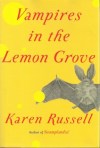
Karen Russell – Vampires in the Lemon Grove (Book Review)

Vampires in the Lemon Grove cover

Karen Russell – Vampires in the Lemon Grove

I spent most of my youth wishing that the literary world would take science fiction and fantasy seriously. Now that they do, I’m not sure what to make of it. Karen Russell’s Vampires in the Lemon Grove is a short story collection written in a literary style, but with a heavy reliance on fantastical tweaks. They’re occasionally fascinating, both for their investigation of human nature and their unusual ideas, but often unsatisfying.

The strange thing is that the stories don’t make the same mistakes. Some are too focused on their ideas, but the plots and characters don’t go anywhere. The title story, for example, starts with a clever twist on vampire tropes but just turns them into the sort of bland, unsatisfying ciphers that no one but book critics like. Other stories are just the opposite, with compelling people who seem lessened by the unrealistic elements that are shoe-horned in. “Proving Up” is an interesting story of frontier life, with a realistic idea that provides enough hook for a story: Settlers need a glass window to qualify for land under the Homesteader Act, so one boy makes a mad ride across the plains to ensure the one window in the area appears in every house that the inspector will visit. However, it takes a sudden supernatural turn that feels like it cheats everything that came before, by applying a sudden harsh judgment to the characters.

That judgment at the end of “Proving Up” is an example of the problem that plagues “literary” fantasy. Like magical realism before it, this genre is only accepted by the tastemakers when it has clear symbolic meaning. And while that sounds like something I should love, the application  is way too heavy-handed. The symbols in this book are a lot less subtle than I would expect from an award-winning author, but apparently people assume that a lack of realism necessitates a lack of subtlety. Nowhere is this more apparent than “Dougbert Shackleton’s Rules for Antarctic Tailgating”, a humorous story about someone who spends nine months of each year traveling to Antarctica to watch the “sporting event” of whales eating krill. Funny for a few pages, it soon gets weighed down in repeated mentions of all the people around him who die on the trip, or his bitter complaints about the ex-wife who left him for a more balanced man. If “Antarctic Tailgaiting” is meant to make fun of obsessed sports fans, it fails by being less sophisticated than the crowd it looks down on.

Russell could be a great writer if she found the right balance for her stories. “Reeling for the Empire” is a compelling story about factory workers turned into monstrous silkworms as a casualty of Japan’s Twentieth Century industrial awakening. It’s the sort of apt, unsettling metaphor that Paolo Bacigalupi would be proud of, and the regretful characters work well. However, I do wish it had a bit more plot. “The New Veterans”, though, only struggles because it has too much plot: It’s the story of a massage therapist who discovers she can manipulate a veteran’s tattoo to change his war memories and take the burden of his trauma for him. It doesn’t come to a conclusion about whether this is right or not, which is understandable, but it still goes back and forth on that decision too many times.

Vampires in the Lemon Grove is interesting and memorable, but rarely enjoyable. It’s a strange mix of elements that I like, but it doesn’t put them together in a way that I can recommend.

Grade: C


Mary Ann Shaffer and Annie Barrows – The Guernsey Literary and Potato Peel Pie Society (Book Review)

The Guernsey Literary and Potato Peel Pie Society cover

Mary Ann Shaffer and Annie Barrows – The Guernsey Literary and Potato Peel Pie Society

The Guernsey Literary and Potato Peel Pie Society, by Mary Ann Shaffer and Annie Barrows, is a novel told entirely by letters sent between the characters. It’s unique, and feels appropriate for these word-loving people of the 1940s, though it does at times create a distance between the reader and events. When protagonist Juliet Ashton is about to meet some pen-pals in person for the first time, she writes about the worry that “I have become better at writing than living” – a strange twist for the novel reader, who only ever knows her through that writer’s personality!

Guernsey is a small island in the English Channel that was occupied by Germany in World War II. The novel tells of Juliet, a London author seeking inspiration for her next book, meeting up with its people shortly after the war ended. The literary society was initially formed as a front to escape German attention, but its plainspoken farmers soon learned to find meaning and even purpose in books. That moral is none too subtle, but sure to please the novel’s audience.

The rest of the plot is no subtler, though. The whole arc of it will be obvious from the first few pages, and the only surprises are when harsh memories of the war intrude. These do lend the story some heft, but the occupation is still past, and there is never the slightest threat to anyone during the time the story is unfolding. In addition to Juliet’s quest for new material, the main plot is a traditional romance. The authors almost seem to casually dismiss it: The initial suitor (who of course won’t work out) is never given much attention, as the important interactions with him take place outside of letters. The later interest is treated as an obvious choice by so many characters that it doesn’t seem like it should matter as a source of tension at all.

Neither plot is really worth attention, actually. The authors make the strange choice to keep Juliet’s professional writing out of the pages she writes here, so we only learn about it second-hand. At a turning point, her friend and editor advises Juliet that her story “lacks a center” and helps her find one. Unfortunately, this novel has the same problem and never does resolve it. The reason to read it is in its characters, who are the sort of quirky, life-loving people who would name their book club after “potato peel pie”. However, funny events like that are be best experienced directly, not filtered through after-the fact letter-writing. Fortunately, the later portions of the book take place once Juliet has met them, and is mainly updating her friends back home about her adventures, so the telling takes on a much more linear, traditional story structure.

Even so, the letter-writing structure of the book is fun. It’s the main thing that saves this from being a weightless story about people the authors wish were their friends. Love for the setting and the characters drive it even when the plot cannot.

Grade: B-

Peter Clines – 14 (Book Review)

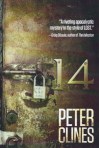
14 cover

14 – Peter Clines

Nate Tucker’s inexpensive new LA apartment seems too good to be true, but it also comes with a lot of quirks. Several doors are heavily padlocked, one unit has a reputation for suicides, and the cockroaches are actually mutated. Despite the building manager’s threats, Nate soon finds himself obsessing over these mysteries, putting his job (and possibly more) at risk. This is the set-up of Peter Cline’s novel 14.

14 is an enjoyable page-turner, though the journeyman writing keeps it from ever becoming engrossing. Cline’s descriptions get hung up on details about the way an item is laid out or a person performs a simple task. It’s never bad, but it often keeps things from flowing smoothly. If this book engrosses you, it will be because of all the twists and secrets, not because you get lost in the prose. Similarly, the quantity and variety of the oddities can be a little hard to accept, as are some lucky coincidences that keep Nate’s investigation moving forward. (Strangely, though, some of the later things he uncovers are huge, and don’t actually rely on him following the trail of breadcrumbs that led him through the first half.) The characters are quirky, even by LA standards, and though the book promises that they have secrets, it’s more that they all have exactly the right skill sets to move the plot forward.

Still, Clines’ gifts lie in the plotting, and the story definitely progresses smoothly while raising the stakes and ensuring that new details are uncovered frequently. Most chapters are a few pages each, with cliff-hanger endings, making it easy to read. (These chapter breaks feel a little forced once you realize that they are consistently placed after surprises instead of at logical breaks in the action. Conversations are often split between two chapters so that one chapter can end with a surprise revelation, but then a major scene change will fall in the middle of the following chapter.)

Strangely, I appreciated 14 as a mystery-thriller novel, but Clines intended it to be a horror novel. It does seem a little creepy at the start, because it is scary to think of moving into a new building where you might not be safe, but that aspect quickly fades away once it takes on the structure of an investigation. Nate and his new friends follow patterns that seem safe and formulaic, in which pieces come together and curiosity is rewarded. This is the stuff of comfortable thrillers, not horror novels. Bad things happen to people, but they’re at the points in the plot where someone should be expected to pay a price. The big reveals late in the story do have some trappings of the horror genre, but by that time, my thought was just “I wonder how the intrepid gang will get out of this!” Had it been a horror story, I would have been wondering if they were going to get out of it.

14 is never as clever or original as it apparently intends to be, but it’s a fun genre exercise. This was one of the three books I was recently reading simultaneously for my book clubs, and it was often the one I was most eager to come back to. On the other hand, when it ended I didn’t feel any need to keep thinking about the story or to look into the author’s other works.

Grade: C+


David Wong – John Dies at the End (Book Review)

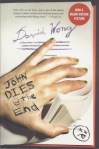
John Dies at the End cover

David Wong – John Dies at the End

David Wong, the author of John Dies at the End, is a pseudonym for Cracked editor Jason Pargin. Cracked, of course, is that humor site that turns out to be full of bitterly intelligent essays with sophisticated points hidden behind the obscenities. John Dies at the End brings that same sensibility to horror-comedy. It doesn’t necessarily make any larger points, but it’s easy to read while building an atmosphere that’s both juvenile and consistent. It proposes that the reality behind what we see is one bad drug trip, and then sells that premise.

More comedy than horror, John Dies is about lazy fuck-ups who learn to see demons and ghosts. The only thing that saves them is that the powers that want to destroy humanity are as dumb as they are. On the other hand, maybe only someone with their approach to life could withstand the barrage of surreal sights that they face. Though there are some consistent rules being built behind the madness (again, just like Cracked), the book is full of absurd humor. Whenever you start getting comfortable with this mix, though, horrifying things will happen to shake you up.

This often works great. Wong is a funny man, and he has a clever take on one of the clichés of horror: The idea of people being insignificant specks in a malevolent universe is a common theme, but it’s difficult to make the reader believe in the incomprehensible beings that are supposed to be out there. Wong finds a mix that lets him dial up the weird humor to a level that would normally be annoying, but in this case it’s a representation of just how wrong our everyday expectations are. By really making the reader feel lost sometimes, the message is conveyed.

However, John Dies works much better at the beginning. The story was serialized online, apparently with modifications, over the course of years, and the collected version still feels episodic. Early on, it feels like the author has free reign to go in any direction he wants, and the unpredictable story is a lot of fun. By the end, it feels like Wong is trying to force a plot into this. Some people get traditional story arcs that don’t fit the anarchic sentiment the book opened with, and the things that aren’t explained feel a lot more arbitrary once certain mysteries are figured out. It’s still funny, but the one thing that really does bug me is the way it derails that horror formula. The heroes become too important and are watched by the bad guys. I can’t shudder at the idea of being lost in an incomprehensible universe when the main characters turn out to matter after all.

Despite that, John Dies at the End is a hilarious, unique book. It’s smartly stupid humor and quirky worldview are worth experiencing.

Grade: B


On Book Clubs

Almost two years ago, I joined a Twitter-based book club called #1book140. Last year, a couple friends and I decided to start a book club of our own. So last month, when some coworkers started looking around for people who might want to form a club, I sensibly said I couldn’t. But I decided to try this month, and that’s how I’ve found myself way behind on three books at the same time. So I think it’s a good time to talk about book clubs.

I’ve enjoyed being in these clubs a lot. Though reading is normally a solitary experience, I like to discuss it. (I’m sure that’s related to the reason I write this blog.) It’s also good for me to have some sort of goals and structure to drive my hobbies: Last year, I read more books than any other time in my adulthood, and I credit my book clubs with giving me motivation. Normally, comics take up a lot of my reading time instead, largely because they come out on a weekly schedule, so there’s a constant feed to keep up with. I’m not trying to judge whether books are better or worse than comics, but the switch in focus has definitely worked well for me.

In fact, one of the first things I tell people about book clubs is that it’s a lot more fun to read books I don’t like if I get to tell people why afterwards. I do really appreciate the fact that these clubs have introduced me to a wider variety of books, but it’s simply the ability to share that I find best. Actually, that exposure to different categories has pros and cons, since I’m a little more likely to find books I don’t like that way. I definitely do enjoy the variety, and I’m glad that it pulls me away from the science fiction and fantasy that would otherwise be my default, but this variety is something to be careful with. I often have to read three books in a month just to find time for one of my own choosing, which means my personal to-read pile is getting dangerously high. There were novels I was eager to read a year ago still sitting on top of the stack!

The positives far outweigh the negatives, though, or I wouldn’t still be doing it. I’ve also enjoyed the very different experiences of the real-world and Twitter clubs. My Twitter one discusses general business on the #1book140 hashtag, and individual sections of the current book on tags named #1b140_1, #1b140_2, and so on. There’s a nominal schedule for the sections, but the separate tags let you join in at whatever time works. This means that the conversation is ongoing. It also means that sometimes people are saying things like “I really wonder what happens next!”, which sounds a little silly when they could just read another chapter to find out. But when I join my monthly group in-person, where we all finish the book before discussing, sometimes I wish we’d had the chance to talk back when we still had more questions than answers. It just goes to show how different one group can be from another.

If you’re considering starting your own book club, here are a few tips I’ve picked up:

  • I recommend voting on the choice every month. We do let people take turns choosing the nominees, but I think it helps a lot that everyone gets some input each time. For a small group, you probably won’t have any bitter arguments about this, but it will guarantee that if someone is strongly against one choice they get a chance to steer the group to a different one.
  • My local group spent some time early on trying to figure out ground rules. Should someone be considered a full member right away, or do they need to show up a certain number of times before they can vote or nominate titles? The answer turned out to be much simpler than we expected: About three-quarters of the people who expressed interest never showed up to a single meeting. Of those who did come once, almost every one turned out to be a dedicated member. So now, as soon as someone reads a book and joins a meeting, we just assume they’re a full-fledged member.
  • Don’t feel bad about skipping books from time to time. Everyone needs to find their own balance between book club books and ones they picked out themselves, and as I said earlier, I have to struggle to keep up with the ones I already bought. I probably participate nine or ten of the months each year for #1book140, and the work club will definitely be a sporadic thing for me.
  • Most of all, enjoy it! Book clubs fit a social role much like going out to see a movie, but everyone actually interacts with each other instead of just sitting in the dark. It’s a good experience.

Jo Walton – Among Others (Book Review)

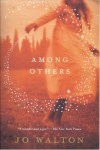
Among Others cover

Jo Walton – Among Others

Jo Walton’s Among Others is a fantasy story about someone who loves science fiction and fantasy literature. New books are the most exciting thing in fifteen-year-old Morwenna Phelps’ life, and often the only reason she keeps going when she feels all alone in the world. It’s a clever trick for the book, given that it’s aimed at an audience who probably felt the same way. Of course, the audience didn’t have real fairies and magic to compete with their reading attention, but Among Others manages to thread that needle very well. The fairies in Morwenna’s life don’t work at all like the ones in books, and she prefers the stories to her reality. If your fifteen-year-old self could identify with that, you’ll find this to be a sensitive character portrayal.

The story is told through Morwenna’s journal, and it frequently pays more attention to the books she’s reading than the events going on around her. If you’ve ever read Walton’s posts at Tor.com, this will feel very familiar to you. Walton blogs specifically about the novels she is currently re-reading, and has a new one to discuss every few days despite also reading plenty of new books. Her character here has the same speed and enthusiasm, as well as also being born in Wales in 1964. The book gained an interesting subtext when I realized that I couldn’t tell where autobiography ended and fiction began.

Morwenna’s voracious reading may be a bit too much, though. I also read a lot at her age, with a focus on the classic SF from this novel’s setting, but not nearly to the extent that Morwenna does. I did at least know of all the authors mentioned, but many of the references were lost on me. And since she applies the lessons and ideas of her favorite books to the world around her, it’s important to be able to keep up. While I identified strongly with the broad strokes of her character, the details often made her seem as distant from me as a character who didn’t read at all. (Don’t even bother with this if you aren’t familiar with Heinlein. It also helps to know Le Guin’s Lathe of Heaven, but you can get away with just reading the Wikipedia page.)

Fortunately, Morwenna is a good character throughout. She is sympathetic, she grows, and the tension between real fairies and science fiction stories makes a perfect metaphor for a geek coming of age. (Other characters are also well-drawn, and seem to be three dimensional even when Morwenna is too self-absorbed to notice. However, they tend to come into focus and then fade away when her social situation changes. It feels realistic for a teenage diary, though it means we don’t see any real story arcs other than hers.) Among Others is a tender story about both youth and genre literature. And surprisingly, that makes it completely unique withn genre literature.

Grade: B


Robin Sloan – Mr. Penumbra’s 24-Hour Bookstore (Book Review)

“There are plenty of people who, you know — people who still like the smell of books.”

“The smell!” Penumbra repeats. “You know you are finished when people start talking about the smell.”

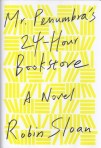
Mr. Penumbra's 24-Hour Bookstore cover

Robin Sloan – Mr. Penumbra’s 24-Hour Bookstore

The tension between physical and digital books is a big topic today, and so it’s unsurprising to find a novel based around that. Mr. Penumbra’s 24-Hour Bookstore strikes an admirable balance, appreciative of the past while also celebrating the future. Its characters generally don’t see this divide in black-and-white terms, either. There’s the mysterious old bookstore owner, for example, who is actually fascinated by the promise of new technology. Also, people on both “sides” share many things in common. But this nuanced look at technology and cultural changes is overshadowed by a plot about a puzzle-solving secret society, and the series of missions that the narrator must go through to learn the truth.

When he isn’t caught up in his especially arbitrary Dan Brown pastiche, author Robin Sloan manages to pass for Neal Stephenson-lite. He has a firm understanding of modern technology and culture, and that permeates the book in a way that seems real but will also make this feel dated in three years. However, Sloan doesn’t mind adding obviously false details to make the plot work, which clashes with the realism. Overall, it seems best to think of this as a parable about our time, but the points are still a little unclear. For example, at the start of the book, narrator Clay Jannon is a techie facing long-term unemployment in today’s economy. But Sloan also wants to comment on today’s new media and commercial opportunities, so every supporting character he introduces is successful and fulfilled in their unique, quirky job. To accept the story, you need to appreciate both that jobs are nearly impossible to find and also that everyone is defining their own successful niche, and the novel never does anything to address this contrast.

Despite the nuanced view on books-versus-technology, characters aren’t very fleshed out. Effectively, they are plot tools just as surely as the made up technologies, books, and even subcultures that all turn out to be just what Clay needs to overcome challenges. In fact, Clay seems especially one-dimensional. For the most part, he just reacts to events around him, and the only hint of character development we get early on is that he is so eager to keep a job that he goes along with the mysterious events happening at the bookstore. But later, he turns out to be dedicated to open source software and free information, so every time he is entrusted with information he immediately tells someone else about it. This sudden willfulness surprised me, and I kept expecting him to get in trouble for betraying other peoples’ confidences. It turns out not to matter, though. Everything that Sloan writes is in service to the plot of the book and its mysteries, so basically, once the reader has learned something, why should anyone bother hiding it from the rest of the characters any more? (Similarly, even fleeting characters who shouldn’t even know about the mystery are presumed to be really interested in its outcome at the end.)

Mr. Penumbra is a cute book (if a little too confident in how charming its modern setting is), and it almost succeeds as a light, turn-your-brain-off-and-ignore-the-coincidences, mystery. This worked sometimes, but I had trouble letting go. The problem is that the novel’s hook is supposed to be about something, with a lot of tantalizing glimpses of the way technology is changing our culture. But since I kept rolling my eyes at the plot and characters, it wasn’t possible for those ideas to go anywhere. This book would have been more enjoyable if it hadn’t tried, and failed, to address serious themes.

Grade: C


John Green – The Fault in Our Stars (Book Review)

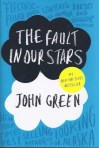
The Fault In Our Stars cover

John Green – The Fault In Our Stars

Remember those conversations your teenage self had with friends? Some were hilarious, some were profound, and all felt meaningful. In retrospect, you weren’t actually as clever as you all thought you were, but that sensation of significance was the best part of becoming an adult. John Green’s The Fault in Our Stars captures this aspect of teenage friendship perfectly. Hazel Grace Lancaster probably wouldn’t really be as coherently snarky as her narration is, and her friends couldn’t always have such perfectly well-timed comments, but I can believe that everything felt like she describes. Though the writing teeters on the edge of being precious and stylized, this interpretation makes it seem human and believable.

The snarkiness and sense of import are vital, given the depressing nature of this book: Hazel has a fatal cancer, as do most of her young friends. This is a novel that can’t end any way but sadly, unless it’s with a trite moral about suffering bravely or learning to appreciate life no matter what. As an intelligent, bitter girl who has to live with cancer’s reality, Hazel hates those clichés. Her story is refreshingly honest about the way terminal diseases actually feel and how the concern of healthy people just creates distance between them. It’s a sympathetic character portrait that’s probably helped a lot of people to deal with these real-world situations.

Readers react in different ways to the quirky dialog and narration. Some find it distracting and fake, while others love it. I initially found myself somewhere in the middle: Though I liked the way this represented the feeling of growing up, its formula felt so precise that it was hard to appreciate the emotions of the people behind the poised one-liners. It grew on me, though. Hazel’s opinions and personality were really appealing, and it is obvious that Green understands his characters even when Hazel’s youthful perspective misses things. Her parents’ difficulty with her disease is especially heartbreaking. So of course, by the end, these are fully-realized characters going through incredible tragedy.

As much as Hazel detests “cancer books”, Green has written one anyway. It’s sad, meaningful, and celebrates life, but it does this without the obtuse justifications that most people use to come to terms with tragedy. It doesn’t go easy on its characters (one important subplot is about Hazel’s love for a brutally honest novel, and trying to contact the bitter, deluded man who wrote it), but it also provides her with love and growth. The story is kicked off when she meets Augustus Green, a charismatic cancer survivor with whom she can immediately have those profound teen conversations.

As realistic as The Fault in Our Stars often is about life with cancer, it definitely succumbs to formula in other ways. Various characters’ diseases follow the exact paths you would predict, and the love between the main characters is presented as a little too perfect, without acknowledgment that imminent death is its only difference from other young romances. In fact, the entire love story fits the standard chick-flick formula perfectly: Hazel is the clever, quirky girl who doesn’t see anything special in herself at first, and Augustus is the unflinchingly supporting and giving man who provides validation.

Even so, the most memorable aspect of the book is the part that breaks with tradition, and it definitely makes this book worth reading. Powerful, life-affirming, and sad, The Fault in Our Stars manages to fulfill the expectations of a “cancer book” and still be an honest discussion of cancer.

Grade: B