Archive for the ‘ Books ’ Category

Colson Whitehead – Zone One (Book Review)

Zone One cover

Colson Whitehead – Zone One

Zombies are frequently metaphors for the barbarism that lurks behind polite society. It’s an unsubtle metaphor, to be sure, but it still makes a good match for a “literary” author looking to try something different. Zone One tells the story of slacker hero Mark Spitz helping to clear zombies out of Manhattan in the early days of society’s resurgence. Though this book should only be read if you have a stomach for the gore and hopelessness of a zombie movie, its prevailing atmosphere is more quiet and introspective: Most of the remaining zombies are quiet “stragglers” who seem lost in an echo of their past lives, giving the characters and the reader time to reflect on their pitiable state.

As far as post-apocalyptic fiction goes, Zone One feels halfway between the bleak tragedy of The Road and the outright satire of The Gone-Away World, with occasional bursts of horror to spice it up. Author Colson Whitehead is capable of hitting all those notes, and there are several amazing scenes. Most of the time, though, these contradictory elements just make the book an aimless muddle. The story jumps around in time frequently, often mid-scene, apparently to ensure the reader feels as detached as the “perpetual B-student” protagonist. This even breaks up the action scenes.

The satire has some clever elements, such as PASD (Post-Apocalyptic Stress Disorder) and corporate “sponsors” who control what items may be looted from stores. For me, though, it was derailed by a stubborn refusal of the author to provide specifics. No products or brands are ever named, relying instead of convoluted vagaries like “seasons one through seven of the hospital drama groundbreaking in its realism”. In fact, Spitz’ old job with a coffee shop chain is described for pages without ever mentioning a company name. This is pervasive throughout the book, and makes the narrator feel too out of touch for the social commentary to have any bite. I wouldn’t care if it mainly used made-up brand names, as long as gave the impression that the characters related to them like normal people.

Zone One leaves no doubt that Whitehead is a very talented author. Provided he doesn’t always use those vague generalizations in place of specific names, I’d definitely try more of his novels. This one, though, feels aimless. After the collapse of civilization, many of the characters wonder whether anything they do matters; That feeling pervades the story itself a bit too well.

Grade: C


Paolo Bacigalupi – The Windup Girl (Book Review)

The Windup Girl cover

Paolo Bacigalupi – The Windup Girl

The Windup Girl takes place in the same desolate near-future as Paolo Bacigalupi’s short stories “The Calorie Man” and “Yellow Card Man”. The one-two hit of an energy crisis and food shortage means that all surviving industry is driven by manual labor, whose expense in “calories” will slowly kill the starving laborers. The book’s genetically engineered marvels may reflect the promise of the future, but it’s a not-too-subtle morality tale: The pandemics and food shortages that plague mankind are the the direct, perhaps intentional, product of greedy genetic engineers.

The previous stories of this world were collected in Bacigalupi’s Pump Six and Other Stories, one of the best books I read last year. This novel is good, though it doesn’t live up to the high standards those short stories set for me. The quicker tales can emphasize the desolation and hopelessness of the setting, but the author (sensibly) restrains himself from making a novel-length story that bleak. The longer format emphasizes Bacigalupi’s deft touch with other cultures – it’s set in Thailand, and both its setting and the foreigners mixed in feel natural – but the moral lesson at the end feels disappointing when it follows hundreds of pages of complex build-up.

If The Windup Girl doesn’t always emphasize the same things that the previous short stories did, it finds a new way to explore human cruelty: Emiko, the titular “Windup Girl”, is a genetically engineered slave, abandoned in a country where her kind are illegal. While prostituting herself to abusive clients who consider her less than human, she tries to keep a dream of freedom alive. Subservient by design, her fight against her own nature establishes the core theme of the book.

Emiko’s scenes have an additional duality: The writing is as violent and lurid as the worst exploitation material, but their power and humanity is undeniable. I wouldn’t blame anyone who found this book to be horrifying or unreadable, especially in the context all the recent debates about rape as a lazy writing tool. But I would say that even the worst writing tropes exist because people are trying to copy from other works that used them well, and The Windup Girl is one of those good ones. No topics should be completely off-limits, and this is an example of why. It’s too bad to think that the empathetic and necessary scenes here may inspire lesser writers to create awful, violent works.

The Windup Girl is a complex, controversial story built atop a world that Bacigalupi is now familiar enough with to keep in the background. It’s not what I expected from his previous stories, but it’s unique enough to work as both a companion piece to them and as a standalone novel.

Grade: B

Connie Willis – Doomsday Book (Book Review)

Doomsday Book cover

Connie Willis – Doomsday Book

Imagine that time travel is discovered a few generations from now, but the only application anyone uses it for is to send historians back to gather first-hand information. If you can keep from questioning this unlikely gimmick, then you might be ready for Connie Willis’ Doomsday Book.

The first of Willis’ novels about time-traveling historians, this one features a university student named Kivrin who becomes the first person to travel to the Middle Ages. The procedure is botched, though, thanks to an incompetent administrator eager to send Kivrin off before anyone can remind them that that era was considered too dangerous to travel to. Before long, the people in both times find themselves dealing with a disease outbreak, while the more reliable characters desperately try to figure out how to get her back safely.

The novel positions itself as both a comedy and a drama. It would have been better off as a pure drama, though. The humor comes entirely from one-note characters who are allotted one annoying character trait each (say, a love of playing the bells or the need to cast blame on others) that they use without pause. Unrealistic and irritating, this kept me from ever becoming invested in the characters. It’s a shame, because the dramatic portions would have been good if I had been able to buy into them. It is interesting to see the contrast between the way two different cultures handle a similar crisis, and Kivrin’s growth in response to a Medieval priest’s faith is surprisingly touching. Willis obviously had multiple big ideas that she was capable of handling in this novel.

The portrayal of the past is simple, but feels consistent and well-researched enough to fit the conceit that people are seeing the “real” era. The portrayal of the future is simple as well, and this is more problematic. After discovering time travel, making brain implants that can immediately adapt to a new language, and curing (almost) all diseases, how can the rest of their life be based on technology fundamentally unchanged from 1992? Our actual culture has changed more in twenty years than Willis predicted in sixty. On top of that, the time travel technology is so blatantly designed around the needs of the story that Willis may as well have just called it a magic spell: It may prevent items from going through if necessary to prevent paradoxes, and with such accuracy that it will block the germs carried by your body if the people in that time don’t already have immunity. Though you can travel to a different year, it must be the same date. This means that time effectively progresses the same for the people in the past and the future, so there is a risk that they will miss the rendezvous with Kivrin if everyone in the future is sick for too long. None of this is explained, nor do they ever give the impression that the scientists understand this technology enough to have invented it.

Doomsday Book wants to be a fast-paced airplane read with a few big ideas that stick with you. I was bored after the first third, which is a major problem for a story like that. I’m apparently in the minority – like most of Willis’ books, this won both the Hugo and the Nebula – but I don’t get the appeal. With taut drama sabotaged by ridiculous characters, science fiction derailed by a laughable foundation, and intelligent ideas that are usually overshadowed by these flaws, Doomsday Book has all the pieces it needs to succeed, but never fits them together.

Grade: C


Ray Bradbury – Something Wicked This Way Comes (Book Review)

Something Wicked This Way Comes cover

Ray Bradbury – Something Wicked This Way Comes

I’ve read a lot by Ray Bradbury, but not for years. I just tried Something Wicked This Way Comes, his most famous work that I hadn’t read yet. I’m glad I did; The style was, if anything, more lyrical and over-the-top than I remembered, but he writes with a confidence that makes it work. As a meditation on aging, both for young boys growing up and men looking back on their youth, the unironic intensity of his purple prose is effective. It’s a heady, memorable read.

The book does get weaker as it goes on, though. It starts as a beautiful description of the unknown territory that comes with growing up, and gradually turns into a fairly clichéd story about good versus evil. While it’s lowest points still make a satisfying 1960’s pulp novel, I feel like I only got glimpses of the book that the opening chapters promised.

The initial protagonists are 13-year old friends Will Halloway and Jim Nightshade, whom the book comes right out and introduces as a innocent do-gooder and a darker, wild spirit. (You can guess which is which from the names.) But at that age, their incompatibility is abstract and they are great friends, despite the stresses it sometimes causes. Best of all, their entire world is viewed through a lens much like a Bradbury fantasy. Even before the coming of the mysterious, sinister circus that gives the book its threat, Jim and Will act like they are in a world of magic. (For example, a nearby house referred to as “The Theater” is apparently a home for mundane swingers, but after catching a glimpse through the window, the boys see hints of mysteries that threaten to tear their friendship apart.)

As the story goes on, Will’s father Charles Halloway takes the lead. A fairly obvious stand-in for Bradbury himself, Charles confronts his own midlife crisis with circumspect, flowery speeches and becomes the perfect hero for the boys when their struggle turns out to hinge on the philosophy behind morality. (Debate still rages on about whether Bradbury was a science fiction or fantasy writer, and this book makes a good summary for each side. The story is purely fantastical, but it portrays the love of ideas, and even more so of talking about those ideas, that dominated classic science fiction.)

Charles’ speeches are often ridiculous, especially when he admits he’s rambling away while they are under a tight deadline. However, the changing relationship between the father and son, especially the aspects they can’t express, is probably the best part of the book. Bradbury’s abstract prose is the only way I can imagine to portray that existential longing crossed with old-fashioned familial love.

Something Wicked is well worth reading despite its disappointments. In fact, those failures help to emphasize the open-ended nature of the book’s big questions. In a paradox that feels very appropriate, I want to say that this story will stick with me for a long time even as I feel it slipping away like a dream a week after finishing it.

Grade: B


Two From James M. Cain (Book Review)

I haven’t had very good luck with the older books I’ve read lately. I’ve read a variety, from 1850’s David Copperfield to 1943’s The Little Prince, and been consistently unimpressed. I finally enjoyed some, though: James M. Cain’s formative noir novels.

I read The Postman Always Rings Twice and Double Indemnity, which even combined are shorter than most modern young adult stories. Both had many of the recognizable characteristics of the genre, though they were also suspiciously similar: In each, the narrator begins seeing a married woman and decides to help her kill her husband. Insurance money is involved, and things don’t end well for everyone. (In the noir genre, I don’t consider that a spoiler.)

I prefer The Postman Always Rings Twice. Double Indemnity is still fun, especially since it only takes a couple hours, and the details of its crime are much more clever. However, I never quite believed in Double Indemity’s characters or their motivations, and a week later most of the plot is already muddled in my memory. Postman, on the other hand, has great characters and remains firmly in my mind even though I read it several days earlier than the other book.

Postman is the story of Frank Chambers, a restless drifter who starts working at a diner after he meets Cora, the owner’s wife. Their passion is believable enough to explain the way they act throughout the story, and their personalities create as much tension as the murder plot does: Frank can’t stay tied to any place long, while Cora is dedicated to making something of herself, but they can’t bear to break apart from each other.

One reason this works for me when other books from past generations is that the characters remain entirely believable. Sure, they’re obviously products of their society, and they’re racist, sexist, and just plain anachronistic by today’s standards. Still, they are perfectly believable. The voice of the book is Frank’s, not the author’s, and any perspectives that seem skewed are realistic when coming from a 1930’s anti-hero. Cain’s own perspectives, right or wrong, would be easier to dismiss 80 years later. (Notably, those racist and sexist elements are gone from Double Indemnity, supporting the idea that they’re products of the characters rather than the author.)

The part that ages less well is the conclusion. One story relies on an unlikely, ironic event in the final act, while the other features a confusing infodump about what had really been happening the whole time. The tragic ending may still be a staple of noir, but now it usually comes from the author’s choice. With the way Cain’s books shoehorn the twists in, it’s obvious that he didn’t have a choice. The stories are designed to give the readers a vicarious thrill, but to reassure them in the end that morality will win out.

Despite that, these are both well worth the time to read. Cain’s love of the sordid may be credited with spawning a genre, but his understanding of human nature is the reason that these got any attention in the first place. Almost a century later, that still feels fresh.

The Postman Always Rings Twice: B+

Double Indemnity: B-


Lionel Shriver – We Need To Talk About Kevin (Book Review)

We Need To Talk About Kevin cover

Lionel Shriver – We Need To Talk About Kevin

Lionel Shriver’s writing is literary and sophisticated, but don’t let that fool you. Had her career gone slightly differently, it’s easy to imagine her cranking out Saw sequels. She loves to make the audience squirm, and that’s exactly why We Need To Talk About Kevin is so successful: Told by Eva, a mother whose son went on a school-shooting rampage, we get to watch his entire childhood unfold with knowledge that he will get worse, not better, with age. Shriver’s empathetic, human approach makes this horrifying story that much more effective.

That’s not to say that it’s perfect. Part of this book’s draw is our curiosity about why a kid would do this, and parents will be captivated by the fear that their child could turn out the same. However, Kevin is too perfectly evil from the moment of birth to be compared to the kids we know. He refuses to be held or fed by Eva, but always acts like a good kid when his father’s around. He stubbornly refuses to talk at all in front of his parents until he’s secretly learned to speak in complete sentences at the age of three, and he still wears diapers even when he’s old enough to make it clear that he’s just doing so to make his mother uncomfortable. Even before the age of self-awareness, Kevin wants to prove to himself that he is better than everyone and relies on them for nothing.

It’s arguable that Eva’s account is not supposed to be trustworthy; After all, one major question of the novel is whether Kevin’s behavior is his parents’ fault. However, she includes too many details involving witnesses: The first nanny refused to finish a single day when Kevin was just weeks old, every parent in his preschool pulled their child out and then met secretly at another place without him, and so on. If Eva is lying about facts like these, especially when she admits so many difficult things in her writing, then the book would be meaningless. No, to get meaning out of this story, I have to believe Eva’s testimony, and approach this as a horrific tale about a child of pure evil rather than an exploration of kids in general. (The question about Eva’s culpability is also less interesting because of this. Apparently, a lot of readers do blame her for not loving Kevin enough. A great book could be written on that subject, but in this case Kevin refuses her love from the beginning. Instead, I read the book, and that reaction, as an examination of the impossible standards some people will hold mothers up to.)

Kevin is a great character, though, and he does eventually grow into his personality. As a young adult, he does represent the fears that parents have when their child grows sullen and withdrawn. The book would be incredibly powerful if it had rushed to get Kevin to that point.

In fact, almost all the characters are great. (The one exception is Kevin’s sister, a loving doormat who is too perfectly designed for narrative convenience.) Eva is a complex woman with hopes and dreams. Many people consider her a villain for being uncertain if she loves her child, but the fears she privately shares in the book are honest and relatable. The book’s horror works because we get to know her both as a vibrant young woman and as the broken product of eighteen years with Kevin. Franklin, the father, is a great foil for Eva. It’s clear how they fell in love, even if they become so strongly at odds when it comes to child-rearing. (However, it should be said that he sometimes sticks up for Kevin to the point of undermining Eva. If anyone was responsible for the way that Kevin turned out, it’s the father, and Eva’s unwillingness to face this is a real problem for her intelligent, practical character.) Even the people who pass through in a single scene are expertly portrayed.

The story is mostly told in flashbacks, but there is a running plot about Eva’s prison visits with Kevin. As much as he always spurned and hated her, their relationship becomes the most fascinating thing about the book. Near the end, the flashbacks catch up to the modern day, and the plot lines converge with a great payoff. The ending does hold some real (and fair) surprises, even if the reader did know to expect the shooting spree all along.

If I have some complaints about this book, it’s because it’s so good that it demands being held up to a high standard. We Need To Talk About Kevin is filled with great characters and makes real emotional connections with the readers. It only falls short of being a modern-day classic because Kevin’s unbelievable childhood keeps us from seriously considering the questions it asks about killers and their parents. Even so, this is both accessible and intelligent, and will stick with you after it’s finished.

Grade: B+


The First Two Fablehaven Books

Fablehaven cover

Brandon Mull – Fablehaven

I have my misgivings about Harry Potter, but I tried out Brandon Mull’s Fablehaven series even though it was recommended to me as being “like Harry Potter“. I’m glad I did. It’s not clear to me how it will keep up the world-building without eventually getting bogged down and inconsistent, but the first two books were worth reading.

The first book, Fablehaven, introduces the central conceit: Magical creatures live in our world, but are almost extinct. A small group of people keep the existence of magic a secret while also running preserves on which these creatures still live. When thirteen-year old Kendra and her younger brother Seth discover this, they get caught up in their grandparents’ efforts to protect the haven, if not the whole world, from evil forces.

This book draws as much inspiration from dark old fairy tales as safer modern stories. The magical creatures are dangerous and inhuman. The intelligent ones are immortal, and can’t bring themselves to focus on, or even comprehend, the concerns of the brief-lived humans who are trying to save them. Most of the danger here comes from a more complex worldview than simply good versus evil.

This book taps into the mix of the innocent and the horrific that gives classic fairy tales their power. The children, especially headstrong Seth, make mistakes with horrible consequences, and the sense of danger is strong. The first hint of magic they discover is grotesque and unique, and described so viscerally that it still sticks with me. It should be said that the plot pacing is uneven, but that also serves to make the disasters and sudden plot shifts much more surprising.

Until the ending, that is. The resolution manages to fix even problems that seemed irreversible, and retroactively makes the world seem safe and fair after all. This is maybe necessary for its target age range, but felt like a betrayal of the story I had come to expect.

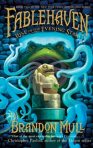
Fablehaven: Rise of the Evening Star cover

Brandon Mull – Fablehaven: Rise of the Evening Star

Fablehaven: Rise of the Evening Star shows Mull’s growing skill as a writer. I have no complaints here about uneven pacing, as the length and plot progression fit the book perfectly. He also appears to be managing the series well. Small events from Fablehaven are now growing into a larger story, and events from the first book are logically followed up on here. This avoids Harry Potter’s problem with characters or spells from one book that just seem forgotten when they could be useful in later ones. It helps that in Fablehaven, magic comes from non-human creatures. People rarely understand how or why fantastical items work, and the magical creatures have established motivations to keep them from becoming directly involved. This resolves most questions of “why didn’t someone just solve the problem with this spell?” Even so, there are a lot of powerful items and creatures on display here, given how small their ecosystem is supposed to be. I worry that that will start to seem inconsistent within a few books.

The immediate problem, though, is that between Mull’s cleaner writing and the reassuring ending of the first book, Rise of the Evening Star never finds the sense of danger that impressed me in Fablehaven. The in-book dangers are still great, and the disasters still happen, but the reader can clearly see the path to a happy conclusion.

Mull has a knack for cool ideas. I don’t want to spoil the creatures the kids encounter here or some of the things that happen to the main characters, but if you ask any young fans about this series, they will probably be bursting to tell you about all the crazy, imaginative things that happen here. That’s true in both books, but seems to be even more prominent now that Mull has found his footing in book two.

Overall, these books are fun if flawed, and their best parts are very memorable. I preferred the more chaotic, unpredictable feel of the first book, but I can see why some people think that the series improves as it goes along. Either way, I’m curious to see what happens next. I’m not sure if it will keep working for me, but it’s doing better than Harry Potter was after two books.

Fablehaven: B

Fablehaven: Rise of the Evening Star: B-


Neal Stephenson – REAMDE (Book Review)

REAMDE cover

Neal Stephenson - REAMDE

Though Neal Stephenson has become known for dense, 1000-page novels in recent years, he has a knack for page-turning adventure as well. REAMDE returns to that side of his writing, with an action-packed story involving Russian mobsters, spies, and a computer virus. REAMDE doesn’t completely distance itself from Stephenson’s latest works, though: It’s still 1000 pages long, and sometimes the thriller plot gets bogged down by the sheer scope of the story.

The novel is set in a world just like ours, except that a new game named T’Rain has eclipsed World of Warcraft as the dominant MMORPG. Shortly after Richard Forthrast, the game’s creator, gets his niece Zula a job with the company, a virus named “REAMDE” appears. It requires victims to transfer money in T’Rain in order to save their data. Things quickly escalate, and before long Zula is a hostage to a Russian crime lord who wants her to track down the creator of the virus. The story barrels through several unexpected changes and ends up following quite a few characters spread across different countries.

In many ways, REAMDE is structured like an especially large “airplane read” thriller. One of the things that makes it so large, though, is Stephenson’s love for detail. The fight scenes involve considerations of gun ballistics, the countries people end up in are determined by the “great circle routes” available to the airplane pilots, and of course the world of T’Rain is structured around a deep understanding of the mechanics and economics of today’s computer games. Whether these additions sound appealing or boring to you will determine whether you should read this book. They are definitely interesting at times, and even when they get a little dry, they make the story believable. Stephenson’s bid for realism may be a bit misdirected, though, given that much of the plot still depends on coincidences and characters making the right decisions to stay relevant to the book. Still, it’s an exciting story, and Stephenson has finally learned to make his musings quick and relevant to the story instead of the long lectures they used to be.

The other element that defines Stephenson’s stories is his love of geek culture. This has expanded in the past to encompass his fascination with history, economics, and philosophy. Now, REAMDE simply opens the doors to celebrate obsessives of all varieties. The computer geeks are well-represented, but the book includes everyone from Medieval re-enactors to Constitutionalist gun-lovers to cat skiiers (an elitist version of the sport that, of course, Richard’s mountain resort caters to). In Stephenson’s world, everyone worthwhile has a some special driving interest. The way T’Rain is explained in the game, It was successful because Richard chose a developer with a compulsive need to base the game’s geography on real sceince and a story-writer who believes that a consistent fantasy language is the key to the new world.

(It’s actually interesting to consider Richard as a stand-in for Stephenson himself. The book frequently mentions that Richard doesn’t understand the people around him, but his success comes from respecting their eccentricities and recognizing their skills. Is that how Stephenson sees himself relating to the fans he writes for?)

REAMDE is often good, but inconsistently so. The first few hundred pages are great. But just when the reader settles in for a crazy ride that keeps jumping from threat to threat, it turns out that the latest round of bad guys are the real villains for the entire book. I find them to be the least interesting of the conflicts that were introduced in the first third, but pretty soon, it’s focused on them with even the side plots fading away. These other plots and characters do return for the last third, though, and things get interesting again. But in the final hundred pages, they all fall apart.

Stephenson has never been good at endings, but I believe REAMDE has his worst ever. After a laborious set-up to bring all the characters back together (involving unlikely guesses among several), the scene is set for a long, long, long gun battle in the mountains. The detailed logistics don’t really matter, but people keep separating, joining up, flanking each other, and getting in shoot-outs. Most scenes in the end section could have been removed without me even noticing, and in fact I’ve already forgotten (one day later) how the conclusion played out. It felt like Stephenson just reached a point where he said “Ok, time for the bullets to stop missing the bad guy.”

Also frustrating is how small a role the titular “REAMDE” plays in the plot. The book’s title (and press) promise a mystery – what is its purpose, and what does the name even mean? (“Read me?” “Reamed?” “Redeem?”) But the answers are mundane, and resolved quickly. Stephenson actually seems to be on the side of the virus writers, even after demonstrating in the beginning that they harmed a lot of people. Meanwhile, the subplots related to T’Rain are never resolved, and the entire game could have been removed from the book with only minor adjustments to the plot. It’s obvious that Stephenson put a lot of effort into this system, but it just doesn’t mesh with the story about abduction and spies he ended up writing.

Despite its 1000-page length, REAMDE is usually breezy and exciting. For many lapsed fans, this may be the novel that rekindles their interest in Stephenson. For me, though, the boring middle and its inability to juggle all the plot threads set in motion tempered much of the thrill.

Grade: C+


Charles Dickens – David Copperfield (Book Review)

David Copperfield cover

Charles Dickens - David Copperfield

David Copperfield is the first Charles Dickens book I’ve read, other than the not very representative A Christmas Carol. The novel is the fictional autobiography of the title character, covering his time from birth to young adulthood.

Most of what I’ve heard about Dickens’ writing is correct. His chief strength is his skill with characterization. Varied, memorable, and believable, the people who populate this novel are fascinating. No two have the same motivations or personality, meaning that even the story’s villains play distinct roles from each other. Dickens does have a tendency towards catch-phrases and annoying tics in order to keep characters easily memorable, but most of the people I got tired of turned out to have new depths or went through interesting changes later in the novel.

The complaints you may have heard about Dickens are accurate, too. Whether it was due to the different standards of the time, or the fact that he was being paid by the quantity of writing, his prose is wordy and repetitive. Some of the drawn-out parts are necessary for setting the scene, but the book is still filled with extraneous asides, page-long speeches that only needed a few sentences, and adjectives that serve no purpose. With an editor cut those and make some hard choices about winding plot branches, I suspect that half of this thousand-page book could be chopped out with little loss.

Many of the story’s memorable passages happen near the beginning, during Copperfield’s childhood. Dickens captures the innocent way a kid looks at the world, but doesn’t omit the evil that is actually there. Mean people lie and take advantage of Copperfield, while good ones hide harsh truths from him, and the reader gets to experience both the child’s and adult’s view of the world at the same time. His childhood is by turns both funny and tragic.

Given the strength of characters in this book, it’s a little frustrating that Copperfield himself at first has less personality than anyone else. He’s positioned as a silent observer of those around him, and even goes through many different names to reflect the identities that others project onto him. Eventually, a personality does begin to emerge, though it’s still very passive. As a reader who was at least discussing this story with others, I sometimes felt that I was taking a more active role in his life than he was himself! If the point of the story is to see his personality forming in response to the world, though, then it succeeds.

Dickens could write in a variety of styles. His preferred one seems a bit too melodramatic today, though when he dials up the emotions for “retrospective” chapters (which brush over the emotional impressions that he carries from that time in his life, and writes in the present tense to emphasize their lasting impact), it actually works well. A confused chapter capturing the jumbled experiences from a drunken party is my favorite, with a style that actually seems somewhat modern. I’m left wishing for an editor’s intervention again, because I wonder what Dicken’s could have produced with a little more stylistic focus.

The plot is at times realistic and at times exaggerated Victorian fantasy. From today’s perspective, it’s difficult to tell exactly when Dickens was bucking trends, but it is obvious that he included some challenging social commentary and at times made characters realistic enough to force readers out of their comfort zones. At other times, though, everything comes together in perfectly clichéd ways, with the deus ex machina and dramatic speech required to give us a morally satisfying outcome.

Unfortunately, this weakens the last couple hundred pages of the book significantly. Characters have sudden life changes necessary to give them the expected closure, the rate of coincidental meetings skyrockets, and one dies for no other reason than the narrative convenience of letting Copperfield move to the next chapter of his life. (Ok, that character’s death is given an in-story reason, but it was predictable even before the vague illness begins.) Copperfield’s own adult successes feel entirely unearned. He becomes a famous author, but glosses over the hard work it must have taken and any details about what he actually produced, simply saying that it isn’t interesting to him to narrate that part. By the end of the story, others are frequently proclaiming his greatness and success, but we never get to see how it grew out of the hundreds of pages that were supposed to be establishing him.

By turns excellent and flawed, my final impression is that David Copperfield is the thousand-page first draft of a great five hundred-page novel. We only get to see hints of what that could have been.

Grade: C


Mark Twain – A Connecticut Yankee In King Arthur’s Court (Book Review)

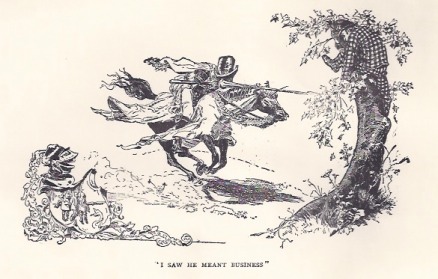
Since my copy of the book had no cover image, here is an internal illustration.

A Connecticut Yankee In King Arthur’s Court is the most famous of the Mark Twain books that nobody reads anymore. So I read it, and concluded that that’s probably the right status for it to have. It’s not bad, but it hasn’t held up nearly as well as his best-known works.

As promised by the title, this is the story of Hank Morgan, a man of Twain’s era, who finds himself back in the time of King Arthur. Realizing that his yankee ingenuity and science make him superior to the people around him, Morgan quickly establishes himself as a magician more powerful than Merlin and attempts to reform the country to match his ideals. He is often successful in the short run, but can’t always overcome the nation’s obstinacy and superstition.

Twain was a master satirist, though the target of his satire isn’t always obvious to a 21st-century mindset. I really couldn’t tell what to make of Morgan, for example: At times, he seems selfish and materialistic, announcing his plans to take over the medieval country and become rich. As the book goes on, though, he is clearly a mouthpiece for Twain’s own politics and values, bemoaning slavery and the tyranny of the upper class, while holding surprisingly vicious opinions of the church.

The main target of the satire is the mythical courtly system of King Arthur, though, and that holds up well today. In fact, his deconstruction of the traditional tale feels surprisingly modern, occasionally reminding me of my recent read of The Magicians. According to the book, the fantastical stories we have today are remembered not because they were real events, but because the people at the time were too stupid to question the grandiose claims that knights made. In fact, people even believe their own lies as soon as they make them. One section involves a woman so confident that a pen of pigs is a group of captive princesses that she can’t even believe that anyone else would think they look like pigs.

While the traditional stories of King Arthur focused on the upper classes, Twain gives equal time to the starving peasants, who are horribly abused by an unjust system. Though the narrator comes off as silly or selfish at times, his American belief in freedom and hatred of monarchy definitely makes him into the hero of the book.

The story was obviously intended to read as a light farce, though the 19th-century prose makes it a heavier work today. It’s not too bad once the reader adjusts, but it does skew the feel of the story. It also doesn’t help that Twain’s style recalls the episodic stories of the Knights of the Round Table. Though a plot is continually progressing, it does so in fits and starts. One of the most important developments, Morgan’s training of a secret group of scientific, freedom-loving men, happens almost entirely behind the scenes. More than once, the story skips over long stretches of time, and most of the progress in both Morgan’s life and his plans occur during these gaps. Twain’s skills lie in a humorist’s eye for the little details of life, but his characters and their lives always feel two-dimensional.

Of course, Twain is more than just another humorist. His scathing anger at injustice is both the book’s best and worst quality. His skewering of the knighthood is relevant today, when people still celebrate an idealistic version of those times. However, that anger culminates in a very bloody ending, with thousands killed in a war against the forces of tyranny. Exaggerated but unsatisfying, the conclusion doesn’t feel like a natural progression of the story. It seems that Twain’s own emotions ran away with him, and he lost control of his own story. That’s not a bad way to describe the book as a whole.

Grade: C+