Archive for the ‘ Books ’ Category

China Miéville – Looking for Jake (Book Review)
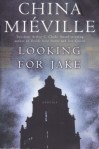
Looking For Jake cover

China Mieville - Looking For Jake

While novels are much more popular these days, I enjoy short story collections as well. Freed of the requirement to develop the same ideas for hundreds of pages, the author can toss out many different stories that capture the essence of their writing style. Also, readers tend to expect happy endings when they devote the time to a full novel, but short stories allow for much more unpredictable variety. Looking for Jake, a collection by China Miéville, has these aspects to some extent, but they seem less significant in this case.

For one thing, Miéville already tends to write stories with open, not completely happy endings. That isn’t any different in this collection than in his other works. The main difference is that he’s just setting up situations and leaving the reader to wonder how they will play out instead of letting us get to know the characters before things work out halfway for them. And since some of his novels (notably Perdido Street Station and Kraken) constantly threw ideas at the reader, the variety that these stories offer also doesn’t seem as different as it would for most authors.

The biggest difference is that his novels tend to be set in different worlds than ours, while the stories in Looking for Jake are consistently on modern-day Earth, or in the sorts of post-apocalyptic scenes that could be just a month away. This does create a different atmosphere for his writing. While Miéville’s fantasy/sci-fi “New Weird” blend had a horror influence in the mix, several of these stories could simply be classified as out-and-out horror. And his socially conscious metaphors seem more obvious in this setting, as well. This feels preachy at times (“Foundation” is about the nightmare creatures drawn to a man who participated in a real-life war crime), but is very effective in the best stories (“The Ball Room” begins as a standard ghost story, but becomes more unsettling when we wonder how a profit-driven corporation would react to such a situation).

On the whole, Looking for Jake offers an experience more like a standard Miéville novel than expected. That’s not a bad thing, though. Several of the stories are excellent. Some could have easily been dropped into one of his existing works with little effort: “Familiar” (a sympathetic look at a blob of flesh conjured by a wizard and then discarded) would fit right in to the world of New Crobuzon, and the horrors of “Details” (a creature that appears when your mind makes faces out of the random patterns in cracks or clouds) seem appropriate to the fractured world of cults in Kraken. Others don’t (yet) fit next to any novel, though. The uncertain protagonist of “Go Between”, who follows mysterious orders without knowing if he’s helping good guys, bad guys, or no one, is pure Miéville, but in a new way.

I often believe that short story collections make excellent introductions to an author. (See Neil Gaiman’s Fragile Things or Ted Chiang’s Stories of Your Life and Others.) In this case, though, Looking for Jake doesn’t feel any more like “pure” Miéville than his novels do, and it’s not as consistent as his best. Even if it’s not my go-to recommendation for new readers, though, this has quite a few stories that every fan should experience.

Grade: B-


Carl Hiaasen – Hoot (Book Review)

Hoot

Carl Hiaasen - Hoot

With Hoot, Carl Hiaasen adapts his style surprisingly well for young readers. After the adult themes are stripped out, he’s left with a slapstick story of wild Florida and the seedy businessmen who threaten it. Seen through the eyes of children, it makes for a good adventure. It starts with Roy Eberhardt, the new kid in town, noticing a barefoot boy running along and obviously not going to school. Determined to investigate it, he finds himself caught up in something that is alternately mystery, adventure, and environmental quest.

That running boy is the selling point of the book. Wild and mysterious – a lot about him is still unknown at the end – he brings the untamed corners of Florida alive and will excite kids’ imaginations. There is a bit of nuance (and outright tragedy) to his home life, which will grab the adult readers who are too jaded to fantasize about running away to the wilds.

Despite this, the other main characters just seem to be thrown together to build a plot around that boy’s adventures. Roy, the main character, is bland and never fully defined: He’s shy, but people want to be his friend. He’s tormented by bullies, but stands up to them with the kind of self-confidence that only appears in children’s stories. The book frequently tells about experiences from his past, but the sheer number of those events (such as seeing a dead body or running into wild animals) is hard to believe for a boy his age. The book’s poor grasp on Roy’s character is most apparent when he devises a plan that involves taunting a bully. The narrator explains that this was unnatural for a shy boy like Roy, which comes as a surprise to the reader who has made it through half the book without noticing a trace of shyness!

There are two other point-of-view characters, both adults who become caught up in the “seedy businessmen” side of a Hiaasen book. They are simplistic and dumber than the reader, and their relationship to their job (alternately daydreaming about promotion and having their bosses threaten to fire them) work only because the target audience is too young to understand the adult world. It’s hard to blame the book for this (it is aimed at readers slightly younger than a standard YA novel), but it does make it less interesting for adults.

The story is interesting, especially while Roy is chasing the truth in the first half of the book. Hiaasen paces it well, with stumbling blocks and unexpected threats keeping the plot unpredictable. This does fall down near the end, as Roy’s ultimate plan to win the day is telegraphed far in advance, and then doesn’t actually make as much difference as the bumbling of the bad guys.

Though flawed, Hoot provides a page-turning thrill that is unusual in books for this age. It has a great character in the “running boy” and a look at family dynamics that makes up for the otherwise silly depiction of the world. I don’t know that it would be enjoyable for many adults, but it’s a fun children’s book.

Grade: B-


Alex Kotlowitz – The Other Side of the River (Book Review)

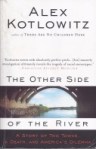
The Other Side of the River cover

Alex Kotlowitz - The Other Side of the River

Alex Kotlowitz’s The Other Side of the River is a disturbing look at race relations in America. Set in both the picturesque white town of St. Joseph and its poor black neighbor, Benton Harbor, it portrays a culture where tension and mistrust are always threatening to boil over. It’s specifically about Eric McGinnis, a black teenager who was found dead in the river that separates the two towns, but it takes the time to cover other events both large (police violence and near-riots) and small (threats and ruined meals). If this weren’t non-fiction, the extremes of these two towns would seem way too exaggerated to take seriously.

The book covers McGinnis’ death and the unresolved investigation out of chronological order, but in a natural way. There are many layers to the case, especially when it relates to the larger issue of race, and Kotlowitz makes an excellent guide through the twists and turns. This control over the information is occasionally frustrating – many chapters end on cliffhangers that feel more forced than the rest of the content, and I wish it hadn’t taken the entire book before it mentioned natural explanations for the hints of foul play at the start. Still, this sticks out mainly because the author successfully uses such a light touch most of the time.

Almost every stereotype you may have, good and bad, about either race can be confirmed by some passages of the book and challenged by others. Casual racism, community spirit, and an ignorance of the other town permeate both sides of the river. McGinnis himself seemed to be at a crossroads before he died, with plenty of signs that he was a petty thief balanced out by a clowning good nature and the universal teenage longing to belong.

The Other Side of the River’s inconclusiveness is both its strongest and weakest point. By refusing to draw any conclusions, or even state non-obvious opinions about the people who appear in the book, Kotlowitz very accurately captures the uncertainty around the issue. Americans have no answers about the state of race relations, and rarely manage to even put the current status quo into words. The book’s power doesn’t lie in the truth of what happened, but in the fact that almost all white people are convinced that the death was an accidental drowning while almost all black people believe it was a murder. Sometimes Kotlowitz’s insistence on sticking to the facts is frustrating. He refuses to call out police incompetence, but also doesn’t push back against those who insist that there must be a huge conspiracy to cover up a murder. The dry, unsensationalistic approach to such hot-button issues paints a clear picture in the reader’s mind, though, and allows them to examine the situation without knee-jerk responses.

It’s difficult to tell how much the author’s point of view influences the portrayal. Many of the stories here will be shocking to readers who aren’t used to thinking about race as such a prominent factor in our culture. But then, most of the people in the book are also surprised by what happens, and they frequently say that race is not a big deal there. In this context, those claims appear naïve if not willfully ignorant, but maybe it’s just because their life does not share the single-minded focus of the book. As an example, Kotlowitz explains about the absolute taboo on interracial dating there (one theory is that McGinnis was murdered for dating a white girl), but he immediately follows up with interviews from a large group of white girls who were dating black boys at the time. Following a standard set by one of the most popular girls in school, they didn’t seem to have much trouble with their choice.

Written during the days of the Rodney King trial and President Clinton’s call for a national conversation on race, The Other Side of the River takes an unflinching look at these issues in a much more effective, and healthy, way than either of those events managed. If it occasionally seems inconsistent, incomplete, or just plain unsatisfying, that’s an appropriate depiction of our time. It’s not intended to provide final answers, but to be a conversation-starter.

Grade: B

Neal Stephenson – Anathem (Book Review)

Anathem cover

Neal Stephenson - Anathem

I gave up on Neal Stephenson sometime during his Baroque Cycle. That ponderous history tome took pages to explain some concepts, but other times assumed the audience was already familiar with the same things as Stephenson. After several years away, though, I’m very glad that I finally tried his novel Anathem. I can see how many readers would have issues with it similar to my problems with the Baroque Cycle, but I can also say that for the right people, this is a masterpiece.

Set in a world where scholarly types remain cloistered in systems that are half-convent and half-university, this features a complex and initially confusing culture. The book is filled with slightly awkward people who like nothing more than to learn and debate each other. (They even have a formal system of “Dialog” reminiscent of Socrates.) Much of the pleasure of the book, especially at the beginning, comes from geeky characters simply talking and going about their lives. This system is low-tech, but it’s still recognizably the place where our world’s computer programmers and philosophers would end up.

The religious and academic development of this world is very different from ours, but some ideas are familiar, with direct parallels for everything from the Holocaust to Occam’s Razor. Other concepts, such as Plato’s Theory of Forms, are twisted into something recognizable but different. There is a lot to learn, but the mix of the familiar and the unfamiliar makes it go smoothly. In such a setting, the hints found in the wordplay (“anathem”, for example, being a ritual that is both “anthem” and “anathema”) are helpful rather than cloying.

The book doesn’t intentionally hold things back; Despite some of the complaints I’ve heard, it starts describing things right away, and sets up situations (such as the once-per-decade festival in which the sheltered characters can mix with civilians) that are designed to explain the system to outsiders. There is a lot to learn, though, and the bulky 900 pages is just barely enough for the novel to cover all of its material. If that scares you away, then this is not for you. However, if you enjoy genre fiction, at least part of that is probably the joy of understanding new worlds. Anathem is just an especially heady version of that experience. I think a large part of the reason that this worked for me where the Baroque Cycle failed is that Stephenson couldn’t make assumptions about which parts of this world I already knew. He (eventually) had to explain everything the reader was supposed to appreciate.

Stephenson’s flaws are still evident, but he has found a perfect vehicle for them. If the characters are sometimes simplistic, it helps that they are various types of nerds safe in a culture devoted to abstract learning. The multi-page lessons for the reader are easier to swallow in dialog format. And if obscure topics that come up in passing always become vital later on, at least the epic length of the story gives them a chance to develop naturally. Happily, at least one of Stephenson’s weak points has been addressed, as this is his first novel to feature a satisfying ending.

I can’t really say much about the plot. In my mind, avoiding spoilers means that I shouldn’t talk about the things that come up after the reader has put effort into the book, and in this case, that covers at least 80% of the story. Suffice to say that Anathem begins with a simple world seen through the eyes of youth, but quickly grows to encompass mysteries and political intrigue. It gets exciting, too: despite Stephenson’s reputation for long, dense books, he has a gift for page-turning adventure. The scope is way beyond what might be expected from the closed society of the early chapters, and by the end, the novel has developed themes even bolder than the fascinating culture it started with. The changes aren’t always welcome at the time, as I felt that I could have stayed immersed in the narrator’s initial boyhood innocence forever. But that, too, worked to the novel’s advantage, because I felt the same nostalgia he did as the situation became progressively stranger. Also, the alternate world isn’t just a clever gimmick. By the end of the story, its quirks have been justified, and it becomes clear that the differences from our reality were all in service to the story and Stephenson’s ideas.

The worst thing I can say about a novel is that only some people will consider it a work of genius. Rich and complex, taking full advantage of its 900-page length to make very foreign systems come alive, Stephenson has mixed his love of geek culture and appreciation for history into his first alternate world. It’s the sort that most writers would spend a lifetime trying to create.

Grade: A-


Lev Grossman – The Magicians (Book Review)

“Magic, Quentin discovered, wasn’t romantic at all. It was grim and repetitive and deceptive. And he worked his ass off and became very good at it.”

The Magicians cover

Lev Grossman - The Magicians

Lev Grossman’s The Magicians is a deconstructionist, more realistic take on the tropes of Harry Potter and Narnia. Magic is dangerous and mysterious, and the faux-Latin wand-waving is replaced by borderline autistic kids in a boring, demanding school. However, The Magicians isn’t just designed to make Harry Potter seem ridiculous. It’s a complex, exciting story in its own right, and while it’s aimed at an audience tired of fantasy clichés, what it offers in the end is still a fantasy tale.

What Grossman does right, he does very right. The world of magic feels consistent and thought-through in a way that Harry Potter, with its arbitrary spells and inconsistencies, never approaches. Magic is a dangerous, unknown force, and if the school’s body count is low, that’s only because the students are studying for tests instead of fighting dark lords. The fundamentals of magic are still undefined, though; The Magicians wins the reader’s acceptance partly by being more glib than other stories. Where Harry Potter spent hundreds of pages on each school year, The Magicians covers Quentin’s entire young adulthood in the stretch of one book. Many elements do feel like they would fall apart on closer examination (such as the workings of the wider magical community), and a few items (like the Quidditch equivalent) are unnecessary additions just to draw parallels to Harry Potter.

I’d hate to think that the only way to make good adult fantasy seem consistent is with Grossman’s fast pace and lack of details. In this case, at least, it works because we want to see the passage of time. The Magicians is a strong character-based book, and Quentin and his friends evolve considerably over the years. The writing doesn’t dwell on this, but the characters do change slowly but noticeably, and believably, as they age. Once the world and plot are established, Grossman often uses a single scene to stand in for an entire stretch of months or even a year. That one scene will have the detail needed both to paint a picture of the characters’ current lives and to give some assurance that the magical system is rich and consistent, even if the reader can’t stop to learn everything.

The Magicians is an exploration of aimless young adulthood. Magic is tempting, but it doesn’t automatically give meaning to life, and the power it offers can be a dangerous distraction from the concerns that keep mundane people grounded. Just as in real life, these people need to find their own way, and the latter part of the book actually becomes laugh-out-loud funny when the more stubborn believers in fairy tales try to live to those expectations. The most common criticism of this book is that the characters are whiny and unlikeable, though I always found them to be so believable that that wasn’t a concern. The conclusion offers some resolution to this, but is also a little frustrating: There are at least three scenes that feel like the set-up to a final status quo, and every one is suddenly reversed by the next. The actual ending feels a little arbitrary, as it’s the least satisfying and the best for a sequel, but at least it promises that the sequel will be a very different story. Quentin grows up more over the course of this book than Harry Potter does in seven, and that’s a great argument for why his story should be allowed to continue.

Grade: B+

David Anthony Durham – Sacred Band (Book Review)

Sacred Band cover

David Anthony Durham - Sacred Band

David Anthony Durham’s Acacia was wordy and awkwardly paced, but raised unusually nuanced moral questions for a fantasy story. The sequel, The Other Lands, lost sight of the moral topics but made up for it with tighter writing. While Sacred Band doesn’t fully live up to the potential of either, it makes use of both books’ strengths to provide the most satisfying volume of the trilogy.

Picking up immediately where the second novel left off, this could easily have been the latter half of one big book. War is looming, and the Acacian royal siblings are scattered around the world dealing with their own problems. The question isn’t just whether the “good guys” will win, but what the world will look like after they do. Their family has been responsible for too many atrocities for the reader to simply accept their victory as a happy ending, and all the siblings have different visions of how, or if, they should change that legacy.

These ethical questions aren’t always subtle, but they do fit in the story very naturally. Meanwhile, Durham includes a few too many subplots and is drawn to fantasy clichés, but he writes with a fluidity that makes this rise above most earnest high fantasy. Sacred Band’s biggest strength, though, is in drawing on the previous books in the trilogy. Though sometimes messy and inconsistent, they built up a strong emotional core, and this final novel isn’t afraid to cash in on everything that they set up. Almost every plot thread from the series is tied up in a way that feels both satisfying to the reader and well-earned for the character.

Durham has strong ideas and solid writing. I do hope that for his next novel, he sets his sights higher than princes, princesses, and dragons, and keeps the focus on the more original parts of his vision. However, the Acacia trilogy was an enjoyable read wrapped up in a satisfying way, and I don’t want to sound too hard on the current book. Where Sacred Band is flawed, it’s highlighting the marked improvements its author has already made in the course of a few years, and when it’s at its best, it provides some unique thrills for high fantasy.

Grade: B

Dava Sobel – Longitude (Book Review)

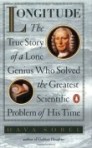
Longitude cover

Dava Sobel - Longitude

There are many things we take for granted today, but sometimes it’s surprising just how different life was before certain scientific advances. For example, did you know that well into the 18th century, people could determine their latitude by watching the sun but had no way to find their longitude? Ships would become lost or even crash because they misjudged their position by hundreds of miles, and in 1714 England offered a huge prize to the first person to find a solution to the problem. Dava Sobel’s Longitude is the story of this problem, and specifically of clockmaker John Harrison who developed timepieces accurate enough to offer a solution.

Though Sobel sets the story up well, with an easy to understand explanation of what longitude is and how people tried to calculate it, I was otherwise very disappointed with her writing. The early chapters, which establish the state of things before Harrison entered the picture, are unfocused and often repeat each other. A plot does develop once Harrison becomes involved, but it’s so sensationalistic as to be untrustworthy. Harrison is a noble hero, working alone on his clock-based answer against a cabal of scientists who insist that the only feasible solution must be based on astronomy. Harrison is an interesting figure – a self-taught clockmaker who advanced the state of the art significantly, and was such a perfectionist that he might have received the prize much earlier if he hadn’t pointed out the flaws in his own clocks. However, Sobel elevates him and his profession to a near-mystical status. “Time is to clock as mind is to brain”, she announces, making her apparently one of the few people in the world who think that brains share a common mind in the same way clocks measure a universal time. Or maybe she is denying any interaction between the mind and brain, and thinks they have a simple relationship in which one merely observes the other. She doesn’t really explain the statement, other than the equally confusing follow-up that clocks “somehow contain” time. She compares Harrison to Christ, and for some reason declares his first sea-clock superior to a “Hollywood time machine”.

Even when Sobel isn’t being outright confusing, the writing is exaggerated and dramatic. She sides strongly with Harrison, railing against the dirty tricks of his astronomical oppressors and pointing out every flaw in their plans while dismissing issues with the clock-based technique. I found it to be so overdone that I questioned the book’s authority, frequently wondering what I wasn’t being told. By the end, when Sobel is literally moved to tears by Harrison’s life, I felt completely uninvested in the characters or story.

Longitude’s saving graces are that it does tell an interesting and little-known story, and can be read very quickly. Considering the quality of the writing, though, it’s still difficult to say who would find it worth reading.

Grade: C-


Paths of Doom Books

The Lost Sword coverSete-Ka's Dream Quest coverRealm of the Enchanter cover

Coincidentally, after writing about Choose Your Own Adventure (CYOA) stories, I happened to find three “Paths of Doom” books that I’d been given and stashed away years ago. They didn’t look like something I’d normally pay much attention to, but it was a perfect time to check them out.

For the most part, this line of books doesn’t stray too far from the classic CYOA formula. The simple journeyman writing leads to choices with often arbitrary consequences, the only real innovation being that the reader must find the single happy ending. I also found it interesting that these books are written in the third person, though most CYOAs are about the adventures that “you” have. The settings are consistently high fantasy, and are probably best for slightly higher age levels than the original CYOAs, due to the larger word count and frequent deaths.

Overall, I thought that these minor tweaks worked well. By featuring protagonists who were not supposed to be me, the books were able to offer a little more variety than I expected. The single ideal ending also gave them a puzzle-like quality, which should work well for anyone who carefully bookmarks the branching points and tries to read it all. It would probably be more frustrating for people who just want to read through a few times from the beginning. And while the writing certainly isn’t very good by the standards of standard linear stories, these do read more coherently than most branching plot books. However, the final result is still a little too silly and similar to the gimmicky 80’s books for me to truly recommend them, either.

It’s also worth noting how inconsistent the formats of these different books are. Two feature storytelling text in the bold sentences that offer choices, while one simply says “If the hero does this, turn to page XX.” One fits the instructions about how to use the book on the same page that the story opens, while the others separate those two parts. One uses a different font size than the others. And all three take a different structural approach to how the stories branch and whether two different threads can rejoin each other. While those don’t necessarily make the books worse, they do make me doubt that there was any real planning or long-term support for this line. It’s not surprising that, as far as I can tell, it went out of print almost immediately.

Here are my impressions of the books that I read.

Continue reading

Scott Westerfield – Goliath (Book Review)

Goliath cover

Scott Westerfield - Goliath

Goliath concludes the trilogy that Scott Westerfield began in Leviathan. That first book was a revelation, being both a thrilling adventure and the introduction to an original world. The pace faltered a little in Behemoth, if only because the sequel couldn’t seem as new and surprising as the first one. But this third book makes good on the promise of the series, bringing everything to a fun and satisfying conclusion.

The alternate-WWI premise, with a steampunk empire battling against genetic engineering, is now well-established, so the book jumps right into the plot. Girl-disguised-as-boy Deryn finds her web of lies becoming more difficult to maintain, and Austrian prince in hiding Alek finds a new hope as he struggles with mixed loyalties. However, Goliath would have benefitted from more introductory action. While the other two books had life-or-death struggles within the first couple chapters, this just sets up the long-running plots for the books. Even when Deryn comes face-to-face with vicious Russian bears of war, it feels strangely safe.

Yes, there are Russian bears which have been engineered as war machines. There are also mechanical walkers in the Mexican revolution, flying platforms over New York City, Japanese war-beasts, and a burgeoning film industry. Goliath may not have a new world to introduce, but it explores as much of it as the previous two books put together. It’s intriguing and, even more importantly, easy to accept, as Westerfield has made a world that feels internally consistent and fits cleverly in with real history. (The afterward, as always, is well worth reading, as it explains both the little elements of reality that the book makes use of and the places where it deviates from our history. While no one would mistake this for a historical novel, it has real things to teach and makes the actual events as intriguing as the fictional ones.)

Fortunately, the slower beginning pays off. The plots it sets in motion mix with the arc of the full trilogy to create an exciting, high-stakes second half. There was always an pleasant fantasy to the story of children hiding their identities in a war, but the reality of this is deadly not just for them, but for the people and nations they love. These dangers seem real by the end, and both heroes find themselves needing to decide a new future path for themselves. They grow up without betraying the characters that they have always been.

The romantic subplot that began to form in the second book plays a larger role here, and it is also effective. I am not generally a fan of storybook love, and I even groaned a little when I read the opening dedication (“To everyone who loves a long-secret romance, revealed at last”), but I have to admit that it worked here. There are no easy answers or convenient plot devices. Every step forward in the potential romance involves sacrifice and in-character decisions.

One defining part of the Leviathan trilogy has always been Keith Thompson’s illustrations, which give the books a period atmosphere and also help the reader visualize the stranger aspects of this world. Though the series no longer introduces completely new concepts every chapter, the art is still an integral part of the book. This book actually provides more illustrations than either of the previous ones, fleshing out the story and providing visual hooks.

Goliath is an appropriate ending to a standout Young Adult series: Providing payoff to the initial hooks and interesting new elements of its own, this deftly guides the story (both for our heroes and the alternate war-torn world) to a well-earned ending that never feels easy to predict.

Grade: B+


Michael Kupperman – Mark Twain’s Autobiography: 1910 – 2010 (Book Review)

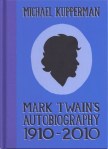
Mark Twain's Autobiography: 1910 - 2010 cover

Michael Kupperman - Mark Twain's Autobiography: 1910 - 2010

Michael Kupperman is a comedian best known for the surrealist Tales Designed To Thrizzle comic book. (I also recommend his Twitter account.) With Mark Twain’s Autobiography: 1910 – 2010, he tries his hand at a (barely) full-length book. Based on the premise that Twain was actually immortal, this tells of the adventures that the man has had in the hundred years since his death was “exaggerated” again.

It turns out that Kupperman is naturally fit for the short-form humor of Twitter or comics that change every few pages. This book features 36 chapters in 150 pages – with half of those pages being illustrations. And the longer chapters even contain sudden shifts, such as the time that Twain investigates a ghost in Einstein’s lab, decides to go time-traveling, meets Cyrano and zombies, and then ends up in a movie studio.

Example of inside pages

Fortunately, the absurdist humor works, frequently providing laugh-out-loud moments. But make no mistake: absurdist humor is the reason to read this. The book is aimed at people who are automatically amused by “Hobo Mark Twain” and “Mark Twain in Space!”, not people looking for humor based on the real Mark Twain. The prose is laughably simplistic, with none of the intelligence or satire that Twain would have brought to an autobiography, and the book generally ignores what we know about the man’s personality. There are occasional references to his love of rafting or his books, but the fiercely opinionated and moral man is replaced with a foolish and self-centered lover of adventure.

Mark Twain’s Autobiography works best as a bathroom reader. It’s quick and amusing, only demanding a couple minutes of attention at a time. With its strange approach and truly funny stories, it stands above most of the humor books that market themselves that way. But in the tradition of bathroom readers, it will be forgotten ten minutes later.

Grade: B-