Archive for the ‘ Country ’ Category

Nick 13 – Nick 13 (Music Review)

Nick 13 cover

Nick 13 - Nick 13

With his self-titled solo debut, Nick 13 joins the growing ranks of punk singers gone country. What makes this case unique is just how country it is. Most projects like this still let the punk roots show through and seem too rough to traditional country audiences. This is pure mellow music whose riffs and rhythm guitar strongly evoke open western vistas. Sparse soundscapes support his distinctive voice, with Nick 13 singing over a simple melody and the band contributing flourishes between his lines.

Of course, his band Tiger Army was always a little unusual in this regard. Their psychobilly-tinged rock was comparatively mellow and introspective, with Nick 13’s mellow, squeaky-clean voice sounding a little too innocent for their chosen scene. Despite their popularity, Tiger Army’s style never felt right to me. Even here, Nick 13’s voice sounds so soft that it’s easy to imagine the typical Western characters dismissing him as too soft and effeminate. He’d be the guy on the dude ranch that the grizzled ranchers joke about while sitting around the campfire. By the third act of the story, though, the sincerity and depth of this ex-city slicker would win them over.

The subject matter is traditional, with wandering, love, and regrets about vaguely-defined sins taking the forefront. A couple times, such as “Cupid’s Victim”, Nick 13 bases the lyrics on metaphors that would seem more appropriate to Tiger Army than a simple country song, but that’s the only (slight) hint that he isn’t native to this genre. And really, most modern country artists are defying tradition more than that.

If anything, Nick 13 is too faithful to the laid-back style he is using here. The songs are consistent and enjoyable, but there are no radio-ready singles here. Only the upbeat “Gambler’s Life” even attempts a catchy refrain or memorable beat, but it still seems understated and more at home on the album than as a single. It’s safe to say that he would consider this a feature, not a bug, and is not likely to make any standalone hits even if he releases more albums like this. It’s hard to argue with that, though: The ten songs found here have absolutely no missteps, and Nick 13 already sounds perfectly at home in this new band. There is enough musical and lyrical variety to keep this from being repetitive. If it is arguably all “filler”, it’s good filler.

Few punk singers have embarrassed themselves when dabbling in country, but they rarely sound completely natural either. At best, those works can be accepted as a progression after years of experience, but the punk history still informs the new work. Here, though, Nick 13 steps into his country western sound like it’s a second skin. In many ways, it seems that he has finally found his perfect niche. If Tiger Army ended to allow for more releases like this, I wouldn’t be disappointed at all.

Grade: B

Wanda Jackson – The Party Ain’t Over (Music Review)

The Party Ain't Over cover

Wanda Jackson - The Party Ain't Over

When Jack White engineered a comeback album for Loretta Lynn, the result was stunning. Van Lear Rose’s collection of both covers and originals introduced Lynn to a new generation, and presented her as a still-talented and interesting woman. Now White is trying again with Wanda Jackson’s The Party Ain’t Over, but with less success.

As one of the first rockabilly singers, and still one of the few notable female ones, Jackson deserves this recognition as much as Lynn. However, she hasn’t aged quite as well. In some ways, a direct comparison to Van Lear Rose is unfair, since Jackson’s harder style favors youth, and original songs were never as central to her persona. However, it’s still the natural approach. Either way, this collection of competently-performed covers can’t avoid being disappointing.

She still has a distinctive growl on songs such as the “Shakin’ All Over” and “Nervous Breakdown”, but little range or energy. White tries to compensate with a band of talented young rock musicians, but there is only so much they can do. This is supposed to be Jackson’s album, and even though the music occasionally threatens to drown her out, she stays at the center. They never aim to be more than a good cover band.

Of the more rocking songs, “Thunder On The Mountain” is by far the best. This five-year-old Dylan song has gone almost uncovered to date, and it takes some serious instrumental scaling up and lyrical paring down to bring it in line with Jackson’s style. It’s the one song here that feels transformed into something new, and while it still would have benefitted from a different vocalist, it realizes the vision that White must have had when he decided to record albums with his influences.

Jackson is at her best with slower, sultrier songs, such as “Teach Me Tonight” and a surprising performance of Amy Winehouse’s “You Know I’m No Good”. She brings a world-weary perspective and experienced sultriness to these works, turning her age to a strength.

The main problem with The Party Ain’t Over may be that it sets its aims too low. It rarely tries to do more than pay tribute to classic songs, and that leaves no room for a tribute to Jackson. Without exception, these songs can easily be judged to be worse than the originals, and worse than Jackson could have done in her prime. Her personality barely comes through, with “Dust On The Bible” being the only choice that sounds like it came from Jackson’s heart. Winehouse’s “little carpet burns”, the gimmicky “Rum And Coca-Cola”, and the overreaching energy just don’t feel right for Jackson today. White succeeded with Lynn’s Van Lear Rose by making it into an honest snapshot of its subject, but this new work buries Jackson under all the glitz and fancy production. It’s hard to tell whether this was a miscalculation or the only thing that would work for her, but either way, it doesn’t do justice to this rock-n-roll icon.

Grade: C

Old 97′s – The Grand Theatre, Volume Two (Music Review)

The Grand Theatre, Volume Two cover

Old 97's - The Grand Theatre, Volume Two

Judging by the album artwork, the Old 97’s latest release tries to draw a sharp contrast from The Grand Theatre, Volume One. While that one featured a sweeping picture of a stately theater, Volume Two uses the high-contrast, washed-out aesthetic of DIY punk photocopies. The choice arguably has some merit, since this volume is focused more on the simple, repetitive rock that makes up the core of the Old 97’s sound. If it was meant to define the album, though, it’s a little disappointing: Volume One was most notable for its broad range, including a few songs in this very style. Volume Two, though it still features strong songwriting, feels more like a step back than an alternate approach.

The basic approach is a straightforward country-rock beat with simple vocals and upbeat guitar. These songs are usually showcases for clever lyrics, but when those fall flat (“You call it rain/I call it the parking lot gets a bath”), there’s little left to justify the song. However, the band’s best songs are noteworthy. “The Actor” is a catchy but despairing character study whose sparse style fit the washed-up title character, and “White Port” is a punk sea shanty that provides a welcome exception to the mostly-consistent sound of the album. “No Simple Machine” is a crowd-pleasing story about women and men who want more than the standard shallow love interests. I question the motives of the narrator of that song, who seems a bit more bitter and boastful than may have been intended, but it’s an example of the band’s lyrics at their finest.

Both Grande Theatre volumes have made the perhaps questionable choice of filling the middle of the album with standouts while starting and ending with the more generic or less notable songs. It’s not the best way to grab listeners, though it did make both albums fun to discover over time rather than all at once. Volume Two doesn’t quite live up to the standard set by the first, but it’s always great to hear a band with such excellent pop instincts refusing to stand still.

Grade: B-


Ray Wylie Hubbard – A. Enlightenment B. Endarkenment (Hint: There Is No C) (Music Review)

A. Enlightenment B. Endarkenment (Hint: There Is No C) cover

Ray Wylie Hubbard - A. Enlightenment B. Endarkenment (Hint: There Is No C)

Ray Wylie Hubbard has been around for decades, but his country-blues style has never found popular appeal. On 2010’s A. Enlightenment B. Endarkenment (Hint: There Is No C), he seems perfectly comfortable with his place in the industry. This is the sound of an experienced, confident artist making the music he wants.

Hubbard’s sound is calm and even, singing over rhythmic, bass-heavy music that recalls the days before country and blues evolved into separate genres. His voice betrays his age, but in this genre, trading energy for soul is always worthwhile. His attitude feels perfectly authentic to his Texas home and blues influence, though it is rarely found in mainstream country. Hubbard is as likely to sing about drugs and wayward women as everyday country life, and these two sides to his persona keep the songs varied and interesting. Bridging the gap are the occasional songs celebrating the music itself (“Down Home Country Blues”) and religious tracks that go beyond the lazy cliches of the genre (“The Four Horsemen of the Apocalypse”).

Hubbard maybe gets a little too slow when he channels the quiet country life (“Tornado Ripe” goes nowhere, and “Wasp’s Nest” is frankly boring), but that’s as close as the album comes to a misstep. It’s an easy one to forgive when he’s willing to go just as far in the opposite direction, with a couple experiments (such as a guest vocalist groaning “Cada día es la Día de los Muertos” over halting drums and electric guitar) that only work due to his laid-back attitude and the wide ground he covers.

Among the most notable songs: The title track’s dreamlike lyrics fit its name and set the tone for the album. “Loose” is an upbeat story reminiscent of John Prine that examines the word “loose” and turns it into an empowering description for a woman. “Black Wings” is a mournful dirge that hints at how important music is to Hubbard when he mixes references to specific instruments and songs in with the emotional lyrics.

A. Enlightenment shows Hubbard arguably at his peak, and makes his lifetime out of the spotlight seem like a crime. Music, life, religion and sin coexist in a string of honest songs that celebrate what country music should be.

Grade: A-


Hank3’s Four September Releases (Music Review)

Though Hank Williams III, or Hank3, revitalized the country music scene with his metal-influenced outlaw approach, he’s seemed to be on a slow decline ever since the seminal Straight To Hell. Though even his lesser output was still notable, everyone has been wondering what would happen once his contract with Curb Records finally ended and their legal and creative feuds would finally be done. As 2011 began and Hank3 was free, though, there were several months of no news at all. When news finally did come, it made up for the long silence: Hank3 released four new albums on the same day in early September, showcasing the variety of directions he was now free to go in.

The albums are out now, and they definitely do have an impressive variety and dedication. They sometimes make an argument that his corporate controllers had kept him from embarrassing mistakes, but they also have some pretty amazing moments that could never have been accomplished as long as he was forced to play it safe and worry about commercial concerns. These may not be the best albums of 2011, but it is the biggest musical event of the year.

Continue reading

Bob Wayne – Outlaw Carnie (Music Review)

Outlaw Carnie cover

Bob Wayne – Outlaw Carnie

One of the big debates in modern underground country is whether the “outlaw” style revitalized by Hank III has run its course. If you aren’t tired of it yet, then check out Bob Wayne’s Outlaw Carnie album. It may very well be the one that pushes you over the edge.

That’s not to say you won’t enjoy it. A lot of the songs on this album are simple fun, with a real understanding of how to strip a story down to the bare essence of music and lyrics. Wayne’s songwriting is outstanding. But the life depicted here seems almost like a parody of outlaw country: Drinking, fighting, robbing banks, and shooting the cheaters at the card table. Even the songs that start out with some vulnerability are feints, such as the lament about a cheating woman that turns into a claim that he won by cheating on her more. The music is similarly over the top, clearly showing Wayne’s metal roots. Though their country performance is serious, the unsubtle, loud music is at least as far from the country styles of a generation ago as modern pop country is.

The songs are a little better individually than they are as a whole. Apparently Wayne’s vision of a country outlaw involves stubbornly giving himself the victory in almost every story. Whether bragging that his band will back him up in any fight, somehow winning a blind five-against-one gunfight, or even having the ghost of Johnny Cash literally come down from the sky to save him, Wayne doesn’t seem aware of the power of songs about loss. Just look at “Mack”, the story of a “truck-drivin’, gun totin’, meth snorting, blue collar, true American hero”. Wayne never explains what makes this murderous drug smuggler a hero, other than the fact that he’s the protagonist of the song, and that the dealer he kills happens to be worse.

You would never guess much about the real Wayne – a recovering addict who has had experience fighting off demons – from the mask he puts on here. Only “Driven By Demons” shows how a song can be rowdy and rebellious while still acknowledging the cost of that lifestyle. I’m not saying that every one needs to end with the narrator paying a price, but a few more like that would have made the album feel a lot more fleshed out.

Wayne lets the bravado slip for a single song, “Blood to Dust,” which has the most fascinating story and is apparently true. Despite some amateur lyrics (“I was born in 1977, the year that Elvis died and went to Heaven”), it builds up to one of the best country music refrains of the past few years:

They say some things in our lives are best forgotten,

I say those are things that make you who you are.

So be proud of what you got, and where you come from,

‘Cause from blood to dust well it ain’t very far.

This would be a standout track on almost any album.

But for every bright point, Outlaw Carnie has something to counter it. “2012” is an embarrassing spoken-word album closer, mixing junk science with bigotry to argue that an apocalypse would be a blessing. (Did you know the fact that “them Muslims, they’re all multiplying” is one of the reasons that we’d all be better off dead?)

Outlaw Country is an incredibly uneven work. Bob Wayne can write excellent and incisive lyrics, but has no vision for combining them into a cohesive whole. When the quality keeps up for an entire song, the results are great. At his worst, though, he manages to bring down the good songs by association. I enjoy a lot of this, but don’t have much desire to listen to to half of the songs on it any more. It will be fascinating to see how Wayne grows as an artist from here. At least, I sincerely hope that he grows.

Grade: C+

Steve Earle – I’ll Never Get Out of This World Alive (Music Review)

I'll Never Get Out of This World Alive cover

Steve Earle - I'll Never Get Out of This World Alive

“Was a time I would of said them days was gone, but I’m givin’ it another whirl”, sings Steve Earle at the opening of I’ll Never Get Out of This World Alive. And he is – this album is a return to form for a singer-songwriter who has been frustratingly unfocused of late. The sticker on the CD cover emphasizes this, announcing it as the “first album of new songs in four years”, glossing over the recent live and cover albums. (You’d need to go back seven years, to The Revolution Starts Now, to find his last truly good album.)

As is tradition for Earle, that title track is one of the album standouts and sets the theme for the songs that follow. In this case, “Waitin’ On The Sky” is a personal look back on his life, and introduces a collection of songs loosely about mortality and endings. This is a turn from the more overtly political songs that made up his strongest output in the past decade. Earle only approaches politics in a couple songs: “The Gulf of Mexico” portrays the recent oil spill through the eyes of blue-collar oil workers who know no other way of life, and “God Is God” explains that only a fool would claim to speak for God or know His intent. They seem perfectly harmless and self-evident, but it’s part of Earle’s genius that he can make the claims he does in the conservative language of traditional songs. Most songwriters would have stumbled horribly when hinting at the way large corporations destroy traditions or implying that God is distant from our daily life.

Those political songs are few, though, and the everyman folksiness pervades the entire album. Earle is a countrified version of Springsteen, with a raspy, blues-infused edge that producer T. Bone Burnett brings to the surface here. As a reassuring, traditional Steve Earle album, the review could easily be lifted from one of his past albums: Murder ballad “Molly-O” is an original, but sounds like it must have been a traditional song that was somehow overlooked before. The storytelling songs (“I Am A Wanderer” and “Lonely Are The Free”, along with the opener) showcase Earle’s strengths, while the love songs (like “Every Part Of Me”) are decent but never the highlights. The expected male-female duet, “Heaven or Hell”, is a little weaker than normal – the song needs a little more emotion to sell the claim “I just can’t tell [if] this kinda love comes from Heaven or Hell”. Then there is a half-successful experiment, in this case “Meet Me In the Alleyway”. It’s got a great sound reminiscent of Tom Waits doing Louisiana blues, but its story about dark New Orleans magic is uninteresting.

No songs are bad, though, and every one feels like it has a place on this album. The lesser ones only earn that description next to the frankly stunning standouts. Don’t worry about Steve Earle’s recent missteps; After a 25-year career, I’ll Never Get Out of This World Alive still sounds like the work of a musician in his prime.

Grade: B+

Frankie and Johnny (Music Review)

Frankie and Johnny cover

Various Artists - Frankie and Johnny

I’ve seen quite a few albums dedicated to murder ballads, but a CD filled with different renditions of a single one is a bold new idea. “Frankie and Johnny”, the chosen song, is unusual in that it’s about a wronged woman killing her man. It’s one of the classic murder ballads, but not nearly as well-known these days as “Stagger Lee” or “Long Black Veil”, so the tracks still feel fresh. I’d never heard of Righteous Records before this, but I’m intrigued now. Unfortunately, my impression of them after this is mixed.

To begin with, the songs are excellent. All from the first half of the 20th century, the sound and production quality is uniformly clear and rich. That’s unusual for recordings from this era, and many classic, well-written songs are done an injustice by the muddy, washed-out versions we have today. Whether Righteous was responsible for the remastering of these, or if they were just very discriminating in their selection, they deserve congratulations for putting together a compilation that retains the feeling the music must have had at the time it was performed.

Unfortunately, Righteous skimps in other ways. The same heavily-pixelated art is used repeatedly across the CD and booklet, despite having nothing obvious to do with the story, and there is at least one typo in the track list. In place of the rich, fascinating liner notes a project like this could have yielded, all we have is a short essay apparently cribbed from the internet. (Its saving grace is referring readers to Planet Slade, possibly the best website for the history of murder ballads.) There aren’t even any details about when the songs were recorded, or what makes each version notable.

Fortunately, the songs are more important than the album they came in. Despite telling the same story, they are not simply copies of each other. The elements of the songs, both musically and lyrically, are recognizable from track to track, but with constant variations. Across blues, jazz, and country roots styles, it flows together into one long but interesting performance, much like something that today’s culture of remixes might provide. The songs generally agree on some details (when Frankie found out Johnny was “doing her wrong”, she shot him three times with a .44), but constantly change up where the events occurred, what they were wearing, and who the focus should be on. (Ironically, the parts they agree on differ from the actual historical event that inspired the song: Johnny, whose real name was Albert, was shot a single time from a .38 pistol. All the songs gloss over the fact that Frankie was a prostitute and Albert her pimp.) Only Champion Jack Dupree drastically changes the story, turning Johnny into a murderous robber who survives to be captured by the law.

The frustrating part is that, out of the fifteen renditions provided here, seven are instrumentals. A few music-only tracks would add some enjoyable variety, as well as emphasizing the way a recognizable melody is adapted across multiple artists’ styles. But it borders on false advertising that almost half of the songs on this “murder ballad” compilation have no murder in them.

My ideal version of this would replace a few of those with other, more varied recordings of the songs. The perfunctory essay in the CD booklet even mentions that this has been performed by Elvis, Steve Wonder, Gene Simmons and others, but presumably those were too difficult to license. Still, it’s disappointing that they don’t include any of the seven artists they list to demonstrate that the song is a classic.

I do have some misgivings about this compilation, but it is an important document of a little-remembered song. The target audience is probably not very large, but those who like murder ballads or classic recordings will find a lot to like here.

Grade: B-

Old 97’s – The Grand Theatre, Volume One (Music Review)

The Grand Theatre, Volume One cover

Old 97's - The Grand Theatre, Volume One

I have to admit that I’ve only paid attention to the Old 97’s sporadically. While Wreck Your Life is one of the classic albums of the alt-country era (it’s one of the first CDs I’ll point someone to if they’re curious about what country offers beyond the radio), most of their output is a lot more hit-and-miss. I’ve learned that a typical Old 97’s album has one or two great songs and a bunch of throwaway fluff. But I’m glad I decided to check out their 2010 album, The Grand Theatre, Volume One.

Grand Theatre finds the band with a much broader range than they did in their Bloodshot Records days. A couple of excellent country songs are found in the middle, and honestly, they’re still the highlight. Many of the tracks focus much more on the rock side of their “country-rock” formula, with mixed results. Overall, they have a Wilco-meets-Fountains of Wayne simplicity that speaks of older men confidently stepping into territory normally reserved for the young. When they focus on more complex musical arrangements that show off their country roots, such as the last half of “The Magician”, they give a rarely-heard depth to pop-rock. When the music takes a backstage to the sometimes pointless singing, such as the first half of “The Magician”, the only saving grace is that frontman Rhett Miller seems to be in a hurry to get the song over with.

Both for good and ill, those aren’t the only styles that the Old 97’s experiment with. A couple songs slip almost into a stoner vibe, but from very different directions: “You Were Born To Be In Battle” features Miller singing over a smooth, dark country groove, while the slow-building “Please Hold On While the Train Is Moving” could almost be a trippy Cracker outtake. Both are good, but per the usual Old 97’s rule, the country song is the memorable one.

The only complete failures on the album are the two attempts at smooth ballads, which are as insipid as their names imply (“Love Is What You Are” and “The Beauty Marks”). But the highlights are worth waiting for. “A State Of Texas” demonstrates just what the band was aiming for through the country-rock songs on the album, and succeeds enough to justify any missteps elsewhere. And “Champaign, Illinois” puts a brash, confident twist on the music from “Desolation Row” but provides completely new lyrics which, while maybe not Dylan-level, are still good enough to justify that bold move.

It appears that any Old 97’s album will be marked by highs and lows. However, The Grand Theatre’s highs are especially memorable, and most of the lesser tracks are still strong enough to add to the experience. This isn’t the sort of classic that I used to want from each Old 97’s release, but it’s a polished work from a band that sounds like they could keep doing this forever. After this album, I’ve accepted that that’s still a good thing.

Grade: B

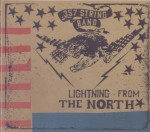
.357 String Band – Lightning From The North (Music Review)

Lightning From The North cover

.357 String Band - Lightning From The North

One common approach for alt country bands is to mix traditional instrumentation with punk-influenced vocals. I’m sure that many people who could otherwise see this music as a reverent, skilled alternative to modern pop country are too put off by the rough singing to appreciate it, and I’ve wondered how this contributes to the divides within country music. Personally, though, I’m a fan of that sound. The aggressive singing is a battle cry for bands trying to reclaim a musical heritage that has been watered down by mainstream expectations, and if this sub-genre has run too far from the wholesome, moral side of country, well, I’m the wrong person to complain to about murder ballads and outlaw songs.

.357 String Band is a perfect example of this style, with their main distinction being their focus on bluegrass instead of more general country. (They call their sound “streetgrass”, but I don’t know that a new term is needed for it.) The members are very skilled country musicians, whose playing adds a lot of complexity to the traditional bluegrass sounds, and with production that retains the energy and layers that most classic bluegrass recordings sadly lose. The lyrics are unmistakably country when considered song-by-song, though very few classic singers would have included so many songs being no-good troublemakers without a few gospel songs for balance. But the singing, of course, is where the band would lose most traditionalists.

I have mixed feelings about the singing on Lightning From The North. Some songs are perfect examples of why this punk approach can mix so naturally with country – witness the authenticity it gives to the hard-partying life in “Dust Devil”, or the world-weariness it brings to the more tender “The Days Engrave”. In many other songs, though, the vocals fall a little flat. The singer seems more intent on hitting all the words at the right time and getting through the song than with actually portraying the emotions that should be behind it. “The Harvest Is Past”, for example, laments social decline (“thieves and beggars prosper while good men wither and die”) with all the subtlety of a high schooler who has been called on to read Shakespeare to his English class, This album features two singers, with the good performances generally coming from Joe Huber, and the weaker ones from Derek Dunn. Both singers have their shares of successes and failures, though. Whether this is from the punk influence on modern country, or the fact that bluegrass music traditionally pushes its performers to stay fast and upbeat on all songs, the band would be a lot better if they would slow down and emote at times.

Lightning From The North is an occasionally uneven, but usually good, collection of songs. It finds a surprising amount of variety in bluegrass, a style that often sounds the same on the downbeat songs as the upbeat ones. My concerns about the singing aside, this is a solid entry in a style that is all too rare among alt country bands.

Grade: B