Archive for the ‘ Music ’ Category

Thao & The Get Down Stay Down – We the Common (Music Review)
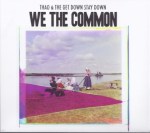
We the Common cover

Thao & The Get Down Stay Down – We the Common

Thao Nguyen has a voice that mixes simple honesty with a winking cleverness. With stripped down instrumentation and a slight reverb added to her singing, it’s attention-grabbing. Nguyen’s utter confidence and uncomplicated voice make her into an indie success story. However, on We the Common, performing as Thao & The Get Down Stay Down, she rarely sticks to that basic winning formula.

Admittedly, it would get a little repetitive if she never did more than that. The epitome of the simple folksy style that pulled me in is “Kindness Be Conceived”, a twee duet with Joanna Newsom. It’s hooky and adorable, but no one would want to listen to variations on that for a forty minutes. The best model for her would be the opening track, “We the Common (For Valerie Bolden)”. It starts and ends with Nguyen on her guitar, alternately representing a vulnerable woman and a united people (the song apparently inspired by the story of someone she met when visiting a woman’s prison). In the middle, the band joins her with a slowly building beat and a wall of sound to fortify the conviction that she presents. I want to hear more songs like that.

Otherwise, the really compelling moments come and go throughout the tracks. The Get Down Stay Down are talented and versatile, but so varied that the album has no consistency beyond Nguyen’s voice. (The band is perhaps nothing more than a rotating cast brought in to fulfill her vision, as fourteen other performers are credited, not counting the ones who contribute only background vocals.) There’s no commonality between the slow-as-molasses “Clouds For Brains” and the clanking mechanical soundscape of “City”. Elsewhere, some songs are bouncy and poppy, while others throw in a soulful saxophone or even organ. The vocals are intriguing in almost every case, and even most of the weaker songs would make me curious about the rest of the album if I heard them in isolation. Put together, though, the album only sporadically lives up to the potential that the pieces promise.

Grade: B-
 

Ray Wylie Hubbard – The Grifter’s Hymnal (Music Review)

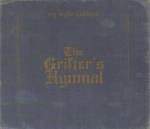
The Grifter's Hymnal cover

Ray Wylie Hubbard – The Grifter’s Hymnal

After I named Ray Wylie Hubbard’s previous album one of the best albums I discovered in 2011, you’d think that I’d know to check out his next one as soon as it came out. But I missed out again, waiting until now to try his 2012 release The Grifter’s Hymnal. And while I don’t think this one is quite going to make it on my year-end list, it’s a reminder that I need to pay closer attention to Hubbard.

Hubbard is an old country bluesman with a penchant for slide guitar, but he’s more versatile and experimental than you’d expect from that description. He sounds a little more settled down this time, which is probably why it didn’t quite live up to my expectations. But still, it features the rocking, irreverent “New Year’s Eve at the Gates of Hell”, half-spoken stories of his restless youth in “Mother Blues”, and “Henhouse”, a catchy tale that rambles through country life and exaggerated character studies. Mostly about sinning, with a few heartfelt moments about God, Hubbard still sounds wild and fun despite the knowing way he looks back on life. And songs like “Moss and Flowers” provide a soulful counterpoint to his jokester moments. This is still a varied, well-rounded album.

Even when he’s playing around, music is serious business to Hubbard. Throughout tales of sex, drugs, and faith, it’s obvious that music is what really drives him. Some songs address this directly, such as the DIY blues set-up of “Coricidin Bottle”, while others just mix music directly in with the rest of his life. When he is judged in “New Year’s Eve at the Gates of Hell”, Hubbard mainly considers his musical accomplishments (“Sure I drank a lot of gin and tonic, but I never threw away my Panasonic.”) It’s a philosophy that should make Hubbard a friend to any music lover.

Though my preferred Ray Wylie Hubbard album was A. Enlightenment B. Endarkenment (Hint: There Is No C), don’t let me scare you off of The Grifter’s Hymnal. It’s an excellent celebration of life, as seen through the eyes of a man who mixes the best parts of youth and age.

Grade: B+


Nick Cave and The Bad Seeds – Push the Sky Away (Music Review)

Push the Sky Away cover

Nick Cave and The Bad Seeds – Push the Sky Away

This blog mixes reviews of artists I’ve known for a long time with ones that are new to me. I’ve often wondered if I’m consistent in my approach to these categories. I think I am overall, but there are ways I can be skewed in either direction. Nick Cave is an excellent example. As a big fan of for years, and I’m able to find things to like even in his less popular works. On the other hand, when I already know of the best options he presents, it’s difficult to get excited about the ones that don’t reach those heights. His new album, Push the Sky Away, falls into that category: It has good moments, and if this were my first exposure to him, it might be enough to make me look into his other works. But compared to what a Nick Cave album should be, I know that it’s especially weak. There’s no reason to recommend this, especially when it follows on the heels of the excellent Dig, Lazarus, Dig!

The main problem is that it feels reserved. Cave has always been defined by a fearless, if not outright foolish, extremism. Whether talking about love, hate, joy, or angst, his lyrics and The Bad Seeds’ accompaniment is always over the top. Here, he seems comfortable in the persona of an aging crooner, taking no risks and refusing to lose control. I’ve described his music as a “psychological exorcism” before, but this would be better suited for a dinner party.

The Bad Seeds’ membership has always been in flux, but with Blixa Bargeld and Mick Harvey gone, the only prominent musician left is Warren Ellis. Possibly because of this, many of the songs do a great job of evoking a darker, threatening atmosphere behind their gentle sounds. The good moments fall into that category, with repeated lines like “you grow old, and you grow cold” or “we know who you are, we know where you live, and we know there’s no need to forgive”. Cave doesn’t always go for that dark, quiet approach, though, and he has nothing else for the other songs. Effectively, only one dimension is fleshed out here. At the very least, Cave needs to add a guitarist to the group next time.

“Finishing Jubilee Street” is the one exception, an interesting track whose appeal comes from its novelty instead. It’s not one to listen to repeatedly, but it’s interesting in a blog-post-as-song sort of way. (It’s a simple story, and repeating refrain, inspired by a dream Cave claims to have had after he wrote another song on the album.) Otherwise, Push the Sky Away features the least experimentation or artistic restlessness of any Cave album ever. He has good lines (“she had a history but no past”), execrable lines (“I was the match that would fire up her snatch”), and everything in between, along with a strange approach to naming songs: The titles “We No Who U R” and “We Real Cool” sound off, fitting in neither with Cave’s established persona or the style he adapted here.

As I said at the start, Push the Sky Away is certainly not bad. There’s half of a good album here, with some quiet, evocative examples of a mature Nick Cave. But that portion doesn’t offer a lot of variety, and the rest is forgettable. He’s set the standard by which albums like this should be measured, and this one isn’t necessary given what else is available.

Grade: C+


Bob Wayne – Till the Wheels Fall Off (Music Review)

Till the Wheels Fall Off cover

Bob Wayne – Till the Wheels Fall Off

Since reviewing Bob Wayne’s Outlaw Carnie, I’ve wondered if I was too harsh on it. My general opinion holds true: He has a good country sound, if a little rough and obviously metal-influenced. And while some of the songs are fun, the overall impression is that of a boorish party animal who’s more interested in telling you how he wins all his fights than in reflecting real life. Despite that, I do keep going back to the best songs, because they’re worth listening to. The album as a whole is obnoxious, but the standouts arguably redeem it. I bought his latest release, Till the Wheels Fall Off, to give him another chance. Unfortunately, this one sees Wayne doubling down on the outlaw posturing, and is definitely a lesser work than Outlaw Carnie.

Part of Wayne’s problem is that his vocals aren’t singing so much as a country affectation and exaggerated quaver. It’s not out of bounds by the standards of harder underground country, but it definitely makes it easy to question his authenticity when the songs get a little unbelievable. This happens with tracks like “There Ain’t No Diesel Trucks in Heaven”, which can’t seem to decide whether that’s supposed to be a relief for weary truck drivers, or a curse. A couple songs about killing drug dealers and rapists barely even try to establish a plot or characters; Wayne sounds too eager to get to the vengeful fantasies.

I just have to laugh at “Fuck the Law”, in which he complains that the government is against him just for “writing and living these songs”. In another song he claims that he’s shot at cops for fun, so I have to agree that living out his songs would be a problem. Maybe that gets to the root of the matter: There’s nothing wrong with living vicariously through songs (even if I do complain about how one-dimensional these get at time), but there’s a confusing mix of reality, too: As far as I can remember from a live recording a while back, “Fuck the Law” was a real response to him being barred from Canada. So it’s real, but the idea that he’s “living” these songs in general is a delusion.

As I said before, the best songs are very good in isolation. “Devil’s Son” is the most fun example of claims to bad-assery, and “All Those One Night Stands” comes close if you can forget that he already covered similar territory with “Chatterbox”. “Lost Vegas” and “Hunger in My Soul” show that he can write moody, somber songs when he wants to. They’re still odes to sin, of course. Don’t expect any of the reflection from his previous highlight, “Blood to Dust”. The only one that tries at that is “Wives of Three”, a surprising song about a polygamist begging his mother to accept him for who he is. In different hands, that would be a touching character study with an unusual point of view. In the context of this album, though, it’s hard to believe that Wayne isn’t really cheering at the idea of having someone having his own little harem.

I still want to like Wayne, and it looks like every album will have a couple tracks good enough to give me hope. He’s heading in the wrong direction, though.

Grade: D+


Gentleman Jesse & His Men – Gentleman Jesse & His Men (Music Review)

Gentlemen Jesse & His Men cover

Gentlemen Jesse & His Men – Gentlemen Jesse & His Men

Jesse Smith, aka Gentleman Jesse, sings simple, slightly tinny garage rock. It almost takes a conscious effort today to create a sloppy DIY sound, and like many of bands who make that choice, he is actually influenced by classic pop sounds. As much Brian Wilson as The Ramones, Gentlemen Jesse & His Men filled their self-titled album with catchy, hook-filled songs. The themes are unchallenging: love (“All I Need Tonight (Is You)”), hate (“If I Can See You (You’re Too Close)”), and slacking off (“The Rest Of My Days”), and the song structures aren’t very complex either. But these songs are pure, energetic, and have a naive charm. At their best, these fuzzy-sounding tracks are great examples of alternative pop.

The constant energy level gets a little dull, though, and Smith’s slightly flat performance doesn’t help when things start to drag. While some songs have an authentic air, others feel like Smith is faking an upbeat attitude because he isn’t sure how else to perform. The most ironic example of this is “I Get So Excited”, which features Smith failing at any hint of true enthusiasm as he plods through a chorus about how excited he is. That song comes right at the two-thirds mark, and it definitely feels like the tipping point between fun pop and a boring exercise. At less than 35 minutes, the album still feels way too long.

Every time I start playing Gentlemen Jesse & His Men, I wonder why I had been disappointed by it in the past. It’s unoriginal, but offers exactly the sort of simple, familiar thrill that should be a staple in any music collection. I remember before long, though, when I find myself bored before the short playthrough is over. I’ll put it aside and repeat that cycle a while later. It’s never satisfying, but there are enough good songs for me not to regret it either.

Grade: C+


Eels – Wonderful, Glorious (Music Review)

Wonderful, Glorious cover

Eels – Wonderful, Glorious

Eels’ confessional lyrics are a welcome relief from the ironic detachment and guarded personalities of today. The band has even been given credit for inspiring the emo scene, but frontman E always stayed oblivious to the trends around him. His consistency through two decades of changing styles probably explains why the band is still around, but it does get repetitive at times. With their three-album “trilogy” in 2009 and 2010, I found myself losing interest very suddenly. But after taking a few more years off, I’m relieved to be enjoying their new album. I can’t say for sure whether Wonderful, Glorious is truly better, or if I just needed to ignore a couple albums so that they would sound fresh again, but I’m happy either way.

Wonderful, Glorious is still not one of the band’s stronger albums. Eels have seemed less musically adventurous since drummer Butch’s departure in 2003, and this one finds them consistently in their “nerdy white guy blues” mode. It’s comfortable, though, and it seems to encourage the most direct lyrics yet. If anything, E crosses into the territory of corny clichés, with songs like “You’re My Friend” and “Stick Together”. (Sample lines: “Yeah, you’re my friend/ Coming through again and again/ Your good will I never will betray”, and “It’s very clear we make a winning team/ We gotta stick together”.) E’s confident lack of coolness comes through for him, though, and he makes even those lines (ok, almost all lines except those) work. Despite playing it safe musically, it appears that this first theme-less album since 2005 freed E to write natural-sounding lyrics again. And as silly as those quotes may sound, long-term fans will appreciate the fact that he finally seems happy and comfortable with his life.

That matters. At this point, checking in with E is one of the main reasons to buy an Eels album. It’s sort of like keeping up with your favorite blog: You don’t expect the author to surprise you with innovations all the time, but it’s still worthwhile to keep up with their life. (Admittedly, buying an album is different than reading a blog. But this way, you get music, too!) Wonderful, Glorious features both the every-day moments and the mundane life changes. (“Bombs Away”, for example, is about the decision to be louder and more assertive.) As long as they don’t appear very frequently, I could keep enjoying Eels albums like this for a long time.

Grade: B


Country Capsule Reviews: 2012 Catch-Up

Though I reviewed plenty of country music throughout 2012, almost none of it was actually new that year. To catch up on what I missed, I went to Saving Country Music’s nominations for the best albums of the year. I don’t always agree with Trigger at SCM, but he makes a great guide. From his seven nominees, I picked out the four that were available on physical CDs. (My preferences are falling out of step with modern times, and nowhere is that more obvious than in the indie country scene. It seems like half of the albums that Trigger loves are only available electronically.) Here are my opinions of those four.

Continue reading

Death Grips – The Money Store (Music Review)

The Money Store cover

Death Grips – The Money Store

Glitch-rap band Death Grips provides a heady, challenging experience. Frantic beats and musical loops mix with aggressive vocals that are repeated, aborted, and stuttered in a way that would just barely be singable without sampling. It’s a daring, but very successful marriage of modern musical styles: The technical, abstract atmosphere of electronics meet the fervent personal declarations of rap. This mixed lineage makes The Money Store an incredible album.

Stefan Burnett’s rapid-fire lyrics can be difficult to follow even if you’re reading them. The album opens with the staccato chant “Get get get get got got got got blood rush to my head lit hot lock poppin off the fuckin block knot clockin wrist slit watch bent through bot.” Though the song’s theme (a car accident) eventually becomes clear, it’s more because of the vocabulary than from coherent sentences. What personality comes through is dark and violent, with the language of street life exaggerated into songs about killing everyone. It’s distasteful, but works because the entire package is so gonzo that over-the-top rants feel entirely appropriate. Even when reveling in the worst of human nature and using studio tricks that usually feel impersonal to me, the result feels intense, exhilarating, and in a strange way to be a futuristic declaration of human potential.

For all its psychopathic raving, there is also a wicked streak of humor and intelligence here. Modern slang mixes with mythological references, and mentions of basilisks and Warhol sound just as natural as scatology. “Hacker” is a thrilling example of the band’s abilities: Complex layers of music and electro-tribal beats create an energy that feels too trapped to dissipate, while Burnett throws off clever stream-of-consciousness one-liners (“Make your water break in the Apple Store… My existence is a momentary lapse of reason… Now backstroke through your k-hole…”). It’s an amazing technical feat that treats the foundations of rap as something to run through a studio computer, and I don’t know of any other songs like it.

With its aggressive nihilism leavened only by post-modern meaninglessness, The Money Store is too dark to listen to for long. But it’s also difficult to stop listening to. Bold, intelligent, and intense, it’s exactly the sort of thing I hope to find when I search through new music. I don’t know that it would survive familiarity or imitations, but I’m glad to have it.

Grade: B+


The Coup – Sorry To Bother You (Music Review)

Sorry To Bother You cover

The Coup – Sorry To Bother You

Radical political rap group The Coup has had a lot of unlucky timing in their career. The cover picture planned for their 2001 album Party Music seemed innocent enough at the time, but September turned out to be a horrible month to release a mocked-up image of a destroyed World Trade Center. And now, a six-year gap in albums found them missing the chance to jump on the rise and fall of the Occupy Wall Street movement. In fact, Sorry to Bother You hardly references Occupy at all.  (An essay included with the liner notes does go into some detail about it, though.) Even though it would have been nice to have this a year or two earlier, though, Sorry to Bother You is as welcome as the rest of their albums.

Even without overt references to Occupy, the movement may have influenced the approach of this album quite a bit. Instead of being a vehicle for speeches from Boots Riley, it sounds like a community celebration. With background singers shouting along and guests artists frequently taking the lead, this comes across as a community celebration. The block party that kicks off the revolution, perhaps.

This is both good and bad. Riley’s flow and charisma are frequently obscured by all the people running around the studio, so nothing reaches highs like Pick A Bigger Weapon’s “Laugh Love Fuck” or “We Are the Ones”. On the other hand, Riley is an intelligent songwriter, and this album freed him to experiment with consistently good results. Many songs recall the funky early days of rap, while songs like “Strange Arithmetic” sound inspired by his side project with Tom Morello. (Though it would probably be even better with backing from a talent like Morello, the song is much stronger than anything Street Sweeper Social Club wrote together.) And “You Are Not A Riot (An RSVP from David Siqueiros to Andy Warhol)” is an angry piece of spoken-word poetry in a genre of its own.

“You Are Not A Riot” is also a perfect example of The Coup’s powerful message. Tearing apart Andy Warhol as a distraction (“the aesthetic of rebellion”), Riley proclaims that art is indistinguishable from real-world meaning. (“My painting isn’t finished till it kills you/and it makes you feel more powerful than pills do!”) Elsewhere, he takes on the celebrations of excess found in mainstream rap with the sarcastic, kazoo-driven “Your Parents’ Cocaine”. And through it all, he remains incredibly quotable.

You don’t have to agree with Riley’s entire philosophy to find his message powerful and relatable. And Sorry To Bother You is a brilliant example of his range and creativity. I may miss the sound that got put aside to make this album, but it’s still a standout album.

Grade: B+


Cult of Youth – Cult of Youth (Music Review)

Cult of Youth cover

Cult of Youth – Cult of Youth

Cult of Youth can write some pretty good songs when they put their mind to it. Just listen to “New West”, the first track on their self-titled debut. Between Sean Ragon’s charismatic pronouncements and the purposeful, driven music, this sounds like the theme for a gothic Sergio Leone feature. In fact, the goodwill from that song carried me through the rest of the album the the first time I heard it. It took me several listens to accept that they didn’t have much to offer after that track ended.

The lyrics of “New West” play perfectly to Ragon’s own limitations. Its vaguely-defined protagonist and lack of resolution paint a picture of some archetypal Man With No Name striding through the frontier. But in the other songs, it’s just frustrating that the ideas lack a firm grounding and then fail to go anywhere. (For example, “Monsters” is some sort of parable about a man who is warned there are monsters in the world, but is then killed by them anyways. “Weary” describes a wandering woman cast out from society, but the refrain contradicts that by claiming “we are not weary” for no obvious reason.) In fact, I spent some time trying to figure out if this whole album was tied together by a theme that “New West” introduced. Everything may have the same cinematic bombast and slippery lack of meaning, but they turn out to have no connection beyond that.

The other problem is that the band doesn’t always seem to be trying very hard. They have the goth-folk formula down pat, with as much reverb as possible applied to semi-acoustic music, and a deep-voiced man soulfully but forcefully singing about the pains of the world. At times, it works well. Other times, it sounds like they barely showed up to the studio with a full song, and just assumed that their producer would turn up the bass and slather angst over everything for them.

It’s frustrating, because Cult of Youth has a sound that works for them and occasionally finds songs worthy of it. But for every compelling line, there are several that sound like they were grabbed at random from an angry high-schooler’s book of poems, and the band only comes up with a few interesting arrangements throughout the album. Cult of Youth could be pared down to create a good EP, but there’s no indication that those highlights define the direction the band wants to go in. They sound pretty comfortable on the songs that don’t go anywhere.

Grade: C