Archive for the ‘ Music ’ Category

Regina Spektor – What We Saw From the Cheap Seats (Music Review)

What We Saw From the Cheap Seats cover

Regina Spektor – What We Saw From the Cheap Seats

Regina Spektor has a strange position in the indie pop scene. Wildly experimental, but also seriously sentimental and unironic, these two sides sometimes collide unexpectedly. When she tried to promote her previous album with “Laughing With”, for example, fans expecting a clever deconstruction of life reacted like it was an especially bad email forward from their mothers. What We Saw From the Cheap Seats doesn’t have anything that extreme, but Spektor continues to flit happily around the whole spectrum. There’s no sign that she sees a difference between the straightforward ballad of “How” (a heart-on-her-sleeve elegy for a relationship) and the flights of fancy in “All the Rowboats” (anthropomorphizing items in a museum). The Manic Pixie Dream Girl of experimental pop, she seems to find meaning in a creative worldview that others see as a strict contradiction.

In Cheap Seats, Spektor seems more settled in to her role than ever. No longer trying the chaotic variety of tricks she used in Soviet Kitsch, but also without the pop stardom attempts of Begin To Hope, she just sings the songs she wants. Her music is becoming consistently good, but I miss the misfires that used to go along with her biggest successes. Hopefully something pushes her out of her comfort zone soon.

In the meantime, it’s hard to complain about the work she’s delivering, A couple songs err on the overly-sincere side (“Ballad of a Politician” has nothing new to say about its subject matter), and there are just a couple flights of experimentation: “Oh Marcello” is full of quick-spoken lines about a woman whose fortune teller warned her that her son would grow up to be a killer, but with a slow, heartfelt chorus lifted directly from “Don’t Let Me Be Misunderstood”. With Biblical references and a little beatboxing mixed in, it creates an unexpectedly beautiful patchwork.

Almost all the songs fall solidly between those, though: Piano-based with electronic accompaniment and clear production, they rely mainly on Spektor’s classical background and beautiful voice to communicate her worldview in quirky ways. She sings about “the pain of knowing that true love exists” and muses on a piano’s suitability as firewood during a song about mortality. Not for the first time, one of the album’s strongest tracks (“Ne Me Quitte Pas” in this case) is a reworking of one of her songs from her early days.

The open-eyed sentimentality and unique styles make Spektor as fascinating as she is divisive. I’m one of the people who likes her, so much so that I expect to keep enjoying her albums even if she continues her slow movement away from the styles I like the most.

Grade: B


Howler – America Give Up (Music Review)

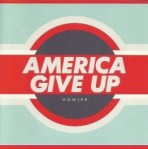
America Give Up cover

Howler – America Give Up

America Give Up, Howler’s full-length debut, has gotten a lot of attention this year. I can sort of see why, though it hasn’t thrilled me the same way. Bouncy surf-rock with a constant fuzzy drone and hooky riffs, this is the bubblegum pop version of garage rock. It’s a style I like, but partly for the substance that often goes with it. In Howler’s case, they don’t have the variety of Black Lips or the lyrical depth of Goodnight Loving. The catchy sound can take them far, admittedly.

The band comes across as youthful and optimistic, in a complete contrast to their album title. In fact, it’s almost hard to notice that the songs cover the half-angry, half-stoned territory common to garage rock: I usually come away from the album feeling vaguely like I’d just heard some eager, lo-fi Beach Boys covers. In reality, they sing things like “A shotgun wedding at a quarter to five/I shot the husband and I sleep with the bride” and “You think we’re Bonnie and Clyde/But both of them fucking died”. Nothing too offensive, of course. If anything, I probably get that feeling because of how carefully calculated it sounds. At least, when I hear Howler sing “I hate myself more than I hate you”, it seems to have little more meaning than “La la la” would.

The group’s catchiness fails it only twice: Once in “Too Much Blood”, when they slow their sound down and seem to reveal the lack of any substance behind them, and conversely on “Black Lagoon”, when the attempt at a more aggressive song just comes out wrong and feels irritating. (Being the last song on the album, its annoying anti-hooks are a real problem.) Otherwise, America Give Up is a fun, upbeat album. It’s just immediately forgettable afterwards, except for a few lines from “Black Lagoon” that I’m trying to forget.

Grade: C+


Two Hardcore Albums: OFF! and Ceremony (Music Review)

The hardcore punk movement is pretty much gone today. But sometimes, it’s only after a sound has run its course that people can fully appreciate the ways it can be used. 2012 brought two albums that do great things with this now-nostalgic style.


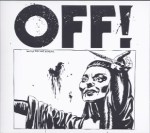
OFF! cover

OFF! – OFF!

Hardcore supergroup OFF! has a new self-titled album to follow up their 2010 masterpiece First Four EPs. By the numbers, it’s even more terse and brutal: Sixteen songs running slightly less than sixteen minutes. What’s more important, though, is that it doesn’t just feel like the band felt pigeonholed into this pattern. These songs are just as vital as the last set.

The idea of a full “album” taking a quarter of an hour is probably more off-putting to some people than the intense music. But punk artists really are capable of fitting a full song into the space of 30 or 45 seconds. Often (though not always) with chord changes, a verse-chorus-verse structure, and as many lyrics as the average three-minute song, these aren’t necessarily a shortcut for the band.

Admittedly, I usually feel disappointed by the albums, even the classic ones, that have nothing but short songs. That’s what makes OFF! so impressive, though. The songs do consistently feel complete, as well as distinctive from each other. (It probably helps that their production is so much better than it was on most of those releases from the 1980s.) And while the songs on First Four EPs didn’t always fit together well, possibly because of the “EP” conceit, OFF! feels like a consistent album from start to end. I can even say things like “it feels sort of uninteresting for the first several songs, but then it really grabs me”, without feeling silly about the fact that those first five songs take four minutes.

If the album has one weakness compared to First Four EPs, it’s in the song themes. They cover the same angry and misanthropic territory, with a few political screeds and stories of the punk scene. (One song is titled “Feelings Are Meant To Be Hurt”, and another has the line “I’m gonna club you like a baby seal”.) But where First Four EPs had a recurring theme of depression and social anxiety, OFF!’s personal stories are references to old grudges or tales about friends. These fail to feel as interesting or revelatory – it’s not like any of the songs develop a serious depth, after all. (Admittedly, the lives of the band members are part of punk history, so they have some relevance. It’s still less interesting to me, though.) Other than that flaw, though, these songs are more sonically varied, and there are still plenty of great moments. “I Need One (I Want One)” is their catchiest song to date, and coming after the strong “503” and “Zero For Conduct”, it’s the sort of album closer that makes you want to listen again right away.

The main flaw of OFF! is simply that it wasn’t first. This release is more of the same, rather than an attention-grabbing statement. But that still is impressive; I’m not sure that many people expected them to keep the magic going for another sixteen minutes.

Grade: B+


Zoo cover

Ceremony – Zoo

In contrast to the traditionalism of OFF!, Ceremony adds a heavy dose of post-punk to their latest release, Zoo. The first two tracks make it clear that this is still a hardcore band at heart, but then “Repeating the Circle” comes on, with the melodic looping sound (and lyrics) that the title implies. Later songs mix the styles, with many creating a full droning gothic soundscape that sounds more new wave than punk. Imagine if Johnny Rotten recorded with both Sex Pistols and Public Image Ltd on the same album, and you’ll have a good impression of the stylistic variety (though not the exact sounds) found here.

Overall, this is intense music with slightly nasal shouting. Even the punkest songs have a full sound, with none of the DIY aesthetic one might expect. They have a knack for hooks, with even the tracks I didn’t quickly learn still having many memorable moments.

Lyrically, there is a consistent aura of hopelessness about civilization and finding a purpose. “Son replaces father when father dies/He eats dead things to stay alive”, goes part of fatalistic story on “Brace Yourself”. That four-minute song has four minutes worth of lyrics, but the later “Nosebleed” (which is slightly longer), has just a couple of lines no longer than that repeated over and over. There isn’t a ton of depth to the lyrics, but there is a consistent message.

With the catharsis of punk and the complexity of art rock, Ceremony have created a heady album. Here we see two different ways to use an older music style: OFF! distills the things that were best about hardcore’s past, taking advantage of the full picture that can only be seen after the fact. Meanwhile, Zoo uses it as a springboard to the future, mixing the things that worked with every other tool they have available.

Grade: B+


Wanda Jackson – Unfinished Business (Music Review)

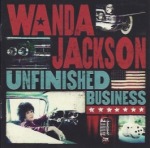
Unfinished Business

Wanda Jackson – Unfinished Business

In addition to releasing his own album, Justin Townes Earle also recently produced Wanda Jackson’s Unfinished Business. He’s a very different talent than Jack White, who produced The Party Ain’t Over for her, and their two albums make an interesting contrast. Though I now think I was a bit harsh on Party, my basic criticism stands: White brought in an energetic rock band that drowned out the aging Jackson. Earle brings a gentler band in, emphasizing the swinging country side of Jackson’s rockabilly legacy, and she sounds a lot more confident now.

The song selection is strong throughout. It’s unfortunate that these are all covers, but Jackson came of age in a time when it was expected that other people would write the songs she sang. Today, that apparently means that she sings previously-released songs, instead of having someone write her new material. However, these are mainly underplayed songs that deserve her attention: One track from Earle appears here, as does one from his father Steve and namesake Townes Van Zandt. All feel appropriate for Jackson’s style and persona, even though only a few are from her heyday. The only one that falls short is “California Stars”. The Woody Guthrie/Wilco song is a good choice, but the delivery feels rushed.

Unfinished Business doesn’t have the high points of The Party Ain’t Over, but it more than makes up for that by feeling like a coherent album without the missteps either. Jackson is charismatic and comfortable, and her throaty growls sound as good as ever. While she’s obviously not young anymore, she and Earle never sound like they’re stretching beyond her capabilities.

I wonder if I’ll ever get to hear Jackson perform new material with supporters of this caliber. Probably not, but at least this is a fun album, and a worthwhile tribute to her influence.

Grade: B-


Two More From Justin Townes Earle (Music Review)

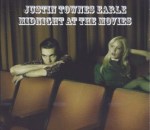
Midnight At The Movies cover

Justin Townes Earle – Midnight At The Movies

The opening track to Justin Townes Earle’s Midnight At The Movies is probably the closest he has ever gotten to sounding like his father Steve. Taking on the persona of a soulful man honest enough to realize what a loser he is, Earle tells a brief alt-country story about the lost souls who sit by each other in a lonely theater. But after that, Earle parts ways with his father, delving into the bluesier sound that he is known for. And as usual, the songs don’t quite fit the youthful singer.

In some ways, this has the same message as my review last year in which I looked at one old and one new Earle album: He’s an excellent songwriter who seems too young and innocent for the soulful, heartbreaking works he is drawn to, but who has started to find the right balance in his newer songs. However, neither of the albums this time around appeal to me as much as the previous round. Midnight At The Movies, Earle’s older album, aims for a style even more deep and sincere than The Good Life did. There are some great songs – I especially like “They Killed John Henry” and “Someday I’ll Be Forgiven For This” – but even those best ones don’t feel quite right. This is almost worth buying for the quality of the songwriting, but it feels lacking throughout. Maybe Earle can re-record all his early works in twenty years. That would probably be a masterpiece.

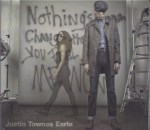
Nothing's Gonna Change The Way You Feel About Me Now cover

Justin Townes Earle – Nothing’s Gonna Change The Way You Feel About Me Now

His new one, Nothing’s Gonna Change The Way You Feel About Me Now, also fails to hit the highs of Harlem River Blues. Earle should be praised for his willingness to experiment with each new album, but his decision to play with a “Memphis Blues” style this time moves it away from the more personal feel of his last work. (That’s not to say it isn’t personal. The lyrics seem more directly about his life than ever before, with “Movin’ On” touching on the parts of his life that keep him restless, and “Won’t Be The Last Time” taking responsibility for a run-in with the police. It just doesn’t feel as personal, thanks to the hint of affectation in Earle’s chosen style.)

Earle does continue to grow into his folk-blues style, so much so that those tracks now feel more right than the rock experiment of “Baby’s Got A Bad Idea”. He’s getting there, and continuing to write some great songs. I expect this album to age fairly well, but I also expect his later works to far surpass it.

Midnight At The Movies: C+

Nothing’s Gonna Change The Way You Feel About Me Now: B-


Three Poet-Songwriters (Music Review)

2012 saw new albums by three of the Twentieth Century’s leading poet-songwriters. None were bad, though their quality did vary. Here are the reviews.


Old Ideas cover

Leonard Cohen – Old Ideas

Leonard Cohen: Old Ideas

Leonard Cohen’s output has been uneven: He predominantly writes poems and relies on others to make them work as songs. (He’s also the artist I’m least familiar with in this article. His only other album that I know well is Songs, and even his fans tell me not to bother with many of the others.) Fortunately, Old Ideas is one of the good ones. The music perfectly fits the plainspoken art of the lyrics, with understated backup singers and a gentle, introspective rhythm. It would be easy to give Cohen’s music a pretentious choral flair to recognize his status, or the stripped-down plucking of a starving artist busking on a corner. By splitting the difference between the two, Old Ideas’ music emphasizes the ways both apply to him while avoiding the pitfalls of either extreme.

Cohen always had an old soul, but as an old man still has some youthful restlessness. The “old ideas” of the album title are sex, love, pain, and death, and the songs feel like they could have come from any point in his lifetime. Cohen’s lyrics are direct and grounded in reality, creating evocative images with straightforward language. For example, a troubled relationship puts its members “on different sides of a line nobody drew”. Even when he moves away from literal reality, it’s not very far: The “broken banjo bobbing on the dark infested sea” is one of a couple tracks which treat “darkness” as a literal force that can invade us. The only literary conceit is in the standout opening track, when the muse speaks directly to us to explain how it forces Cohen to deliver these poems.

I listened to this album repeatedly, sure that I was missing out on the true depth of the songs. Eventually, I realized that their surface appearance was the extent of it. Old Ideas features no more and no less than songs distilled down to their beautiful essence. It’s not everything that some people claim this master can deliver, but it’s very good.

Grade: B


Tempest cover

Bob Dylan – Tempest

Bob Dylan: Tempest

The modern era of Bob Dylan began with 1997’s Time Out Of Mind and seemed like it would be a brief final phase for him. But after fifteen years and five albums, it is obvious that this is one of the most powerful eras of his long career. This man never sounded like he had anything to prove, but he is more confident than ever.

Don’t expect the wordplay or verbal gymnastics of the young Dylan. He has embraced the old-time sounds from before he was even born, and plays it fairly straight. The genius of most of these songs is not his unique fingerprint, but the feeling that you’re finally hearing the best songs of the early 20th century. (There are catchy lines, like “I’ll pay in blood, but not my own” and “if I can’t work up to you, you’ll surely have to work down to me someday”, but he’s not trying to reveal the human condition here.) The band provides bluesy folk with an energetic bounce, and Dylan’s voice is fuller than ever before.

Dylan’s an old man now, and his songs embrace it, but he isn’t quietly facing the end of life. As the title implies, nearly all songs involve tempests of some sort or another. From brawls to romantic tiffs, Dylan’s persona is that deeply passionate old man as likely to pick a fight over his “flat-chested junkie whore” as he is to sacrifice everything for his loved ones.

The classic song topics are all here, from trains to love to murder, and they often capture those archetypes perfectly. Consider “Tin Angel”, based on the trope of a king tracking down the wife who ran off for love. The title track is his take on the sinking of the Titanic, a forgotten topic that used to be as common as dance songs are today. Much has been made of the fact that this song is fourteen minutes long, but what I haven’t heard anyone point out is that it feels like it flows by in five. It’s as if Dylan is trying to personally make up for the loss of Titanic songs in our culture, and accomplishes it in a single track. (With verses ranging from serious to comedic, this is also the closest Dylan comes to exploring greater meaning. The songs about the Titanic were fundamentally about making sense of tragedy.)

Tempest stands among the best of Dylan’s long, accomplished career. If you like Dylan or traditional music, this is a must-have. If you don’t, consider this your gateway.

Grade: A


Banga cover

Patti Smith – Banga

Patti Smith: Banga

Though known as the preeminent “punk poet”, Patti Smith has spent the better part of her career as a folk-pop poet. She doesn’t often hit the highs of her youth, but this hasn’t been a bad move for her: Smith has a good singing voice, and it conveys her fervent passions as well as her punk songs did. Banga, her first album of new music in eight years, has only a few hints of rock. This may disappoint anyone who knows Smith mainly from her 1970’s work, but it could be her most consistently pretty album ever.

However, it also feels like one of her less meaningful albums. Smith always has a lot to convey, and if it’s easy to call her an idealistic hippie, she does find creative and honest ways to express those ideals. None of the songs in Banga directly touched me, though, and the meanings to many are obscured. (Where they are obvious, they are less impressive than past works. The discovery of the Americas comes up a few times, with a focus on the peaceful “Eden” that it offered. I am uncomfortable with the patronizing “noble savage” attitude that some people take towards Native Americans.)

What really makes this album worthwhile is the CD booklet. (Hopefully you didn’t already buy it digitally…) Featuring a six-page essay, plus photos, it helps to put the album in context. While the other two albums I’m reviewing here feel disconnected from the modern world, her inspirations ranged from old friends to Russian author Mikhail Bulgakov to The Hunger Games. Some explanations help a lot (such as knowing that “This Is The Girl” eulogizes Amy Winehouse), while others don’t at all (I’m not familiar with most of the works that inspired Smith, and while “Nine” was written as a birthday present for Johnny Depp, I don’t hear any of that in the song). Even so, Smith’s writing and photography are always a pleasure.

Smith’s plans aren’t always well-executed (“Constantine’s Dream” is an improvised speech about Constantine’s conversion, Christopher Columbus, and Smith’s research into artists they inspired, but it doesn’t really go anywhere in its ten minutes), but her conviction and songwriting remain strong. The album’s main weakness is the ever-more obscure reference points Smith has, even when she draws from pop culture. Fans will find plenty of meaning to unpack. To others, this is a collection of beautiful-sounding songs, but they will feel surprisingly slight.

Grade: B-


Two Releases from Screaming Females (Music Review)

Usually when I review multiple albums by the same artist, they all get pretty similar grades. But I was surprised by how differently I reacted to two releases by Screaming Females. I wouldn’t be surprised if at least part of this difference is unique to me, so your impressions may vary. Still I found their 2011 release to be uninteresting and their 2012 one to be great.

Castle Talk cover

Screaming Females – Castle Talk

The band’s skill is definitely evident on Castle Talk. Marissa Paternoster, the only actual screaming female of the group, has a bold punk snarl with a hint of traditional singing to it. The band displays a wide range that gives the songs too much complexity to be described as punk. The pieces just don’t mesh, though: Paternoster spends the majority of the album projecting her voice in a flat, atonal way, and the music usually sounds hesitant while she is singing. If not for the fact that Paternoster was also lead guitar, I’d come away from this with a story about an indie-prog band trying and failing to find a way to work with a punk singer.

There are good songs here, most notably “I Don’t Mind It”. Otherwise, too many of the memorable parts of this album stick in the mind not because of their quality, but because they’re reminiscent of simple elementary school rhymes (“Laura and Marty went to a party…”) It’s notable that the band has more success when they seem to scale back their ambitions: “A New Kid” contains a simple mess of electronic guitar fuzz, rather than the more intricate music of the other songs, but at least it provides good support for the vocals.

With obvious potential, but rarely good for more than a few lines at a time, Castle Talk is a frustrating album. It was just good enough to convince me that I should also check out their newer album before writing a review. I’m glad I did, because Ugly is where the individual pieces of talent suddenly fit together.

Ugly cover

Screaming Females – Ugly

The major complaints I had about their previous album are gone in this one: The music doesn’t drop out when Paternoster sings, and she uses a much broader vocal range. Though not a classically pretty voice by any means, it rises above the bouncy, lo-fi hard rock to provide a very comfortable dissonance. Non-traditional hooks fill the album, and feel completely natural. If Castle Talk was less than the sum of its parts, Ugly finds the alchemy that makes them something greater.

The lyrics seem personal, but in an obtuse way that discourages interpretation. (Sample: “My fingers swarm the gun as blinding as the sun but I’ve got to point it to the right and fascinate the night that begs to mourn the moon…”)

The highlight of Ugly is “Doom 84”, a seven-and-a-half-minute song that feels like twelve, in a good way. Sludgy, driving rock slowly builds in tension as Paternoster sings with a release that seems to proclaim life’s secrets. That the lyrics actually seem to be about dirty, submissive sex just make the song greater. If she can find such empowering joy in “your piss on my pillow, your filth in my veins”, well then, there is hope for everyone to find what they need. The song’s end is the ultimate release, as the light, saccharine “Help Me” provides an immediate change from the heady darkness.

Screaming Females feel like a long experiment in the ways one can merge guitar with the human voice. Like all experiments, there are going to be successes and failures, but we are fortunate to have all the best results grouped into one album.

Castle Talk: C

Ugly: B+


The Mountain Goats – Transcendental Youth (Music Review)

Trancendental Youth cover

The Mountain Goats – Trancendental Youth

As a new father myself, I have a lot of respect for The Mountain Goats’ John Darnielle. Transcendental Youth is his first release since the birth of his son, but he didn’t suddenly become soft and sentimental. Instead, this is a collection of honest songs about the difficulties of life, with the chance for happiness found at the end of a gauntlet. As a lesson for his child, it’s honest and refreshing, with the bit of hope it holds out being completely believable.

These songs are the most grounded in reality since The Mountain Goats’ The Sunset Tree, and while the songs aren’t all obviously about youth, the songs make sense if you imagine confused teens narrating each one. From a drug addict to a schizophrenic runaway, Darnielle narrates these without any implied judgment: These are their stories, and they don’t need some adult songwriter inserting his own judgment. And to the extent that Darnielle does have an opinion about this, his repeated theme is that everyone needs to figure out their own path: “Spent Gladiator 2”, the one song that strays slightly outside modern realism, is about bloodied gladiators and besieged villagers just trying to survive, with the obvious implication that childhood is equally epic and dangerous. (Its lyrics are echoed in the advice of “Amy (AKA Spent Gladiator 1)”, with lines such as “play with matches if you think you need to play with matches… just stay alive”.)

Musically, this is what you’d expect from a modern Mountain Goats album. Post-anti-folk, if there is such a thing, Darnielle’s voice mixes a poet’s confidence with a human’s frailty. The music is simple, but emphasizes the emotions in the songs, especially the tension and desperation. This album adds a horn section to many of the songs, which add an effective flourish when singing about the triumph of living through another day.

Transcendental Youth doesn’t have as many standout hits as recent Mountain Goats albums Heretic Pride or All Eternals Deck, but it has a clarity of vision that those ones lack. Darnielle’s son didn’t change his art, but it helped him hone the worldview he’s been describing for years. Youth is a painful struggle, but it’s worth surviving. This album captures that.

Grade: B+


Two New Releases from Neil Young and Crazy Horse (Music Review)

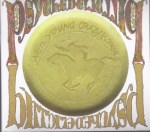
Psychedelic Pill cover

Neil Young and Crazy Horse – Psychedelic Pill

Neil Young and Crazy Horse got back together this year for their first joint album in a decade. The result, Psychedelic Pill, is long enough for two CDs despite having only nine tracks total. It’s the kind of sprawling mess we’d expect from the band, for good or for ill. In this case, it’s somewhat disappointing. The music is still excellent, with carefully-sloppy jams that have aged much better than the grunge scene they inspired, but they can’t find anything to sing about.

The twenty-seven minute opener, “Driftin’ Back”, epitomizes the album. Young opens with “Hey now now hey now now, I’m driftin’ back”, an explicit callback to past hits. It’s the only good lyrical choice in the song, which otherwise has awkward statements like “I used to dig Picasso, then a big tech giant came along and turned him into wallpaper”. Those would be difficult lines to sing in any song, but Young spits them out like he’s not even trying. Fortunately, the singing is sparse during this half hour, and most of it is taken up by a pleasant, if forgettable, groove.

The other long, winding songs are a little more successful lyrically, though still not up to the hits of the past. There are also several short, punchier songs to add variety: The reverb heavy title track is fun, but the extra alternate mix is unnecessary. “Twisted Road” may be the only unqualified success on the album, though admittedly that’s because of its limited vision: That song is a quick, heartfelt ode to the past yet again, this time referring to Dylan and the Grateful Dead as his “old-time music”.

Americana cover

Neil Young and Crazy Horse – Americana

It’s kind of funny that they used that term, because Neil Young and Crazy Horse also released an album with their renditions of actual “old-time music”. Called Americana, it’s obviously a warm-up exercise for a band, with in-studio discussion between songs and a variety of approaches. Though a few attempts aren’t successful, the results are frequently excellent. That shouldn’t be a surprise: If Psychedelic Pill provides a great performance of mediocre songs, then of course they could apply themselves well to time-tested classics.

Crazy Horse’s meandering style doesn’t always work well with these more direct folk songs. “Clementine”, for example, is actually a simple joke (I bet you didn’t know that!), but in their hands it becomes more of a drawn-out shaggy dog story, and while their version of “Tom Dula” has an excellent build-up, the tension they create actually gets dropped a couple times over its eight-minute length. But in  “Gallows Pole” and “Travel On”, the band finds the perfect mix of their style with the songs’ needs. They travel outside their comfort zone on “Get A Job” with an energetic vocal arrangement that has more in common with barbershop quartets than grunge rock. And while it’s difficult to take “She’ll Be Coming ‘Round The Mountain” seriously today, they perform “Jesus’ Chariot” with a fervor fit for a revival service. I find “This Land Is Your Land” and “High Flyin’ Bird” to be pretty bland, but the only true misstep is “God Save the Queen”, which they merge with “America the Beautiful” in a way that honors neither song.

Most people I’ve talked to were disappointed with Americana, but I don’t agree at all. I think that a lot of people have trouble seeing through the clichés that these songs have become, but fortunately Young was able to do so. It may be uneven, but the successes easily justify the whole project. Neil Young and Crazy Horse did release an album worth buying this year, but it’s not the one that you might expect.

Psychedelic Pill: C+

Americana: B


Avengers – Avengers (Music Review)

Avengers cover

Avengers – Avengers

For years, the Avengers’ seminal debut was unavailable due to legal issues. All I knew of them was “The American In Me”, a brutal, catchy song that showcased frontwoman Penelope Houston’s charisma and presaged both the hardcore movement and the poppier punk that would come later. That self-titled debut (their only album ever) has finally been re-issued with a second disc of B-sides. Now that I can hear it, I’m finding it somewhat enjoyable, but it’s not the classic that deserves the legend it has three decades later.

The main problem is that it doesn’t feel like a cohesive album. A 1977 EP fleshed out with additional tracks recorded over the next couple years, it catches a young band figuring out what they want to be in a not-yet-defined scene. It’s especially obvious that this comes from the early days of punk with songs like “We Are The One” and “I Believe In Me”. The optimism there optimism would have been dismissed as hippie trash once punk culture was more fully defined. Just one year later, the painful street life documented in”Desperation” and “Second To None” sounded like it could have been lifted right from The Stooges or The Dead Boys. And while the impassioned cover of “Paint it Black” is one of my favorite tracks, it’s just plain difficult to categorize.

Though there are many good songs, there are unfortunately no more like “The American In Me”. “Fuck You” has the energy, and “Thin White Line” has the subversive earworms, but that just emphasizes the unfocused chaos of the release. And then there is the unfortunate “White Nigger”, which would sabotage the whole album if their definition of “nigger” weren’t too unconventional to be fully offensive.

It’s ironic that the B-sides have better production and a more cohesive feel. But there are only enough new studio tracks to create another EP, and the rest is filled out by live recordings and alternate song takes. Still, it shows what an excellent band The Avengers were turning into. It’s too bad that their first album has to stand alone, rather than being the opening chapter to a great career.

Grade: B-