Archive for the ‘ Music ’ Category

Catch-Up Capsule Reviews: Pop

Finishing up my quick reviews of older albums, here are the “pop” ones. For me, that term still usually refers to stuff fairly outside the mainstream. If it can’t be described as rock or country, but it does fit into modern American expectations of music styles, it counts as pop. (The only possible exception would be rap/hip-hop. That hasn’t become an issue yet, because I don’t buy much of it. I will have to deal with that categorization before long, though.)

Continue reading

Catch-Up Capsule Reviews: Punk

Continuing with my catch-up reviews of older albums I bought this year, I have three punk albums that date back to the 1980s and 1990s. It’s interesting to look back at what makes them work, or not, today. I make no secret of the fact that I don’t think most works of art age well, and I rate them now by how well they work for me in modern times. I probably would have been more generous to all of these if I were looking at them when they first came out. On the other hand, this attitude makes me inclined to appreciate the punk scene, with its living-in-the-moment approach. I think two of these three still hold up fairly well today.

Continue reading

Catch-Up Capsule Reviews: Country

Obviously, I’ve fallen way behind on music reviews. I’m catching up now, mainly thanks to the motivation of “oh, crap! I need to make a best of the year list soon!”, but I averaged only one new music article per month from February through October. So I’ll need to get through a lot of albums quickly.

“Cult of the new” often means “… new to me”, and so I review even the older things that I’m finding for the first time. But I know that not everyone wants to see me dwell on old things as thoroughly. So over the next week or so, I’ll try to run through quick reviews of older albums that were new to me this year. None of these were released in 2012, and most are from before 2011.

Since I group my music loosely into Country, Rock, and Pop, I’ll start today with four that fall under the “country” umbrella.

Continue reading

Jello Biafra and The Guantanamo School of Medicine – Enhanced Methods of Questioning (Music Review)

Enhanced Methods of Questioning cover

Jello Biafra and The Guantanamo School of Medicine – Enhanced Methods of Questioning

The centerpiece of Enhanced Methods of Questioning is the 18-minute hidden track, “Metamorphosis Exploration On Deviation Street Jam”, which is basically one of Jello Biafra’s spoken word pieces put to music. The Gauntanamo School of Medicine’s meandering space-rock provides a backing for Biafra to riff off of as he gives an inspirational speech about his life as a freak. My first impression was that there would be no point in ever hearing it again, but it actually is worth returning to from time to time. Like a punk take on jazz jams, it works as both a twisted sort of background music and as a bravado performance piece.

That experimental jam actually provides a contrast to the rest of the album, which otherwise feels like the return to form that Dead Kennedys fans have been hoping Biafra would deliver for years. Don’t expect it to be exactly the same, of course – Biafra is unlikely to ever repeat himself. But the normal tracks have the hard, angry edge and vocal focus that is often missing from Biafra’s side projects. The hardcore foundation and vocal delivery is combined with a more metal sensibility, and the songs tend to go on longer with more variety.

The main problem with Enhanced Methods is that it has only five tracks. I’m told it’s an EP, but I have no idea whether to believe that: Ignoring the hidden tracks, it’s actually longer than the band’s nine-song debut album. And while the total play length sounds satisfying, the mix of punk intensity with drawn-out songs makes it feel skimpy as a whole.

The Guantanamo School of Medicine may be the stars of this, with a flexible style and thrashing delivery that sometimes has to cover up for a lack of ideas from Biafra. Songs like “Victory Stinks” (about the danger of ignored veterans snapping) and “Invasion of the Mind Snatchers” (proselytic Christians) could be pulled from any point of his thirty-year career, while the Bob Dole-takedown in “Miracle Penis Highway” is well over a decade late. (It would have been a career highlight for Biafra if it had come out on time, though. The contention that Viagra cured Dole’s politics is inspired.) “Dot Com Monte Carlo”, on the other hand, is a clearly present-day complaint about the gentrification of San Francisco. Without any clever things to say, though, it just sounds like the mean-spirited ramblings of someone who wants the kids off his lawn. The only unexpected topic is Henrietta Lacks’ story, told in “The Cells That Will Not Die”.

Yes, that’s every album track covered in one paragraph. None are perfect (unless you ignore the timing of “Miracle Penis Highway”), but Biafra’s strange charisma shines through even when his ideas sound stale. That high-pitched, sardonic voice is one of the defining features of American punk, and it’s great to hear it in this context. Enhanced Methods may feel lacking in some ways, but the potential shown is thrilling. Between the classic approach in the main tracks and the experimentation of the hidden one, this is a step in the right direction for Biafra.

Grade: B-


Billy Bragg and Wilco – Mermaid Avenue: The Complete Sessions (Music Review)

Mermaid Avenue: The Complete Sessions cover

Billy Bragg & Wilco – Mermaid Avenue: The Complete Sessions

With digital music the new standard, CDs and their packaging have gone sharply downhill in quality over the past few years. Unless something makes it “special”, such as collectors’ editions or vinyl, physical media is an afterthought. But as the new reissue of Mermaid Avenue shows, even the deluxe releases may be trending downhill.

Mermaid Avenue certainly deserves an upscale release, especially as part of this year’s celebrations of Woody Guthrie’s centennial. Billy Bragg and Wilco recorded these unfinished songs of Guthrie’s only fifteen years ago, but they have already become a central part of the man’s legend: Playful and serious, sexual and political, Guthrie comes across as a much more well-rounded person than anyone ever knew, and his lyrics still feel fresh in today’s folk scene. The project seemed to bring out the best in all participants, especially Bragg, whose solo work rarely lives up to his potential. The first album was the strongest of the project, but the second is still a minor classic on its own.

The main selling point of Mermaid Avenue: The Complete Sessions is that it contains a new third album. While not quite as strong as the first two, it’s worthy of release on its own. The problem, though, is that there’s no way to get it on its own. All three must be bought together at a $40 MSRP, even though you probably own at least one of the others already. That “deluxe packaging” is simply a fold-out cardboard case whose promised “booklet” is an introductory letter and the lyrics to all the songs. It also comes with The Man In The Sand, a (previously released) documentary on the making of the original album. This is worth watching once: The people and music are interesting enough to carry the piece through, despite its fluffy marketing nature. But there’s little depth or conflict to make it worth returning to. (A part near the end covers conflicts about which songs and mixes to put on the album, but it both starts and ends suddenly, leaving the viewer with no more knowledge than what the musicians were willing to say to the camera.)

That mainly leaves album number three to justify this. And it does, more or less. So many good songs were still available that it doesn’t feel like scraps from the cutting room floor. There may be a few more filler songs on it, and it feels a little less like a complete album, but it could just be that I’m comparing something new to comfortable old classics. There are several great new songs, including the rousing folk-punk “My Thirty Thousand” and the Occupy-relevant “The Jolly Banker”. If there’s a complaint, it’s that many of the best songs have already been released as promos or in the She Came Along To Me EP years ago. It feels like a blatant money-grab that you can only get this as part of a larger set.

And that’s where the recommendation lies. Packaged like a simple “triple-length album”, but priced as if you’re buying three separate ones, this is neither the deluxe edition the project deserved nor the sale that might have made sense for music from the 1990s. If you have neither Mermaid Avenue volume yet, then buying this set is a no-brainer. But if you already have some of the music, this just isn’t worth it.

Grade: B-


The Dead Milkmen – The King In Yellow (Music Review)

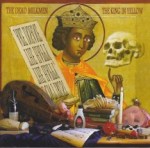
The King In Yellow cover

The Dead Milkmen – The King In Yellow

The Dead Milkmen were the class clowns of 80s punk, and the thought of them releasing a new album today seems both fascinating and unnecessary. The King In Yellow fills both those expectations.

As confident and unpolished as always, the songs are all over the place. Intelligent but absurd jokes sneak into the serious songs, while poignant observations can be found in the sillier ones. The bitter “Meaningless Upbeat Happy Song” is the closest to a “classic” Dead Milkmen song, but the band always featured too much variety to be pigeonholed. Contrast that song with “Fauxhemia”‘s more mature look at the life of an aging punk: They begins with the expected complaints about popular culture, but they don’t seem so proud of it now. (“I just don’t get Norah Jones, and maybe that’s why I feel so alone.”) It’s better to think of this as a collection of outtakes than a consistent album.

Some songs are surprisingly weird, and give the impression that you’re witnessing an inside joke. “Hangman”, for example, is a straight-faced story of condemned criminals staking their lives on a word game. Other songs are painfully literal, such as “Commodify Your Dissent”‘s complaint about corporations appropriating underground music. (Though you’re pretty much required to enjoy any song with the line “Johnny Cash died for you!”) There are also songs that seem to be closer to fragments than fleshed-out ideas: “Or Maybe It Is” ends immediately after bringing up the idea that a “horse race sniper” might not be committing any crimes. When all the elements come together, you get a clever deconstruction of modern life like “Solvents (For Home And Industry)”, and when they don’t, you get the unfulfilled plot ideas of “Quality of Death”. Imagine watching Monty Python for the first time, and you’ll have an idea of how it feels to listen to The King In Yellow.

In addition to everything else, there are enough songs about murder that even I, a big fan of murder ballads, feel a little weird about it. (The detailed fantasy of the stalker in “Some Young Guy” has a lot to do with it.) In fact, the title song is a (punchy, very fun) cover of an Irish folk song about a man killing his wife.

Intelligent and aimless, the modern Dead Milkmen are much the same as ever. Whether that is a good thing or not is a personal decision: Even the catchy songs are grating, and the lyrics are sporadically brilliant. Are you able to approach a Dead Milkmen album the same way you did decades ago, or would that just seem off-putting today? You may have to buy the album to find out.

Grade: B-


Stephen Malkmus and The Jicks – Mirror Traffic (Music Review)

Mirror Traffic cover

Stephen Malkmus and The Jicks – Mirror Traffic

Every few years, Stephen Malkmus comes out of hiding to remind you that he’s still cooler than you will ever be. His albums with The Jicks, like that high school friend you desperately looked up to, remain as effortless and confident as ever. But after staying unchanged for years, you eventually start to understand that that friend could stand to mature a little.

Mirror Traffic comments on Malkmus’ persona like no other album he’s made. “No One Is (As I Are Be)” pokes fun at himself with lyrics like, “I cannot even do one sit-up. Sit-ups are so bourgeoisie. I’m busy hanging out and spending your money.” A couple breakup songs treat the subject matter with a casual disregard for commitment. Specifically, “All Over Gently” can be seen as either fun or cruel, depending on whether the other party agrees with his opinion that it’s time for her to leave with no hard feelings. And though the political satire of “Senator” is arguably new territory for Malkmus, it’s really an experiment in what how slacker lifestyle would fit in with corrupt politicians.

In fact, Jicks albums can now be described entirely in terms of what has come before. Mirror Traffic is as poppy as their debut album, but with the full sound and varied instrumentation of Face the Truth. The experimentation of Pig Lib is almost nonexistent now, though the meandering jams of Real Emotional Trash have remained even in the shorter pop songs.

It is, honestly, one of the band’s stronger efforts. The Jicks are honing one sound rather than looking for new ones, and there is a perfectionist streak hidden behind their casual front. The production and performances are near-perfect, and they keep building on the tricks that worked best in the past. I do complain that the albums have started to feel similar, but I have to admit that no song directly copies a previous one.

Mirror Traffic is something of a milestone, in that Malkmus has now released as many albums with The Jicks as he did with Pavement. But while it was a sign of stagnation when Pavement’s releases started sounding similar, it seems that The Jicks will be content to play with their sound forever. There is good and bad in that, but they get away with it because new albums only appear every few years. That friend who hasn’t changed since youth might not be a good person to have around every day, but if he can only show up as rarely as this band does, you’ll keep looking forward to the next time.

Grade: B


Amanda Palmer and The Grand Theft Orchestra – Theatre Is Evil (Music Review)

Theatre Is Evil cover

Amanda Palmer and The Grand Theft Orchestra – Theatre Is Evil

It’s easy to describe the music of Amanda Palmer and The Grand Theft Orchestra: It’s an amalgamation of goth and synth influences from the 1980s and 1990s, combined with heart-on-sleeve lyrics and performed with a theatrical flair. In fact, the album title Theatre Is Evil is as much of a joke as the sugary pink cover: Palmer’s real life is too intertwined with her art to ever separate her from her “theatre”, and her songs are frequently self-aware about that. (“I couldn’t do that, it is wrong/But I can say it in a song,” she explains in one refrain.)

The impact of her songs is much stronger than one would expect from that description, though. The styles may be openly derivative, and actually so varied that I wouldn’t expect the album to fit together coherently, especially since they were written over a period of several years. However, Palmer’s persona is the glue that makes it all work. Everything, from the Siouxsie to the Bowie to “Melody Dean” (which references “Love the One You’re With” over the riff to “My Sharona”) feels to be uniquely Palmer’s style.

With backing from The Grand Theft Orchestra, many songs take on an energetic sound that could fill arenas, but they somehow feel more personal than they ever did in her previous band: the stripped-down, thoroughly theatrical Dresden Dolls. “Want It Back” and “Olly Olly Oxen Free” are perfect examples of glammy pop-rock, while “Massachusetts Avenue” has a punk simplicity that approaches punk execution at the shouted crescendo. “Do It With A Rockstar”, possibly the highlight of the album, is a self-loathing pickup song packed with jokes, encapsulating the self-aware theme of “theatre is evil”.

Palmer and her band do slower songs, too. “Trout Heart Replica” is the sort of beautiful poetry that high school goths yearn to write, but it will be years before they have the life experience to examine relationships like “Grown Man Cry” does. “The Bed Song” does away with all the electronics, but its simple piano performance may be the emotional core of the album. And my other favorite song, “Bottomfeeder”, has the angstful but inscrutable lyrics that would have made it a hit on 90s’ radio. Theatre Is Evil has a variety that makes it incredibly satisfying as an album in addition to successes of the individual songs. (The only place the variety disappears is in the atmosphere. Even the fun, upbeat songs are uniformly depressing. “Melody Dean” and “Lost” are the only arguably happy songs. The former is a justification of an affair, and the second is an assurance that lost things can return.)

I wouldn’t expect to call a goth-pop throwback album a masterpiece, but Theatre Is Evil qualifies. My favorite songs are mind-blowing, and my least favorites obviously deserve to be loved by people with different taste. Nothing here is filler, so even those lesser songs feel like part of an experience. And for Palmer’s theater-meets-life attitude, it’s hard to come up with a better compliment than “this music is an experience”.

Grade: A


Deer Tick – Divine Providence (Music Review)

Divine Providence cover

Deer Tick – Divine Providence

Divine Providence demonstrates that Deer Tick is a one-trick band, but it’s an excellent trick: Boisterous cock rock sung with a sloppy abandon. The stripped-down music perfectly emulates a lush arena rock band that’s too drunk for the subtleties they’d normally employ, and the lyrics have just enough of a self-conscious wink to win over people who might normally be put off by the frat boy personas. Despite that, it’s best appreciated without any irony. (The liner notes open with “You should play this fucker as loud as possible”, and that’s maybe a more accurate description than this entire review.)

The problem, though, is that they don’t fully appreciate that they should stay within the bounds of that one trick. Half the songs are slower, and, frankly, uninteresting. They actually aren’t bad, with solid hooks and a good variety, but songs that are merely tolerable become harder to wait out when the album is supposed to be a non-stop adrenaline rush. One or two might make an interesting break from the full-throated energy: “Chevy Express” has a bored tension that brings to mind an unsatisfying day waiting for the party to start, and “Now It’s Your Turn” has the weariness of the next morning’s hangover. But with a few more songs like them thrown into the mix, the album just feels watered down.

Deer Tick is excellent when they put their mind to it. You’ll be hard-pressed to find better anthems to the id than “Let’s All Go To The Bar” or “Something To Brag About”, but you’ll have to wade through a lot of filler to get to them. Fortunately, it’s easy to keep returning to those best few songs. I know I’ll be doing that a lot in the future, and honestly, that means more than my complaints about the skippable songs. But as an album, it’s hard to escape the feeling that this was a missed opportunity.

Grade: B


Two From the Dirt Daubers (Music Review)

The Dirt Daubers album cover

The Dirt Daubers – The Dirt Daubers

The Legendary Shack-Shakers’ crazy music and over-the-top vocals sometimes make it hard to remember that their performance comes out of a sincere love of the South and its traditions. From that perspective, it makes sense that frontman J.D. Wilkes would start a (slightly) calmer band with a stronger connection to his everyday culture. The Dirt Daubers feature acoustic instruments and a fairly even split between traditional songs and originals. Wilkes’ hell-raising energy is present as always, though, and the result is a raucous celebration of old-time country and folk. Though the lyrics don’t have the surprising intelligence of the Shack-Shakers, they are sharp and honest, and the songs fly by at two minutes each.

Of their two releases so far, Wake Up Sinners is the essential one. In comparison, the self-titled debut feels more like a calling card than a complete album. Only four of its ten songs are written by Wilkes, and one of those is a misguided remake of an existing Shack-Shakers song. Another is redone (and improved) on Wake Up Sinners. Even one of the traditional songs, “Sugar Baby”, has already appeared on a Shack-Shakers album. A couple of the tracks feel more like incomplete snippets than full songs. That’s not to say there aren’t some great efforts: The loose, belted-out rendition of “Black Eyed Susie” and the mellow “On The Front Porch” summarize the range of their energetic-but-respectful approach to musical traditions, and the gravel-voiced “Ode to Conrail Twitty” brings a punk efficiency to a song about trains and tradition.

Wake Up Sinners cover

The Dirt Daubers – Wake Up Sinners

Wake Up Sinnersbrings in the Shack-Shakers’ Mark Robertson on bass and promotes Jessica Wilkes, J.D.’s wife, to lead vocals. It’s at this point that they seem like a self-assured band instead of a side project. The fuller sound and more fleshed-out lyrics will be welcome to Shack-Shakers’ fans, even as Jessica’ contributions distinguish it as a separate band. She doesn’t show much range, sticking to a fast-paced, slightly aggressive delivery, but it fits the band perfectly. With the two vocalists taking turns on songs, variety never becomes a concern. The excellent harmonica performance deserves a mention, as well. It’s rare for that instrument to distinguish itself like this.

The traditional songs are much improved, as well. I’d never wanted to hear “Wayfaring Stranger” again, but J.D.’s upbeat rendition of it is exactly what was needed. Later, Jessica delivers “Say Darlin’ Say” (a different version of “Hush Little Baby”) as an enjoyable song for adults. The songs still feel a little slight, and even the best ones wear out their welcome if listened to repeatedly, but they’re great if you return to them the next day. I wouldn’t be surprised if the band’s true masterpiece is still ahead of them. If they improved this much from one album to the next, why should they stop now?

The Dirt Daubers: C+

Wake Up Sinners: B+