Archive for the ‘ Music ’ Category

New Albums from Tennis and Islands

Not only have a been a little slow about reviewing music lately, but the albums I have been reviewing are still all from 2011 or earlier. I ended the year with a huge backlist that I’m still working through, and the first time that I went to buy new music this year wasn’t until Record Store Day. Even then, it took me a little over a month before I was ready to review the first two albums I bought. Both of them needed a lot of time before my opinion settled.


Young & Old cover

Tennis – Young & Old

Tennis’ album Young & Old took me some time to evaluate because it comes across as such light, forgettable pop that I didn’t believe it had much substance at first. But at this time, I can say that it stays interesting. I’ve tried putting it aside for over a week, and when I listen to it again, it’s familiar and welcome, not at all like an album that wears out its welcome.

Alaina Moore’s vocals are gentle and innocent, and the music supports a vision of the wide-eyed naivety of 60’s pop. Her lyrics have a cynical bite, though. Songs like “Dreaming” sound like odes to youthful love, but the refrain of “I’m dreaming I can still believe in you” make the narrator seem foolish and willfully blind. Maybe the happiest-sounding, most memorable hook of the album is Moore’s apparently-joyful announcement that “paradise is all around, but happiness is never found.”

The band never seems to be intentionally satirizing the optimistic songs that they mimic. See “Traveling,” for example: The song doesn’t shy from the fears and dangers of initially falling in love, but paint them sympathetically. The impression is that Moore is exploring these themes because they are personally relevant. When she opens one song with “a sensitive heart, you’re doomed from the start,” she could easily be talking to herself.

If you only buy one collection of light, upbeat songs about love this year (and really, would you need to buy more?), Young & Old is your best bet.

Grade: B


A Sleep & A Forgetting cover

Islands – A Sleep & A Forgetting (Yes, the album art is hard to see)

There was a very different reason for why I waited so long before reviewing the new album from Islands. I love the band’s old work, especially their 2008 masterpiece Arm’s Way, and it’s hard to accept that their glory days may be over. Oh, A Sleep & A Forgetting is still a good album, but it never escapes the shadow of their best work.

In the past few years, the band has replaced youthful impishness with staid indie pop. It’s solid and enjoyable, but doesn’t highlight the interests that make their vocals so unique: Death, disaster, and the mechanics of the physical body are obsessions for the band, though they’re examined with macabre humor and clever wordplay.

The extremes of old are gone along with the catchier music. Instead of post-apocalyptic tribes looking for shelter or tiny gnomes devouring people, this album opens with several songs questioning reality: “In a Dream (it Seemed Real)” ties this theme to the album title, and the ideas of “This is Not a Song” carry forward to the next track, whose opening line is “this is not a band”.

It’s an appropriate concept for an Islands album, though it rarely rises above the basic ideas to come up with anything truly insightful or funny. They need more concepts like “No Crying”, an investigation into whether there’s something wrong with the narrator for not feeling bad when listening to sad songs. Even silly little ideas like “Can’t Feel My Face” (which suggests that the feeling leaves for “a better place”) would help. That line may not have their modern sophistication, but it provides a catchy lyrical hook to an album that feels a little dry most of the time.

A Sleep is a solid album, with plenty of decent songs and an unusual take on the lyrics. If this were my first Islands album, I’d probably be intrigued. As it is, though, I already know what the band is capable of, so I don’t need to see hints of it. It’s difficult to imagine that someone would regret this purchase, but that’s partly because it doesn’t make a very strong impression at all. Surprisingly, this turned out to be the forgettable pop album that I worried Tennis would deliver.

Grade: C+
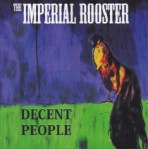
Imperial Rooster – Decent People (Music Review)

Decent People cover

Imperial Rooster – Decent People

“Anything Goes At A Rooster Show”, the lead track on Decent People, wastes no time in announcing that Imperial Rooster is a quirky, irreverent country act. Featuring L. Ron Hubbard, monkeys, and a vending machine full of raw pickled eggs, it does sound like “a good old fashioned Rooster show” would be a lot of fun.

After that song, though, the band tries to go in too many directions, few of them good. One country standby after another is embraced eagerly, from warnings about divine judgment to an enthusiastic jug solo. I still can’t tell whether the exaggerated country moan in the vocals is satirical or just over-indulgent. At least it’s obvious that the huge body count comes from a less-than-serious love of murder and heartbreak songs. This young band has some strengths, but a lot of weaknesses, and they haven’t yet figured out how to tell them apart.

The attention-craving sinners of “Anything Goes…” and “DWI Marijuana Blues” clash with the God-fearing balladeers who sing “our ignorance will block out the Sun” and warn the listener away from internet porn (with too much fervor to be taken seriously). In case that isn’t enough variety, the singer occasionally switches over to a Tom Waits-esque yell. These all clash, especially when they show up in the same song. (For example, the painfully-slow ballad about their fears for the modern world would be more tolerable if it weren’t named “Korhn Sirup Sundae”.)

If Imperial Rooster has a future, it’s probably in that Tom Waits impression. Not that they have Waits’ gift for lyrics, but the growling and energy distract from their lack of singing skill. “45 Seconds Of Blood” is actually a fun little song, and only partly because it is too quick to wear out its welcome. In fact, “The Beast On The Backs Of Our Children” is almost seven minutes long and manages to stay interesting. It could use some polishing up, but its bloody morality play grunted out over an oompah beat is unique enough to work.

Unfortunately, every decent song like that is balanced out by a few completely forgettable ones. With production that makes the album sound like an unprepared first take and failed humor that never lives up to the promise of “Anything Goes…”, many of these songs shouldn’t have even been considered for release. (Even if women abusing their husbands were automatically funny, “I Like The Way (She…)” is plodding and forgettable enough to ruin the joke.)

There’s one reason I keep coming back to this album, though: “Suzie Anna Riverstone”. This mixes Imperial Rooster’s split personalities perfectly, and results in a song I will listen to on repeat. Modeled after a traditional country tragedy, the lyrics are just too over the top to take seriously, and the shit-kicking energy makes it a fun, self-aware celebration of the genre.

Decent People is a rare thing: An indisputably bad album that still makes me interested in seeing the band live. The country pranksters behind “Anything Goes At A Rooster Show” and “Suzie Anna Riverstone” have to be fun in concert, and given that those songs bookend the album, the band clearly knows those are their standouts. It’s just too bad that they haven’t figured out how to make the rest of their songs work like that.

Grade: D+


Social Distortion – Hard Times and Nursery Rhymes (Music Review)

Hard Times and Nursery Rhymes cover

Social Distortion - Hard Times and Nursery Rhymes

Though Hard Times and Nursery Rhymes is Social Distortion’s first album in seven years, Mike Ness seems to be one of the few punk rock frontmen capable of aging gracefully. He was pulling in country influences years before “punk gone country” became a trend, and always focused on slightly slower songs about life. He was never afraid to admit that life changes sometimes, and by now his fanbase has had time to come around to his point of view on songs like “I Was Wrong”. It’s time for Ness and his band to bring that same honesty to middle-aged life.

For the most part, he succeeds. Ness may not betray his age (he was 49 at the time of this release), but this obviously isn’t the work of wild kids either. Hard Times is a collection of confident songs with nothing to prove. They may be the best-produced of any Social Distortion songs yet, and Ness’ gravelly voice is one that he wears more naturally with every passing year. This may be white-trash blues rock, but it’s smooth and soulful under the rough edges.

Recent trends haven’t made the band veer towards country, but the influence is still there. Their rendition of “Alone and Forsaken” won’t attract as much attention as their old “Ring of Fire” cover did, but in reality, Hank Williams’ work was much more in need of a modern update than Johnny Cash’s. Intense and respectful, “Alone and Forsaken” could pass as a modern song if not for a few archaic turns of phrase. Social Distortion does Williams a great service by demonstrating the excellent songwriting at the core of his songs. Country lyrics seem to creep into many of the original tracks, most notably on the album standout “Can’t Take It With You”. Announcing that he has “never seen a hearse with a luggage rack”, Ness warns the listeners away from material greed with lines that would do a wholesome country singer proud.

The band experiments with a few new things, some better than others. The gospel-tinged backup singers that appear in a few songs are a great addition, but the slow, bluesy ballad “Bakersfield” doesn’t play to the strengths of Ness’ voice or the band’s instrumentation. Similarly, the 1930’s gangsters of “Machine Gun Blues” don’t seem to draw from the more personal sources of inspiration that usually drive Ness’ songs. It’s obvious that the band does best when staying close to their comfort level. That’s fine for now, since it means even the filler songs are part of the album’s core appeal, but it may be a problem in the future. Perhaps that explains the seven-year wait for this one.

Regardless of that, Hard Times and Nursery Rhymes is a consistently solid album that every fan of Social Distortion should own. Usually, I consider claims that a rock singer has “matured” to be more of an insult than a compliment. In Ness’ case, though, maturation is not a gimmick or betrayal of his past. It’s simply part of the process that he has chronicled since the beginning.

Grade: B


Amanda Shires – Carrying Lightning (Music Review)

Carrying Lightning cover

Amanda Shires - Carrying Lightning

Though I learned of Amanda Shires through country music fans, it actually took me a while to decide if I would categorize Carrying Lightning that way. Sure, she plays a fiddle (among other instruments), and has a banjo and upright bass in the band, but the arrangements often seem more suited towards folk. Many of the lyrics have a folk-singer’s worldliness (such as the eager sexuality in “Shake the Walls” or the acknowledgment that lovers drift apart in “Lovesick I Remain”), but the settings are pure country (consider the songs titled “Kudzu” and “Bees In the Shed”). The songs all have the honest humanity of great country, but ones like “Ghost Bird” and “She Let Go of Her Kite” obscure it with the metaphors more common to folk. And while I suspect many of her fans are more interested in Dar Williams than Willie Nelson, her voice frequently has a little tremble that I associate with country traditions. In the end, I accepted that this is country. A strict traditionalist might exclude her, but all genres need to evolve over time. And really, the important thing is that this is great music regardless of genre.

I’d say that it’s especially important to think of Shires as part of country’s evolution because she provides an alternative for people not interested in the Hank3-styled outlaw movement. Earnest, beautiful, and vulnerable, the music on Carrying Lightning sets a high standard for anyone who may be inspired by it. The music is slow and building, while the lyrics most of provide the hooks. (“Are you noticing that we’re breathing the same air at the same time?” whispers Shires about the slow, mutual seduction in “Sloe Gin”.) Her most common vocal hook is the tremble mentioned earlier, which is effective and full of personality, though sometimes it seems in danger to being overused.

Shires wears her heart on her sleeve, and is convincing with even the simplest, most clichéd messages. “Kudzu”‘s explanation of love (“and you never really get it till it’s happening to you”) seems too plain to work in theory, but she really sells it. It helps that she doesn’t restrict herself to the safe surface territory that most sentimental songs use. “When You Need A Train It Never Comes” is near-suicidal in its depiction of the narrator post-breakup, but its wish for destruction and a clean transition is universal.

Shires is an incredible new talent: Simple and catchy while intellectually satisfying, she is the only modern country singer who I honestly expect to break through to the mainstream. I certainly hope she does: Whether you call this country, pop, or folk, I would love to be discussing her influence on other musicians a decade from now.

Grade: B+


Wild Flag – Wild Flag (Music Review)

Wild Flag cover

Wild Flag - Wild Flag

For fans of the much-missed Sleater-Kinney, 2011 was a banner year. Corin Tucker returned with a new album after years of silence, and Carrie Brownstein started the surprise hit comedy Portlandia. Around the same time, Brownstein also joined forces with Janet Weiss, the only Sleater-Kinney member who had stayed active in the music scene, to form the band Wild Flag. While I found Tucker’s album to be so-so, the self-titled Wild Flag album has manages to capture the spirit of Sleater-Kinney without ever being stuck in the past.

(I should admit to one issue with my review right away: Wild Flag has two more band members, Mary Timony and Rebecca Cole, with resumés that stretch back as far as Brownstein and Weiss’. They are integral to this new band, but since I’m not familiar with them, my personal reaction to Wild Flag is through the lens of a Sleater-Kinney fan.)

Brownstein, once listed by Rolling Stone as one of the most underrated guitarists of all time, is only improved by the move from a trio to a quartet. Wild Flag’s sound is rich and varied, with one foot in the Kill Rock Stars-led scene of indie 90’s rock, and the other ready to fill clubs today. The balls-out rocker “Boom” is several steps above the treatment that the comparatively stripped-down Sleater-Kinney would have offered, while “Racehorse” (with its confident, sexualized declaration, “I’m a racehorse/Put your money on me”) is like a tighter version of The Woods’ challenging “Let’s Call It Love”. That’s not to say that the band needs to be compared to Sleater-Kinney at every turn. Some songs, such as the tension-filled “Endless Talk” go in a direction that that previous band simply wouldn’t have thought of.

Brownstein remains as energetic as ever, with Wild Flag being first and foremost a love letter to music. This is made obvious, and literal, right from the opening track: “Romance” is specifically about the joys of live music, and directly calls out any fans who are too cool to sing and dance themselves. That theme of movement and abandon repeats throughout, most notably on “Boom” and “Short Version”. Though it’s difficult to reconcile this attitude with Brownstein’s half-decade under the radar, you’ll be best off simply ignoring that and enjoying the result.

As someone who always wants to see artists trying new directions, I feel a little strange emphasizing Wild Flag’s connection to Sleater-Kinney at every turn. I’m doing it not to reduce them to a nostalgia act, but because they feel like deserving heirs to Sleater-Kinney at every turn. It’s not just the girl-rock, complex lyrics, and Brownstein’s distinctive voice, but the fact that they don’t seem beholden to the expectations that those might create. In 2006, Brownstein and Weiss risked alienating their fans by following their muse to The Woods, a jammier album made for large arenas. That same freedom is evident here. Follow these musicians to their new band not in the hopes of hearing a repeat of Dig Me Out or All Hands On the Bad One, but because they still have the creative spark that drove them then.

Grade: A


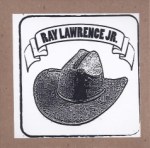
Ray Lawrence Jr. – Raw & Unplugged (Music Review)

Raw & Unplugged cover

Ray Lawrence Jr. - Raw & Unplugged

Ray Lawrence Jr. is positioned for the archetypal country success story. Broke, divorced, and living in a homeless shelter when someone gave him an old guitar, he eventually found himself given a seven-minute spotlight on Hank3’s Ghost To A Ghost album. Lawrence’s simple, traditional approach made a great counterpoint to the rest of that aggressive album, but the songs would have stood out anywhere.

If Lawrence’s rise continues, though, it won’t be due to his first full album. Rushed straight to CD Baby to take advantage of the sudden attention, Raw & Unplugged features nothing but Lawrence singing and playing acoustic guitar. These country ballads certainly don’t need fancy production – that big break was with recordings of him in the back of Hank3’s bus, after all – but he could have used a fuller band. The guitar work is better described as “minimalist” than “simple”, and Lawrence’s voice doesn’t have the energy that it did when surrounded by fellow musicians.

Do the songs live up to the promise of those initial hits? Sometimes. Lawrence is a very traditional songwriter, more in line with Hank Sr. than the standard-bearers of later generations. He’s also focused on pain and no-good women almost to the point of parody. Songs like “Two Timin Mama”, “She Stopped Lovin Me”, and “There’s Another Cheatin Heart” apparently cover what he knows, but don’t offer a lot of variety. His voice is perfect for those mournful ballads, though, to the point where he even sounds defeated when the song has him courting women. (“Tonight She’ll Be Making Love To Me Again” simply makes him the lucky recipient of a cheating woman’s affections, but still seems to regret the other man’s situation.) Maybe, though, he intends to sound hopeless when going after women: The less said about his approach on “You Can Hide Your Body But You Can’t Hide Your Beauty”, the better.

Despite all that, Lawrence knows how to write a memorable song. “She Stopped Lovin Me” and “My Hurtin Will Be Done” are every bit as good as the songs that appeared Ghost To A Ghost. “Lot Lizards Don’t Love You”, a trucker’s guide to prostitutes, also stands out. It’s good enough to support the gimmicky nature, but the delivery makes it clear that it’s not intended as a gimmick after all. He has that classic gift of making simple, personal tales feel memorable and catchy.

I firmly believe that Ray Lawrence Jr. has at least one great album in him. He has some handicaps, most notably that he’s decades too old to still be in these early stages of artistic development. Raw & Unplugged mixes great songwriting with too much filler, but it’s still notable for the level of raw talent on display. It’s chief selling point is the vision it provides of Lawrence’s potential future. As an album on its own, though, it feels incomplete.

Grade: C


Slim Cessna’s Auto Club – Unentitled (Music Review)

Unentitled cover

Slim Cessna's Auto Club - Unentitled

The gothic Americana of Slim Cessna’s Auto Club seems to be both authentic and an affectation. Intelligent, literate, and often unforgiving of the simple country characters who populate their songs, the lyrics nonetheless have an honesty that could only come from living the lives they deconstruct. Cessna’s adenoidal voice has a great range, but is not easy for country music fans to embrace. Like their previous releases, Unentitled will find devoted fans and rabid haters.

There are haunting, almost baroque ideas throughout. In Cessna’s world, problems with childbirth are a source of family shame, folksingers are ritually castrated, and finding the right dog to guard your property can become a consuming, self-destructive quest. The song quality varies widely, though. For example, “Three Bloodhounds, Two Shepherds, One Fila Brasileiro,” that song about finding the right dog, has little to offer on repeated listens. “United Brethren,” on the other hand, stays interesting due to its simple style and guilt-ridden vocals (in this story, the townspeople convert between Christian denominations in hopes of ending a drought). “The Unballed Ballad of the New Folksinger” has a menacing air appropriate to a song about castration, but “Thy Will Be Done” is simply monotonous and plodding. On balance, fortunately, there are more good moments than bad: Whispered chants of “dig the pit, fill the pit” and a militaristic call-and-response of “do you know the enemy?/yes we know it truthfully” provide the hooks for a band that refuses to simply make catchy music.

The gem of Unentitled is “Hallelujah Anyway”, a seven-minute story about a corrupt town leader demanding grandchildren, even though their birth would mean his daughter’s death. Told by the hapless fool who is being pressured to father a child, it takes on an air of impending tragedy. “Hallelujah Anyway” has scene changes, singers for the multiple characters, and an uncomfortably vague moral lesson.

Unentitled is worth hearing, though it demands effort of the audience before it can be appreciated. Its chief failing is that not all songs continue to reward that attention after the initial listen, but the ones that do provide an experience that no other band can offer. Not everyone will love Slim Cessna’s Auto Club, but everyone should have an opinion on them.

Grade: B-


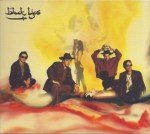
Black Lips – Arabia Mountain (Music Review)

Arabia Mountain cover

Black Lips - Arabia Mountain

Forget people like Kurt Vile; garage rock may be the true heir to 90’s slacker scene. The lo-fi sound and unassuming production make for an exciting contrast with the craft that the best performers bring. Black Lips may not sound anything like Pavement or Sonic Youth, but they invoke the same impression of being both your stoner friends and musical geniuses.

The breadth of sound on Black Lips’ Arabia Mountain is impressive. The gentle introduction to “The Lie” recalls “Stairway To Heaven” more than the demon god that the song is about, and “Time” has the freewheeling poppiness of a subversive Beach Boys. “Dumpster Dive” begins in a sloppy garage-folk style, but throws in piano flairs once the band starts rocking out. “Bone Marrow” is a post-breakup pep talk driven by clapping hands and heavily reverbed drums. They pull from all elements of rock tradition, from classic pop to modern metal and even to the creepy lounge music of “Noc-A-Homa”.

The aren’t limited by any concern for accuracy: A song about how Spider-Man “kills them dead” is followed by one celebrating the satanic messages hidden in rock music. However, their subject matter varies widely, with no theme (from women to drugs to everyday life) coming up enough to wear out its welcome. Each song has something to say – not always anything sophisticated, but none are a waste of time either.

Generally, though, the songs start out at their most creative and all veer towards the same territory by the middle: Chanting out enthusiastic but flat vocals along with music which tries to match the singer’s cadence with a surprising simplicity. At times, they could practically be a satire of spastic high schoolers unsure how to write songs. Fortunately, this sound is more of a home base for the band than a crutch. They circle around that simple territory, but always return to whatever specific style they are playing with at the moment – and their ability to write complex songs is evident, if obscured.

With sixteen tracks, it’s impressive that the band never seems to repeat themselves. They also avoid any missteps, with the possible exception of the slower space rock of “You Keep On Running”. Arabia Mountain is a fun journey through the possibilities offered by garage rock. If no individual song seems to contain enough promise for a full career, the overall effect is much more satisfying.

Grade: B


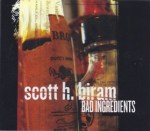
Scott H. Biram – Bad Ingredients (Music Review)

Bad Ingredients cover

Scott H. Biram - Bad Ingredients

Gravel-voiced “dirty old one-man band” Scott H. Biram has mellowed out noticeably with each new album. Bad Ingredients reverses that trend, with lo-fi blues covering every sound from his early wild rock to his later ballads. In that sense, Bad Ingredients is probably the best introduction a new listener will find to Biram. For someone who is already familiar with him, on the other hand, it is the first one to seem a little underwhelming.

I want to be careful not to dismiss this too quickly, though. Even though he isn’t breaking new ground here, I expect to look back in a year or two and consider many of the songs here to be among his best. But at least now, they seem to be less interesting than I expect from Biram. The one potentially new direction I see is that songs like “Born In Jail” and “I Want My Mojo Back” are more indebted to classic blues than his past DIY efforts. It’s a subtle change, though, and those ones don’t always feel as honest and personal as his best.

Though this is his most rocking album in years, that doesn’t seem to be Biram’s strength any more. Songs like “Killed A Chicken Last Night” recall the chaotic, rambling abandon of The Dirty Old One-Man Band, but without the energy behind it. On the other hand, some great things come out of the career-spanning mix. “Victory Song”, for example, applies that chaotic rambling to a more formally-structured song with great results. If you prefer the assured rock-n-roll attitude of Graveyard Shift, you’ll find that incorporated frequently, and usually with success.

It’s probably misleading for me to imply that Biram is calm or quiet. No matter how much he mellows out, his restless, redneck blues will always be inappropriate for dates and dinner parties. For example, the album’s standout is “Broke Ass”, a song that I would unsarcastically describe as a soulful ballad, beautiful despite his rough blues-man voice. But it’s still a song about a depressed slacker and his “worn out two-dollar whore”. Even for a Bloodshot Records artist, he incorporates a lot of metal into his country/blues format. But unlike many Bloodshot artists, it feels entirely authentic, with no posturing or overreaching.

In fact, Biram is the unappreciated gem of Bloodshot’s catalog. Their performers tend to fall into two categories: Decent cover artists committed to an “alt-country” aesthetic that the rest of the underground country scene has already moved beyond, and truly skilled artists who are just passing through on their way to larger indie labels. Biram is an authentic, unique talent who follows his own muse, but has been overlooked by too many people. If you haven’t heard him before, then like I said, Bad Ingredients makes a great introduction. And if you have, what are you waiting for? Even if it’s not his most original work, it’s still a new Scott H. Biram album.

Grade: B


Lydia Loveless – Indestructible Machine (Music Review)

Indestructible Machine cover

Lydia Loveless - Indestructible Machine

Lydia Loveless is the new star standard-bearer for Bloodshot’s “country punk” sound, with an aggressive snarl and songs full of taunts and kiss-offs. But she is just as quick to present herself as a socially awkward alcoholic, with references to depression that seem a little too real to write off as mere songwriting. Loveless’ biggest strength is in how she merges these two sides of her personality, and presents it as a consistent, fleshed-out life. If great country singers are expected to open their lives to the audience, she has the most promising approach in the modern rebel scene. Her debut album Indestructible Machine’s greatest accomplishment is shouting out lines like “you seem like such a pussy, babe” while still claiming a place in the conservative country tradition.

However, she still has some room for improvement. The opening songs demonstrate this best, with “Bad Way To Go” being simply jarring, and “Can’t Change Me” sounding like a rock band and country singer who are about to split over creative differences. The sadder songs could stand to have slightly more nuanced singing and less projecting of her voice. But when she attempts that with the more generic-sounding “How Many Women”, it seems that she had to forget her strengths in order to slow things down.

However, even the weak songs are usually excellent vehicles for Loveless’ character, and feature snappy, personal lyrics. When everything fits together as it should, the effect is excellent: “Jesus Was a Wino” is a shit-kicking justification for alcoholism, but with a dark edge that will discourage anyone from living vicariously through her. (The hook is “if I can’t find the corkscrew, I’ll just smash it open right here on the floor”.) “Crazy” should be the template for her quieter side, presenting a downward spiral that can’t be stopped despite the narrator’s self-awareness.

Indestructible Machine is consistently enjoyable, and at least for now, Loveless’ unevenness is part of her reckless charm. Even the songs that should be better are difficult to stop listening to, and the high points are worth the price of the album. I can’t tell how or if she’ll evolve next, but I have high hopes. This might not be the best debut of the past year, but it may be the most promising.

Grade: B