Archive for the ‘ Music ’ Category

Eddie Spaghetti – Sundowner (Music Review)

Sundowner cover

Eddie Spaghetti - Sundowner

Sundowner is the third solo album from Eddie Spaghetti, but his first released through Bloodshot Records. The new label doesn’t change much, though. A review of this could match the earlier albums almost word for word. His formula is a series of country covers, with just a couple originals, as always including selections from both Steve Earle and Spaghetti’s own Supersuckers.

Spaghetti is a competent but unremarkable singer, and his band matches him in that. His strength here isn’t so much in his performance, but in his excellent taste as a curator. Spanning generations of country, and even choosing a couple curveballs from the punk scene, everyone should expect to learn some new songs from this album. (Did you ever expect to hear a country cover of The Dwarves or Lee Harvey Oswald Band?) I wonder, though, if I would prefer him to devote this energy to hosting a radio show or releasing compilations. His renditions stick so close to the originals that there sometimes seems to be little purpose to them. But then, nothing about this album implies commercial calculation: From the cover picture of his wife to the closing song by his son, not to mention the rambling greeting inside, this is obviously a labor of love. (And yes, those elements appear on all his solo albums.) From that perspective, it’s easy to enjoy this. I may wish Spaghetti tried to put his own mark on these covers, but his enthusiasm for them is unmistakeable. As an ambassador between country music and the punk scene, his intended audience will get a lot out of this.

As always, the cover of his own Supersuckers song (in this case, “Marie”) fares poorly next to the classics he’s chosen, but he acquits himself well with a couple new songs. They may not be technically the best on the album, but at least there are no better versions out there to compare them to. They flesh out the album, and establish him as a creative force in his own right.

Compared to his other albums, this doesn’t hit the highs of Extra Sauce (which had all his first picks of songs to cover, and was elevated, surprisingly, by an excellent harmonica performance), but it regains the energy that Old No. 2 often lacked. I’m still holding out hope for him to release an original country album someday. He’s already proven that he has the aptitude for that, both on his own and with the Supersuckers. In the meantime, these interesting but somewhat forgettable fans-only albums do their part to flesh out the legacy of a great rock-and-roll star.

Grade: C+

Three Bloodshot Records Reviews

As usual, I bought several CDs during Bloodshot Records’ year-end sale. Since they’ve extended it through the end of January, I figure it’s worth getting my reviews out before the sale ends. Three of the albums I bought just came out in 2011, while three more were released before that. Since it makes sense to focus on the newer ones, I’ll give each of those individual articles over the next few days. But first, here are quick reviews of the ones from 2010 or earlier.

Continue reading

The Builders And The Butchers – Dead Reckoning (Music Review)

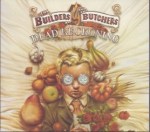
Dead Reckoning cover

The Builders And The Butchers - Dead Reckoning

With their folk-rock sound and nasally, somewhat lost voice, The Builders And The Butchers are immediately reminiscent of fellow Portlanders The Decemberists. But where The Decemberists rely heavily on affectations of past eras, this band is rooted firmly in a modern, or maybe recently-passed, alternative sound. More importantly, their vocals don’t have nearly the range of Colin Meloy, and maintain a consistently whiny sound throughout. I was ready to dismiss them in the first few minutes, but before long, they started to grow on me.

The cover to Dead Reckoning, with its realistic but overly-saturated cartoon of a dead boy (as well as the back, filled with penny-eyed children being rowed off to their fate) makes a good summary of the band’s themes. The depressing and angstful lyrics contrast with upbeat, forward-moving music, and the whole thing is a little too exaggerated to feel the emotions personally. The band has an excellent ear for pop, although their sound has never been mainstream, and this brand of wrist-cutting flamboyance went out of style after The Smashing Pumpkins and Nine Inch Nails.The back of the Dead Reckoning case

This is a band whose “Lullaby” starts with “It’s time we made ashes of our bones”, and who performs a song called “Rotten To The Core” as if it’s a dancy interpretation of Tom Waits’ cynical Blood Money album. The songs feature a huge variety of instruments (with a unique beat that comes from two people sharing a single drum set), but the results are always simple and repetitive, sometimes with a bit of a waltz or a march to them, and other times just with a stark beat to emphasize the disasters envisioned in the lyrics. Apocalyptic visions are where the singing sounds most at home, reaching manic heights with the proclamation “there’s a battle in the sky between God and the Devil” or warnings about monsters in the sea. Other songs (especially the opening “I Broke The Vein” and the closing “Family Tree”) are more personal, with a quavering narrator explaining his own pain, but the wider cinematic scale sounds the most appropriate to the band.

Though these examples may sound depressing, this is a fun album. It functions as a light, folksy call to arms for a fantasy war that doesn’t actually touch the listener personally. The Builders And The Butchers provide an unusual form of escapism, with a catchy style that sounds full and epic even when featuring mainly acoustic instruments. It’s a unique experience.

Grade: B

Best Albums of 2011

It’s traditional for end-of-year lists to start with a self-aware apology. I’ll gloss over the standard part, because I assume you already know how silly and arbitrary this process is, that it’s only meant to reflect my own opinion, and so on. The only part that really gives me pause is how incomplete it is. I do this as a hobby, which means that I’m generally only reviewing the albums I’ve chosen to buy (or in a couple cases, borrowed from friends). This year, I reviewed 67 albums, only 32 of which were actually from 2011. I still have about 15 more from this year that I have yet to review. Now, I listened to part or all of a couple hundred albums online before I decided I was interested in the ones I bought, but it’s still a limited sample.

So, I’m sure I’ve missed a few gems. But at this point in my life, I’m pretty confident in my ability to find the music I’m most likely to enjoy. So I think it’s fair for me to pick a top 5 for the year. Even if I did buy and review a couple hundred more of the year’s popular albums, I think that these ones would manage to stay within the top 10.

I don’t really feel like there was a runaway #1 this year, but I’m comfortable defending each one’s position near the top. Yes, even the albums that no one else picked.

Continue reading

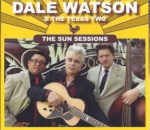
Dale Watson & The Texas Two – The Sun Sessions (Music Review)

The Sun Sessions cover

Dale Watson & The Texas Two - The Sun Sessions

With a band named “The Texas Two” and an album called The Sun Sessions, it could be easy to think that Dale Watson’s new album is a collection of rarities from the classic days of Sun Studio. He even does a passable imitation of the rockabilly that made Johnny Cash and The Tennessee Two famous while recording there. Only a few modern references and the mature perspective betray this as new material. Whether this approach is a gimmick or not is a matter of opinion, but every sign is that Watson takes this perfectly seriously. He and his band never stretch themselves trying to sound more like Cash than they can handle, and the songs legitimately fit alongside the ones from that era without feeling like simple copies.

According to the liner notes. Watson wrote half of this album in a rush after spontaneously scheduling the studio time, and the band had almost no chance to practice. This shows in the simple nature of some of these songs, especially the music. However, this style is not meant to be complex, and there is a thin line between simple and iconic. Even the most basic songs such as “Gothenburg Train” and “The Hand of Jesus” could find a place as filler on the classic Johnny Cash recordings, and that’s no small feat. The fact that Watson managed this on  short notice is a testament to his songwriting skills.

Averaging two minutes each, the band barrels through the expected variety of country themes. The heartfelt songs about love and religion fit in alongside suicide and vengeance, and Watson covers the trains, trucks, tributes, and life lessons on other tracks. “My Baby Makes Me Gravy” is a fun slice of life that doesn’t feel as gimmicky as the lighthearted songs of many country greats, and the self-destructive “Down, Down, Down, Down, Down” is a passable shot at Watson’s own “Folsom Prison Blues” or “Mama Tried”. But the song that should truly enter the country canon is “Elbow Grease, Spackle and Pine Sol”. Despite the awkward name, it’s a heartrending new take on a traditional country topic, and a vivid character study as well.

Even if the songs seem dashed off, there is not a bad one on this album. I wouldn’t encourage anyone to simply imitate their inspirations forever, but for the length of The Sun Sessions, the results feel pretty nearly perfect.

Grade: B


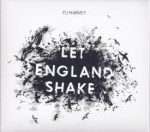
PJ Harvey – Let England Shake (Music Review)

Let England Shake cover

PJ Harvey - Let England Shake

Calling PJ Harvey’s Let England Shake a return to form is misleading. After all, she has reinvented herself with each new album. The first sign of her recent decline was when Uh Huh Her reprised past sounds instead of creating new ones. So this new album is a “return” only in the sense that it is nothing like what she has done before, and therefore sounds vital and natural.

Let England Shake is different not only in sound, but in focus. Harvey has turned her intense gaze away from herself and towards humanity in general. Specifically bemoaning her native England’s decline, she lays the blame on its destructive wars. Harvey’s singing here is mellow and restrained, admittedly not playing to her strengths, and the unusual (for her) backing vocals are a little flat, but that hardly matters: This is a vision as arresting as any she has presented yet.

In fact, the vision is unrelentingly bleak. Harvey’s western audiences may not often think about violence around the world, but this album offers no alternative to the idea that our time is dominated by war. Her quiet voice seems lost in a tide of nationalism and forces outside her control, telling stories of doomed soldiers and civilians fleeing through sewage. The mood is incredibly effective, offering no moments of anger to provide catharsis. The closest it comes to release is in the sarcasm evident on the propaganda-styled chant of “The Glorious Land”. (This is one of the standout songs, by the way, twisting a children’s chant about their rich, fertile nation into one in which the land is plowed by tanks and produces orphans.)

The songs cover wars past and present, confusing the message about England’s current decline. All the war portrayed here seems equally hopeless, with “On Battleship Hill” highlighting the unhealed damage that remains even after nature has reclaimed a battleground. However, this change in focus, which lets Harvey’s stories shift between survivors, victims, and observers, provides the main source of variety on the album without ever letting up on its point.

Let England Shake is far from Harvey’s best album, and not all fans of her rougher, more personal work will find the spark that they’re hoping for here. Despite that, this is an incredibly affecting document of our times. It’s difficult to listen to repeatedly, but that’s actually a testament to its songcraft. PJ Harvey is back in excellent form, and if it isn’t exactly with the sound you would expect, how can that be a surprise?

Grade: B+


The Coathangers – Larceny & Old Lace (Music Review)

Larceny & Old Lace cover

The Coathangers - Larceny & Old Lace

The Coathangers are an all-female punk group with the brusque intimacy of someone shouting at you from across a crowded room. Their simple song structure and deliveries occasionally give way to influences from classic pop and soul, and even a country-style ballad, proving that their style is more of a fundamental melting pot than a limitation. Larceny & Old Lace is their third album.

The drums and more electronic-sounding music almost appear to be pre-programmed, at odds with the full-throated shouting and chaotic guitar fuzz. This is a very unfortunate distraction. As it is, they are best in quick hooks and soudbytes, such as the suddenly-intense declaration “such a shame we say goodbye” or the bratty schoolyard chant of “well, Johnny’s going to hell for what he did”. Those highs are rarely maintained over the length of a whole song, though. (For example, “Johnny” loses me when the second verse turns out to be about a mass-murdering woman going to hell as well. It takes on a seriousness that doesn’t suit the irreverent start.)

More problematically, the songs rarely seem to be about anything memorable. I’m not asking for anything deep, but most songs are forgettable beyond a couple catchy lyrics. This needs more tracks like “Go Away”, a simple song about needing space from a not-quite-boyfriend. Humanity and a relatable situation come through, in spite of (or because of) the fact that it isn’t trying to be anything more than an everyday slice of life. Punk’s strength is in how easily a sloppy, basic song can seem to reflect the human condition, but its weakness is that if it misses that mark, it seems to be posed and unnatural.

It’s frustrating to review The Coathangers, because they frequently approach true genius. The hooks are raw and pure, and the modern indie craft they bring to a wild, unhinged genre provides real moments of frisson. But the songs are ultimately forgettable, without the ability to keep the listener coming back after the initial attraction. I could easily see myself hailing the band as essential with just some small tweaks to the format, but as it is, I’m disappointed.

Grade: C


Tom Waits – Bad As Me (Music Review)

Bad As Me cover

Tom Waits - Bad As Me

“Whatever they told you about me, well all of it’s true!” crows Tom Waits, somehow bringing a childish enthusiasm to his trademarked blues growl. Bad As Me is an album celebrating Waits’ image, from the strangely iconic photos in the lyric booklet to the songs that seem to pay homage to his entire career. The “brawlers, bawlers, and bastards” are all here: The title track is a declaration of his aggressively individualistic and impish leanings, but it works partly because the beautiful sentiments on songs like “New Year’s Eve” also come from the heart. On “Kiss Me”, Waits even seems to be going back decades to his quirky lounge singer persona.

In fact, about the only thing Bad As Me is missing is consistency. The transitions between the different songs can be so jarring that this feels less coherent as an album than the recent Orphans collection. Or compare this to his last studio album, Real Gone, which found Waits seemingly trying to sing serious songs about serious problems. Sure, that album had beat-boxing experiments, but it seemed intent on putting a human face in front of the music. That’s almost forgotten here, with “Face To The Highway” and “New Year’s Eve” being the only times that he seems interested in putting the character before the performance.

Despite all that, though, each song is excellent, and this finds Waits back in the classic form that Real Gone lacked. This is also Waits’ strongest album musically since Mule Variations, if not before, with the energy and richness to do justice to his voice. These songs are full of distinctive Waitsian touches. The characters have names like “Flat Nose George” and “Nimrod Bodfish”, and he tosses off lines like “the only way down from the gallows is to swing” with a sincerity that belies their unusual nature.

“Hell Broke Luce” gains distinction as the loudest Tom Waits track ever, but this noise is completely justified in an angry war story. Waits has a history of preachy anti-war songs, such as “Day After Tomorrow” and “Road To Peace”, but he finds the perfect approach here. As a soldier, the narrator’s anger seems natural, and his initial complaints (a hellish land and idiotic superiors) are in line with traditional pro-war stories. Waits’ most absurd lyrics fit right in here, and as fortunes crumble for the narrator and his friends, the listener will agree about the futility of war without needing a lecture.

On the other hand, “Last Leaf” is Waits at his most quiet and contemplative, considering his aging rock star status as if he’s a leaf that won’t let go of the tree. The song doesn’t make this sound glamorous or noteworthy, but just presents it as the only life the leaf knows. It’s beautiful but inconclusive, as the leaf also sounds a bit dried-up and lonely. (This song features very appropriate backing vocals from Keith Richards, who is in his most vital form in years playing guitar for the album’s more rocking tracks.)

Maybe the best way to summarize Bad As Me is to say that I have to stop myself from writing paragraphs about every song on it. If this album feels inconsistent at times, it’s because the idea of “Tom Waits” now encompasses such wide territory. Even this whole album can’t quite encompass all his sides (no spoken-word stories? Really?), but whichever of his many personas you prefer, you’ll find great examples of it here. The consistency is found not in the styles he chooses, but in the song quality.

Waits releases good albums regularly, but the career-defining ones only appear about once a decade. Bad As Me is in that rare category.

Grade: A


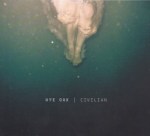
Wye Oak – Civilian (Music Review)

Civilian cover

Wye Oak - Civilian

I was introduced to Wye Oak through song samples on the internet. The band makes an excellent first impression, with a mellow, ethereal sound that hints at meaning just beyond the listener’s grasp. Singer Jenn Wasner’s trancelike voice is calm and confident, and bandmate Andy Stack is an inventive musician. The dark but beautiful style leaves an impression of something like Portishead backing up the Delgados.

When I bought their album Civilian, though, I was immediately disappointed. Wye Oak is as talented as that initial exposure implied, but the promised meaning behind the songs never came through. The consistently mellow music didn’t make it easy to stay invested in exploring the songs, and Wasner’s voice began to sound more and more like someone singing through a mouthful of cotton. There are some brilliant moments, such as when “Dogs Eyes” implies that a human spark in other animals could cause crises of faith for both believers and non-believers. But even that song has nothing left to say after the first 40 seconds. In general, this is an album that makes you work hard to find meaning, but rarely offers enough to make it worthwhile.

I’ve been listening to Cilvilian for a few months now, always thinking that I was almost to the point where I could write a thorough review. More recently, I’ve started to come around to appreciating it again. Like a koan, the key step is in accepting the lack of purpose to the lyrics. Once that has happened, you can truly appreciate the music. This holds up under an audiophile’s scrutiny, but would fit in equally well in a department store background. Simple time-keeping beats usually let the focus stay on Wasner’s voice, but occasionally rises above it and builds to memorable crescendos. While the lyrics may not have much purpose, the vocals and instrumentation of this two-person band blend together seamlessly for the greater whole.

It’s difficult for me to review an album I’ve had such disparate reactions to. I’ve seen other people in all three of the phases I went through, and I’m not sure that there’s one correct “final” conclusion. I enjoy Civilian now, but I’m not sure if it was worth the effort I went through to reach this point. I can already imagine the next phase of my relationship to the album: I won’t feel compelled to listen to it much more now that I’ve reviewed it, and it will get lost in my music collection. Every now and then I’ll get a pleasant surprise from rediscovering it, but I’ll put it aside again after another listen. Those times it resurfaces for me will be as fleeting and inconclusive as Wasner’s voice.

Grade: C+


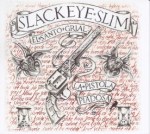
Slackeye Slim – El Santo Grial: La Pistola Piadosa (Music Review)

El Santo Grial: La Pistola Piadosa cover

Slackeye Slim - El Santo Grial: La Pistola Piadosa

It’s interesting that I’ve recently bought two story-focused concept albums. The first was Fucked Up’s David Comes To Life, and now I have Slackeye Slim’s El Santo Grial: La Pistola Piadosa. It may be a coincidence, but I’m wondering if this is an emerging trend. Concept albums are a logical response to the modern focus on cheaply-purchased singles.

Albums like this have always had a tricky relationship with their stories. The repetitive verse-chorus-verse pattern of songs works against standard narrative structures, and song lyrics are generally expected to be circuitous and vague. El Santo Grial takes a very different approach to storytelling than any other album I’ve ever heard, basically by making the story a priority. Songs are either monologues or outright narration, with no almost no hidden meanings to be parsed from the lyrics. This is effectively a radio play set to music.

However, even radio plays have trouble attaining the sense of place and storytelling that Slackeye Slim manages here. The song structures are very simple, but the music and atmosphere are rich and beautifully textured. Nominally a gothic country-western work, this eschews traditional musical tropes to incorporate samples with a modern producer’s flair. Neighing horses, rambling town drunks, and haunting flutes set every scene from busy towns to deserted plains. The vision of a dangerous, mystical western land is firmly established in the music alone, leaving the lyrics free to focus on story.

That story is of a man who rants about the unfairness of life until being granted the holy Pistola Piadosa, which will make him the instrument of God’s vengeance. Silly but unique, this idea works largely because of its darkness and “be careful what you wish for” twist. The lyrics are compelling and often clever, driven by frontman Joe Franklin’s gravelly voice. He has a Firewater-meets-Tom Waits flair which is sometimes focused too much on the spoken word, but is nonetheless attention-grabbing.

The story drags at times, letting multiple songs cover plot points that a single one could have handled, but the varied soundscapes make up for these shortcomings. The ending is also a bit unsatisfying: There is a complete plot arc here, but the conclusion feels more like the beginning of something larger. The story itself ends up being entirely about one man’s struggle and self-discovery, without the larger battles and action that seem promised at times. But this truly is worth repeated listens all the way through, and how many albums can say that in this single-driven era?

A gothic “weird country”, Slackeye Slim won’t necessarily appeal to the people who normally listen to country music. Their sound is built on an honest appreciation for the sounds and traditions of the genre, though, and the result is something startlingly original.

Grade: B