Archive for the ‘ Rock ’ Category

Wild Flag – Wild Flag (Music Review)

Wild Flag cover

Wild Flag - Wild Flag

For fans of the much-missed Sleater-Kinney, 2011 was a banner year. Corin Tucker returned with a new album after years of silence, and Carrie Brownstein started the surprise hit comedy Portlandia. Around the same time, Brownstein also joined forces with Janet Weiss, the only Sleater-Kinney member who had stayed active in the music scene, to form the band Wild Flag. While I found Tucker’s album to be so-so, the self-titled Wild Flag album has manages to capture the spirit of Sleater-Kinney without ever being stuck in the past.

(I should admit to one issue with my review right away: Wild Flag has two more band members, Mary Timony and Rebecca Cole, with resumés that stretch back as far as Brownstein and Weiss’. They are integral to this new band, but since I’m not familiar with them, my personal reaction to Wild Flag is through the lens of a Sleater-Kinney fan.)

Brownstein, once listed by Rolling Stone as one of the most underrated guitarists of all time, is only improved by the move from a trio to a quartet. Wild Flag’s sound is rich and varied, with one foot in the Kill Rock Stars-led scene of indie 90’s rock, and the other ready to fill clubs today. The balls-out rocker “Boom” is several steps above the treatment that the comparatively stripped-down Sleater-Kinney would have offered, while “Racehorse” (with its confident, sexualized declaration, “I’m a racehorse/Put your money on me”) is like a tighter version of The Woods’ challenging “Let’s Call It Love”. That’s not to say that the band needs to be compared to Sleater-Kinney at every turn. Some songs, such as the tension-filled “Endless Talk” go in a direction that that previous band simply wouldn’t have thought of.

Brownstein remains as energetic as ever, with Wild Flag being first and foremost a love letter to music. This is made obvious, and literal, right from the opening track: “Romance” is specifically about the joys of live music, and directly calls out any fans who are too cool to sing and dance themselves. That theme of movement and abandon repeats throughout, most notably on “Boom” and “Short Version”. Though it’s difficult to reconcile this attitude with Brownstein’s half-decade under the radar, you’ll be best off simply ignoring that and enjoying the result.

As someone who always wants to see artists trying new directions, I feel a little strange emphasizing Wild Flag’s connection to Sleater-Kinney at every turn. I’m doing it not to reduce them to a nostalgia act, but because they feel like deserving heirs to Sleater-Kinney at every turn. It’s not just the girl-rock, complex lyrics, and Brownstein’s distinctive voice, but the fact that they don’t seem beholden to the expectations that those might create. In 2006, Brownstein and Weiss risked alienating their fans by following their muse to The Woods, a jammier album made for large arenas. That same freedom is evident here. Follow these musicians to their new band not in the hopes of hearing a repeat of Dig Me Out or All Hands On the Bad One, but because they still have the creative spark that drove them then.

Grade: A
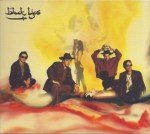

Black Lips – Arabia Mountain (Music Review)

Arabia Mountain cover

Black Lips - Arabia Mountain

Forget people like Kurt Vile; garage rock may be the true heir to 90’s slacker scene. The lo-fi sound and unassuming production make for an exciting contrast with the craft that the best performers bring. Black Lips may not sound anything like Pavement or Sonic Youth, but they invoke the same impression of being both your stoner friends and musical geniuses.

The breadth of sound on Black Lips’ Arabia Mountain is impressive. The gentle introduction to “The Lie” recalls “Stairway To Heaven” more than the demon god that the song is about, and “Time” has the freewheeling poppiness of a subversive Beach Boys. “Dumpster Dive” begins in a sloppy garage-folk style, but throws in piano flairs once the band starts rocking out. “Bone Marrow” is a post-breakup pep talk driven by clapping hands and heavily reverbed drums. They pull from all elements of rock tradition, from classic pop to modern metal and even to the creepy lounge music of “Noc-A-Homa”.

The aren’t limited by any concern for accuracy: A song about how Spider-Man “kills them dead” is followed by one celebrating the satanic messages hidden in rock music. However, their subject matter varies widely, with no theme (from women to drugs to everyday life) coming up enough to wear out its welcome. Each song has something to say – not always anything sophisticated, but none are a waste of time either.

Generally, though, the songs start out at their most creative and all veer towards the same territory by the middle: Chanting out enthusiastic but flat vocals along with music which tries to match the singer’s cadence with a surprising simplicity. At times, they could practically be a satire of spastic high schoolers unsure how to write songs. Fortunately, this sound is more of a home base for the band than a crutch. They circle around that simple territory, but always return to whatever specific style they are playing with at the moment – and their ability to write complex songs is evident, if obscured.

With sixteen tracks, it’s impressive that the band never seems to repeat themselves. They also avoid any missteps, with the possible exception of the slower space rock of “You Keep On Running”. Arabia Mountain is a fun journey through the possibilities offered by garage rock. If no individual song seems to contain enough promise for a full career, the overall effect is much more satisfying.

Grade: B


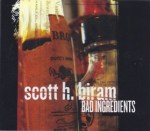
Scott H. Biram – Bad Ingredients (Music Review)

Bad Ingredients cover

Scott H. Biram - Bad Ingredients

Gravel-voiced “dirty old one-man band” Scott H. Biram has mellowed out noticeably with each new album. Bad Ingredients reverses that trend, with lo-fi blues covering every sound from his early wild rock to his later ballads. In that sense, Bad Ingredients is probably the best introduction a new listener will find to Biram. For someone who is already familiar with him, on the other hand, it is the first one to seem a little underwhelming.

I want to be careful not to dismiss this too quickly, though. Even though he isn’t breaking new ground here, I expect to look back in a year or two and consider many of the songs here to be among his best. But at least now, they seem to be less interesting than I expect from Biram. The one potentially new direction I see is that songs like “Born In Jail” and “I Want My Mojo Back” are more indebted to classic blues than his past DIY efforts. It’s a subtle change, though, and those ones don’t always feel as honest and personal as his best.

Though this is his most rocking album in years, that doesn’t seem to be Biram’s strength any more. Songs like “Killed A Chicken Last Night” recall the chaotic, rambling abandon of The Dirty Old One-Man Band, but without the energy behind it. On the other hand, some great things come out of the career-spanning mix. “Victory Song”, for example, applies that chaotic rambling to a more formally-structured song with great results. If you prefer the assured rock-n-roll attitude of Graveyard Shift, you’ll find that incorporated frequently, and usually with success.

It’s probably misleading for me to imply that Biram is calm or quiet. No matter how much he mellows out, his restless, redneck blues will always be inappropriate for dates and dinner parties. For example, the album’s standout is “Broke Ass”, a song that I would unsarcastically describe as a soulful ballad, beautiful despite his rough blues-man voice. But it’s still a song about a depressed slacker and his “worn out two-dollar whore”. Even for a Bloodshot Records artist, he incorporates a lot of metal into his country/blues format. But unlike many Bloodshot artists, it feels entirely authentic, with no posturing or overreaching.

In fact, Biram is the unappreciated gem of Bloodshot’s catalog. Their performers tend to fall into two categories: Decent cover artists committed to an “alt-country” aesthetic that the rest of the underground country scene has already moved beyond, and truly skilled artists who are just passing through on their way to larger indie labels. Biram is an authentic, unique talent who follows his own muse, but has been overlooked by too many people. If you haven’t heard him before, then like I said, Bad Ingredients makes a great introduction. And if you have, what are you waiting for? Even if it’s not his most original work, it’s still a new Scott H. Biram album.

Grade: B


The Coathangers – Larceny & Old Lace (Music Review)

Larceny & Old Lace cover

The Coathangers - Larceny & Old Lace

The Coathangers are an all-female punk group with the brusque intimacy of someone shouting at you from across a crowded room. Their simple song structure and deliveries occasionally give way to influences from classic pop and soul, and even a country-style ballad, proving that their style is more of a fundamental melting pot than a limitation. Larceny & Old Lace is their third album.

The drums and more electronic-sounding music almost appear to be pre-programmed, at odds with the full-throated shouting and chaotic guitar fuzz. This is a very unfortunate distraction. As it is, they are best in quick hooks and soudbytes, such as the suddenly-intense declaration “such a shame we say goodbye” or the bratty schoolyard chant of “well, Johnny’s going to hell for what he did”. Those highs are rarely maintained over the length of a whole song, though. (For example, “Johnny” loses me when the second verse turns out to be about a mass-murdering woman going to hell as well. It takes on a seriousness that doesn’t suit the irreverent start.)

More problematically, the songs rarely seem to be about anything memorable. I’m not asking for anything deep, but most songs are forgettable beyond a couple catchy lyrics. This needs more tracks like “Go Away”, a simple song about needing space from a not-quite-boyfriend. Humanity and a relatable situation come through, in spite of (or because of) the fact that it isn’t trying to be anything more than an everyday slice of life. Punk’s strength is in how easily a sloppy, basic song can seem to reflect the human condition, but its weakness is that if it misses that mark, it seems to be posed and unnatural.

It’s frustrating to review The Coathangers, because they frequently approach true genius. The hooks are raw and pure, and the modern indie craft they bring to a wild, unhinged genre provides real moments of frisson. But the songs are ultimately forgettable, without the ability to keep the listener coming back after the initial attraction. I could easily see myself hailing the band as essential with just some small tweaks to the format, but as it is, I’m disappointed.

Grade: C


Tom Waits – Bad As Me (Music Review)

Bad As Me cover

Tom Waits - Bad As Me

“Whatever they told you about me, well all of it’s true!” crows Tom Waits, somehow bringing a childish enthusiasm to his trademarked blues growl. Bad As Me is an album celebrating Waits’ image, from the strangely iconic photos in the lyric booklet to the songs that seem to pay homage to his entire career. The “brawlers, bawlers, and bastards” are all here: The title track is a declaration of his aggressively individualistic and impish leanings, but it works partly because the beautiful sentiments on songs like “New Year’s Eve” also come from the heart. On “Kiss Me”, Waits even seems to be going back decades to his quirky lounge singer persona.

In fact, about the only thing Bad As Me is missing is consistency. The transitions between the different songs can be so jarring that this feels less coherent as an album than the recent Orphans collection. Or compare this to his last studio album, Real Gone, which found Waits seemingly trying to sing serious songs about serious problems. Sure, that album had beat-boxing experiments, but it seemed intent on putting a human face in front of the music. That’s almost forgotten here, with “Face To The Highway” and “New Year’s Eve” being the only times that he seems interested in putting the character before the performance.

Despite all that, though, each song is excellent, and this finds Waits back in the classic form that Real Gone lacked. This is also Waits’ strongest album musically since Mule Variations, if not before, with the energy and richness to do justice to his voice. These songs are full of distinctive Waitsian touches. The characters have names like “Flat Nose George” and “Nimrod Bodfish”, and he tosses off lines like “the only way down from the gallows is to swing” with a sincerity that belies their unusual nature.

“Hell Broke Luce” gains distinction as the loudest Tom Waits track ever, but this noise is completely justified in an angry war story. Waits has a history of preachy anti-war songs, such as “Day After Tomorrow” and “Road To Peace”, but he finds the perfect approach here. As a soldier, the narrator’s anger seems natural, and his initial complaints (a hellish land and idiotic superiors) are in line with traditional pro-war stories. Waits’ most absurd lyrics fit right in here, and as fortunes crumble for the narrator and his friends, the listener will agree about the futility of war without needing a lecture.

On the other hand, “Last Leaf” is Waits at his most quiet and contemplative, considering his aging rock star status as if he’s a leaf that won’t let go of the tree. The song doesn’t make this sound glamorous or noteworthy, but just presents it as the only life the leaf knows. It’s beautiful but inconclusive, as the leaf also sounds a bit dried-up and lonely. (This song features very appropriate backing vocals from Keith Richards, who is in his most vital form in years playing guitar for the album’s more rocking tracks.)

Maybe the best way to summarize Bad As Me is to say that I have to stop myself from writing paragraphs about every song on it. If this album feels inconsistent at times, it’s because the idea of “Tom Waits” now encompasses such wide territory. Even this whole album can’t quite encompass all his sides (no spoken-word stories? Really?), but whichever of his many personas you prefer, you’ll find great examples of it here. The consistency is found not in the styles he chooses, but in the song quality.

Waits releases good albums regularly, but the career-defining ones only appear about once a decade. Bad As Me is in that rare category.

Grade: A


Rock Capsule Reviews

I review new things on this site, but that includes anything that is new to me. I have a pile of rock and punk CDs I recently bought that range from two to ten years old. A couple are disqualified because I already knew them from years ago, but there are five that I hadn’t heard before.

“New to me” doesn’t necessarily mean new (or relevant) to you, and not all my readers want to read about a bunch of rock bands anyway. Also, I’m going to be posting a lot of music reviews in the next couple weeks, as I try (and fail) to get through my 2011 backlog before the obligatory best of the year article. So to keep my music reviews from dominating the site, I’ve written up short ones for these older albums, combined them into one post, and hidden them below the fold.

Continue reading

Screeching Weasel – First World Manifesto (Music Review)

First World Manifesto cover

Screeching Weasel - First World Manifesto

It’s been eleven years since Screeching Weasel’s last album, enough time for their pop punk sound to dominate the music industry and then fade away. A few years too late for a shot at mainstream success, they are back with First World Manifesto. Founding member John Jughead is missing after legal squabbles, but the other 40-year-olds are here and projecting youthful brattiness as if it never went out of style.

The band is at its best when frontman Ben Weasel acknowledges his role as an aging standard-bearer of a dying scene. In “Follow Your Leaders”, he describes the band as “frat boys with sillier haircuts” and urges the fans to “fall into line like you do all the time”. “Little Big Man” features a tongue-in-cheek lyrics about how Weasel will sic his lawyers on anyone who doesn’t acknowledge his punk rock cred. Self-deprecation is a common punk rock trick, but Manifesto takes it one step further by acknowledging that they’re expected to do so. (“See? Please notice, I laughed at myself” sings Weasel, apparently with checklist in hand.) It’s an appropriately mature and self-aware bid for relevancy in the 2011 punk scene. That’s a relief, because their only attempt to branch out from the traditional themes of punk rock is the somewhat embarrassing love song “Dry Is The Desert” (which never manages any emotional or lyrical depth beyond what the name implies).

For the most part, the band is content to churn out pretty standard songs. They don’t have much to say, but are saved from irrelevance by surprisingly catchy hooks. Tracks about self-destruction (“Bite Marks”), rebelling against scenesters (“Friday Night Nation”), and breakups (“Frankengirl”) manage to be a little more memorable than the comparable songs from other bands. The only one that tries to say much, though, is “Come And See The Violence Inherent In The System”: It contrasts the most fun, lighthearted music on the album with an over-the-top laundry list of complaints about the state of the world, only to spend the second half of the song making fun of the people who issue such complaints.

For the most part, Manifesto succeeds by setting the bar low and clearing it easily. If you’re looking for new pop punk, this may be one of your better bets. It doesn’t break any new ground, but it also never seems like a cynical cash-grab. For a comeback album, that’s not bad.

Grade: B-


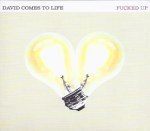
Fucked Up – David Comes To Life (Music Review)

David Comes To Life cover

Fucked Up - David Comes To Life

It seems that there’s always one band to take up mantle as the potential savior of punk rock. Of course, they rarely seem to impact as much as expected: Where are all the bands inspired by The Refused or The New Bomb Turks? Regardless of their future legacy, though, Fucked Up has stepped into this role with the perfect approach for today’s music scene. From the radio-unfriendly name to the literate lyrics, this is legitimate punk for hipsters. The style works perfectly for people who might not normally listen to such hard music, as well: Vocalist Pink Eye just shouts the words in his throaty voice with a constant high energy level that could be almost a parody of punk. It can sound like noise at first, but after reading through the lyrics once, it sticks in the mind easily and the listener is inducted into the secret club of those who understand Fucked Up.

The band has a flair for the dramatic, and their experiments push the boundaries of what one would expect from their straightforward punk sound. Even knowing this, I don’t think anyone expected their 2011 release to be a rock opera. Over the course of 78 minutes, their character David falls in love, falls out of love, despairs, rails against the very concept of love, and then finally learns to open himself and accept pain as part of living life fully. David Comes To Life is possibly the most ambitious album of the year.

Most rock operas are confusing, showing the artistic overreach of classic and prog rock bands. This happens at times here, because Fucked Up is certainly capable of following their muse into strange territory. However, they are also grounded by a solid punk foundation, so quite a bit of the story is based on simple descriptions of emotions and events. The interplay between these two aspects of the band gives David an unpredictable feel, with every line like “He’s a ship on the sea, setting sail to perfidy” balanced by a catchy, heartfelt declaration like “Maybe it was my fault and I deserve to be upset, maybe the price of being wrong is a lifetime of regret.”

The first half of the album focuses especially on the literal story of a relationship and its aftermath. It’s so centered on the emotional rewards and costs that the plot specifics are barely given; The characters meet with a simple “hello, my name is David, your name is Veronica, let’s be together, let’s fall in love”, and the troubles begin two songs later with a perfunctory “right on time, here’s the other shoe”. It’s not a satisfying story, but the emotions, good and bad, come through with a clarity that few concept albums have ever conveyed.

As the story continues, it becomes more abstract and even metafictional. David’s anger leads to him directly confronting the narrator of the story, and the band seems to consider their own culpability in creating unhappy characters, but not before literally defeating David in battle. David is accused of murdering Veronica by people who sometimes seem completely literal, but other times imply that the actual crime was one of forgetfulness. Being only a character in a story, Veronica can’t survive if David blocks out her memory. These conceits are still peppered with a believable portrayal of emotions, though, and while I’d be hard-pressed to explain the details of the plot, David’s eventual healing and maturity feels like it was legitimately earned.

David Comes To Life is occasionally guilty of the ambitious failures that plague all rock operas, but it’s an impressive work overall. Fucked Up certainly put everything they could into it, too, with their lyrically dense songs filling up a CD to capacity. (As if that’s not enough, the liner notes include two additional poems, one providing an in-story introduction to go with the opening instrumental, and the other a tongue-in-cheek greeting to the fans.) However, it does fall short of the high bar set by the band’s last full-length, The Chemistry of Common Life. The focus on story and lyrics means that, despite the quantity, there is a lot less musical variety than an album of standalone tracks would have. And given that fans expect a high level of meaning out of all Fucked Up songs, the ongoing story is in some ways less dense in meaning than Chemistry was. Here, several songs might run together to say a single thing, rather than providing something new every few minutes.

There is no reason to complain too much about the flaws in this album, though. Fucked Up continues its reign as the Great Hope of Punk, giving their all for a work whose ambition only slightly outpaces its accomplishments.

Grade: A-


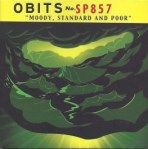
Obits – Moody, Standard and Poor (Music Review)

Moody, Standard and Poor cover

Obits - Moody, Standard and Poor

When the Obits’ first album I Blame You appeared in 2009, it was a breath of fresh air. Two years later, their follow-up Moody, Standard and Poor is much like a second breath of that exact same fresh air. It’s as good as the first one in many ways, but just doesn’t feel nearly as vital.

It’s kind of strange to complain about the album sounding too similar to anything, given how unique the band’s sound is. A bass-heavy, blues-informed garage band, they have a punk energy but the clean sound and slightly abstract lyrics of an indie blues band. Singer Rick Froberg has an intense scream that demands attention, but the taut, frequently-evolving music is what sticks in the listener’s mind. The Obits deserve comparisons to Boston in their accomplishment of creating a distinctive, immediately recognizable sound on their debut.

If anything, Moody, Standard and Poor dials down the musical intensity slightly and explores slightly wider ground lyrically, but this is so subtle that it’s hard to tell if it was intentional. That may be a fertile direction for future Obits albums, but in this one, it just sounds like a collection of second-best songs from the same session as I Blame You. It’s even shorter than that album, at a slim 35 minutes.

The similarities mean that the sound is still great, at least. There isn’t a single minute of filler, and the new songs are welcome. They range from the introspective and (slightly) slow-paced “New August”, which takes time to build a groove, to the angry “No Fly List”, which proves that the band can incorporate punk rock intensity when they want. The mostly instrumental “Spot the Pikey”, with surf riffs leading up to an almost-bored group reciting the song title, has a sense of humor not previously shown.

There are definitely multiple possibilities for evolution in the group’s future. Obviously, it will still sound reminiscent of these past albums, and in some ways it’s unfair to punish them for having developed such an original sound already. But it will be necessary for the Obits to recapture the thrill of discovery and claim the excitement that their style deserves.

Grade: B-


Hank3’s Four September Releases (Music Review)

Though Hank Williams III, or Hank3, revitalized the country music scene with his metal-influenced outlaw approach, he’s seemed to be on a slow decline ever since the seminal Straight To Hell. Though even his lesser output was still notable, everyone has been wondering what would happen once his contract with Curb Records finally ended and their legal and creative feuds would finally be done. As 2011 began and Hank3 was free, though, there were several months of no news at all. When news finally did come, it made up for the long silence: Hank3 released four new albums on the same day in early September, showcasing the variety of directions he was now free to go in.

The albums are out now, and they definitely do have an impressive variety and dedication. They sometimes make an argument that his corporate controllers had kept him from embarrassing mistakes, but they also have some pretty amazing moments that could never have been accomplished as long as he was forced to play it safe and worry about commercial concerns. These may not be the best albums of 2011, but it is the biggest musical event of the year.

Continue reading