Archive for the ‘ Rock ’ Category

Dropkick Murphys – Going Out In Style (Music Review)

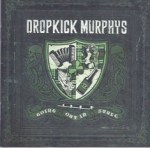
Going Out In Style cover

Dropkick Murphys - Going Out In Style

Don’t let the Dropkick Murphys fool you. Though they named their latest album Going Out In Style, they have no plan to disband anytime soon. They’re an institution now, so much so that their Wikipedia page needs a chart to record the members who have come and gone over the years, and they know exactly how to please their fans with every new album. (It helps that they wait a few years between each release, so there’s never a glut of Murphys music.)

That’s not to say that the Dropkick Murphys sound exactly the same from year to year. Interestingly, Going Out In Style is possibly the Irish punk band’s hardest album yet, but the standard punk signifiers are almost missing. Bagpipes and flutes, which used to appear sporadically for flavor, are now as prominent as the guitars, and a new listener could easily interpret this as an especially raucous Irish band.

Despite this change, the band’s strength is still in how naturally they connect Irish and punk culture. The wild party in Going Out In Style’s title track is a punker’s dream, but the specifics draw from hard-drinking Irish culture. “Sunday Hardcore Matinee” is about going to concerts as a kid, but describes punk shows as a character-building experience that their community-oriented fanbase will embrace. And of course, the Murphys’ rocking renditions of traditional songs (here “Peg of My Heart” and “The Irish Rover”) still sound like they should have been the definitive versions of the songs all along.

Even more than the Irish elements, the thing that really sets the Dropkick Murphys apart from other punk bands is their perspective as mature adults. It’s a traditionally youthful genre, but they manage to sound perfectly natural looking back at a hard-fought life (“Cruel”) or giving life lessons to those around them (“Deeds Not Words”). This element features even more strongly than normal here, with Going Out In Style being billed as a tribute to a (fictional) 78-year-old veteran and longshoreman named Connie Larkin.

In short, the Dropkick Murphys have once again released one of the best legitimate punk albums of the year, while also writing songs that will appeal to a lot of people who would normally even never give punk music a chance.

Grade: A-

Woven Bones – In And Out And Back Again (Music Review)

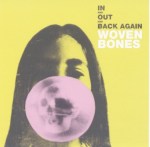
In And Out And Back Again cover

Woven Bones - In And Out And Back Again

Woven Bones have a strong ear for catchy pop hooks, but they bury these under layers of droning guitar and fuzzed-out garage vocals. The small fraction of pop aficionados who will appreciate that combination will find In And Out And Back Again enjoyable and light. That grainy, minimalistic bubble gum picture on the cover is accurate.

Despite the sloppy garage sound, Woven Bones are a tightly knit outfit. Not a beat is out of place, and the confident vocal snarl maintains a constant forward momentum. In And Out demonstrates that Woven Bones has already crafted a more distinctive sound than most bands ever achieve.

This “Woven Bones sound” is both a blessing and a curse. The songs are consistently good, without a single bad moment, but neither does any track work as an obvious standout. And though there is definite variety from track to track (check out the hooky “Your Way With My Life” followed immediately by slow, sinister “Creepy Bone”), it would wear out its welcome if it went past the album’s short 26 minutes. However, it is to the album’s credit that it doesn’t even feel like 26 minutes. It flies by with a constant succession of earworms, and no breaks at which the listener might notice the passage of time. Album-closer “Blind Conscience” does take a minute too long to fade out, but it isn’t until this wind-down that anyone would check their watch.

From what little I can find online, it looks like Woven Bones have released a series of under-the-radar EPs along with this (barely) full-length. I don’t see them breaking through to popular appeal any time soon, but I fully expect them to gain new devoted fans with each release. Their enthusiastic, high-energy twist on a slacker sound remains compelling even after the newness has worn off.

Grade: B


Andrew Jackson Jihad – Candy Cigarettes, Capguns, Issue Problems and Such (Music Review)

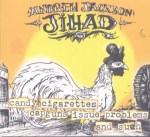
Candy Cigarettes, Capguns, Issue Problems and Such cover

Andrew Jackson Jihad - Candy Cigarettes, Capguns, Issue Problems and Such

What makes some jokes worth repeating, but not others? Many people will enjoy watching a funny movie over and over, but it can be almost painful to sit through the act of a comedian you’ve seen before. Funny songs can work either way. Candy Cigarettes, Capguns, Issue Problems and Such, a reissue of Andrew Jackson Jihad’s early releases, shows examples of both extremes.

The songs are stripped-down anti-folk, often nothing more than drums, an acoustic guitar, and Sean Bonnette’s high off-key voice. The music ranges from sweet and folky to an aggressive sound reminiscent of a high-school Modest Mouse cover band. The lyrics are tend towards irreverent, and often obscene, humor. And that’s where my questions about the nature of jokes arise.

Most humor comes from some element of surprise or subverted expectations. If you know what to expect, the joke doesn’t seem as funny any more. I think that comedic movies work so well because they are structured around a plot structure that could just as easily be serious. We rarely enjoy a contextless joke more than once, which is why comedians have such trouble. But when the jokes are mixed with something else, such as a plot arc, they can remain fresh. Perhaps this is because these other elements don’t grow old, so we aren’t bored even when we remember the punchlines. Or perhaps we still enjoy jokes as long as we can share them with someone new, and the unwitting characters in the movie are new to the joke each time.

Andrew Jackson Jihad’s songs work best when they are songs. A few of them are nothing more than funny lyrics, so there is no reason to listen more than once. “Little Brother” is the best example of this, as a musically-deficient song about how the narrator gave his brother fetal alcohol syndrome, but made up for it by buying him a crack whore in grade school. There’s no reason to listen to it a second time. (And without a tolerance for sick humor, many people wouldn’t even want to listen to that one once.) “Smokin'” (a song about cigarettes and being cool) and “Daddy” (about someone whose success is all due to his abusive father) just barely survive on further listens.

However, “Ladykiller” is a wonderful song to listen to over and over again, despite the horrible pun at its core. (Women are attracted to the narrator because he’s such a “lady killer”, but, you know, he also kills ladies.) This is partly because the music is so catchy and upbeat that it could work as a fun pop-folk song if it had different lyrics. But there is also an intriguing character hinted at between the lines of the song: The narrator doesn’t like to kill ladies; he just does it because that’s who he is. It’s the kind of gimmick that falls apart if examined directly, but stays funny when the singer just refers to it obliquely.

Later songs in Candy Cigarettes show a band that has gained a little more subtlety. When the songs stop telling a funny story, and instead focus on amusing but difficult to interpret lyrics, they extend their life quite a bit. As a sort of folk-punk They Might Be Giants, but with the geeky references replaced by stoner concerns, Andrew Jackson Jihad works quite well. “Survival” is an excellent song, throwing out a bunch of conflicting one-liners about “how I learned how to survive”. (Of course, that works as part of the joke, as the song specifically lists screwing with the listeners as a survival tactic. And the excellent Woody Guthrie reference is fun as well.) These elements were still there in their early days (“God Made Dirt” channels their anger very effectively), but improved as time went on.

The other tricky thing about telling jokes is that it is difficult to be serious at the same time. It is fun to hear the thoughts of a mass-murderer in “Bad Stuff” (though it’s another song that wears thin quickly) because we know the singer is not serious. But there are a couple innocently good-natured songs on the album as well, and one of them (“People”) follows “Bad Stuff” immediately. Taking the murderous lyrics with a grain of salt means that the earnest ones sound off. At least in the context of this early work, the band hadn’t yet learned how to make their points mix with the humor.

Candy Cigarettes is a very uneven album. A few songs aren’t very good, and several others only work as one-time novelties. But some of them truly are fun, and I’d even call a few of them excellent. This was my first exposure to the band (on the recommendation of a friend), and I am curious to see where they went from here.

Grade: B-

Jaguar Love – Hologram Jams (Music Review)

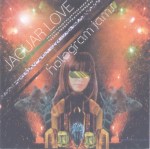
Hologram Jams cover

Jaguar Love - Hologram Jams

Spinning out of art-punk bands Blood Brothers and Pretty Girls Make Graves, Jaguar Love seemed to be an attempt to bring a more accessible element to their distinctive sound. Given that it took me a full year to hear that they had released a second album, though, they apparently fell short of any popular appeal. On Hologram Jams, the band is reduced to just ex-Blood Brothers members, with Jay Clark replaced by a drum machine. Most of the Blood Brothers’ original spark is gone, as well.

Hologram Jams ups the ante on both the accessible and off-putting parts of Jaguar Love’s debut, opening up with a heavily electronic beat and a disco bombast. The Blood Brothers’ distinctively aggressive, stream of consciousness lyrics are largely replaced with simple celebrations of partying and youth. If these are meant to be parodies of vapid dance music, the band rarely lets on. A joke played straight for too long can cease to be a joke.

This approach shows some potential on the surprising “Cherry Soda”, which builds up through Whitney’s yowling “jaguar” vocals to a sudden white-guy-club rap: “Sugar-coated cherry soda/puking on the lawn./It’s six AM the party’s over./Everybody’s gone./Rode a motherfucking mastodon to my highschool prom/It’s on it’s on it’s on it’s on like Immigrant Song.” That glorious celebration of ridiculousness in a perversion of mainstream music is the album’s highlight, inviting the listener to laugh at and with the band at the same time. Otherwise, though, the album mainly features high-pitched yowling vocals on top of uninspired drum machine-and-synthesizer compositions.

Towards the end, the focus shifts to a couple slow, angsty songs, which are as embarrassing as the names (“Sad Parade” and “A Prostitute An Angel”) imply. These are the kinds of poems that most highschoolers have the sense to throw away a few years later. What possessed artists who used to be known for their challenging, non-traditional lyrics to publish this stuff? (Fans desperate for a Blood Brothers fix will find some relief in “Up All Night”, “Jaguar Warriors”, and “Evaline”, but they’ll need to pretend that those are just the throwaway tracks from a better album.)

Hologram Jams is dominated by obstinate attempts to insist that Jaguar Love and their music are awesome, despite all evidence to the contrary. The rare times that the curtain is lifted and we see beyond that shallow surface, nothing is there.

Grade: D

OFF! – First Four EPs (Music Review)

First Four EPs cover

OFF! - First Four EPs

Who would’ve expected that the most vital-sounding supergroup in years would be a bunch of middle-aged hardcore musicians? OFF!, whose members come from bands such as Circle Jerks and Rocket From The Crypt, appeared out of nowhere in 2010 to release four EPs, each one squeezing four brutal songs into less than five minutes of playing time. Those are all collected on First Four EPs, which feels like a complete, satisfying album despite its 18-minute length. This approach seems more than a little gimmicky, given that all four EPs and the collection were released in a matter of months, but it’s hard to argue with the results.

The songs are, of course, uniformly short and intense. Though the band only has one speed, they manage to keep each song sounding different. Most manage to squeeze chord changes or a verse-chorus-verse structure in despite their short length, and all of them are distinct musically and lyrically. These are sixteen fleshed out songs, not just throwaway clips. The songs also cover an impressive range of topics, from confrontational political songs to a eulogy for punk singer Jeffrey Lee Pierce. Quite a few of them address depression and social anxiety. That’s a topic that I’m not used to hearing in punk music, but the band’s honest, straightforward approach makes it seem like the most natural idea in the world. “Blast” is a rare uplifting track, with singer Keith Morris unapologetically celebrating that he “slashed and burned through my fifteen minutes of fame.”

One good thing about the EP format is that there isn’t any space for dead wood, especially with such a short length. There’s not a single disappointing track on this CD. However, the full collection also feels like it lacks standout tracks. One or two longer, meatier songs could have gone a long way towards fleshing this out as an album. That’s the only complaint I can come up with, though. First Four EPs is a stunning argument for the relevance of fierce, vicious hardcore in today’s world.

Grade: A-

Agnostic Front – My Life My Way (Music Review)

My Life My Way cover

Agnostic Front - My Life My Way

When I reviewed the new album from Roger Miret And The Disasters a few weeks ago, I didn’t realize that Miret also had a new release with his original band, Agnostic Front. It’s been four years since their last release, making it the longest gap in the group’s two decades of existence. Maybe that’s to be expected. All these years removed from the youthful energy that pushed them to the top of the New York hardcore scene, what does the band still have to sing about?

In some ways, My Life My Way is a very safe take on what Agnostic Front should be in 2011. The music is almost as intense as ever, though the songs are now consistently two minutes long instead of one. The lyrics focus once again on the punk scene and Miret’s life on the streets, with the difference that his stories are now in the past tense instead of the present.

So is this a retread, or a return to form? Given that Agnostic Front had evolved to cover other topics in the past decade, and that The Disasters seemed to be Miret’s outlet for stories about his youth, one could be forgiven for assuming that it’s the former. The music supports that cynical position: Music has never been Agnostic Front’s strong point, but this album takes their sludgy, undifferentiated metal riffs to a new extreme. After 15-20 listens, I don’t think there’s a single song I could identify with the vocal track removed. (Take out the drums as well, and I don’t know that I’d ever learn to tell them apart, except for the extra-intense “That’s Life” that sounds lifted from their defining Victim In Pain era.)

On a closer listen, though, the lyrics do justify this album. Miret seems to have grown into a more contemplative, adult outlook on life, and his takeaway from a violent youth turns out to be a heartwarming philosophy of self-determination and the power of friendship. True, songs like “Self Pride” and “More Than A Memory” (an ode to a fallen friend) would have fit in at any point in Agnostic Front’s career, but Miret hits those points more than ever in this album. Then he goes a step farther, with life lessons like “sometimes you have to walk away from everything to get a new start” and the acknowledgment on “The Sacrifice” that he hasn’t lived up to the standards set by his heroes. It’s not deep, but it’s heartfelt, and more introspective than you can usually expect from hardcore. The songs are honest, enjoyable, and keep the band moving forward rather than treading water.

It seems that Miret is trying to impart some fatherly wisdom to the next generation of punks. He has enough credibility, and couches the message in vicious enough music, that he may get his message through where actual fathers are failing. If so, good for him. There aren’t many elder statesmen of punk, and Miret’s one of the few possible contenders.

Grade: B-

Roger Miret And The Disasters – Gotta Get Up Now (Music Review)

Gotta Get Up Now cover

Roger Miret And The Disasters - Gotta Get Up Now

For the past decade, Roger Miret (of the seminal 80’s hardcore band Agnostic Front) has fronted The Disasters. The songs typically tell unapologetic stories of his violent youth and the glory days of punk rock. The result is strangely backward-looking for a genre that usually focuses on the here-and-now. But Miret has earned the right to a few victory laps, and The Disasters’ songs are clear and compulsively listenable, a cleaner, Oi Punk-influenced version of his hardcore past.

Gotta Get Up Now still has these stories of Miret’s youth, but it takes a surprising turn towards activism. Through tracks like “Stand Up and Fight”, “The Enemy”, and the title track, Miret suddenly seems more interested in calling his fans to action instead of just telling stories. This is what I thought I wanted for the past few albums, but the reality is strangely unsatisfying.

This is largely because Miret is so vague on what he’s calling on his fans to do. The message is “stand up and work together”, but the lyrics rarely mention what to work together on. There’s a brief mention about the power in a union, and “Red White and Blue” accuses politicians of lying to us, but that’s about it. He’s much more forthcoming when it comes to details about growing up in the Lower East Side (pissing in a record store, breaking into cars, and seeing friends die), but that’s not going to win him much political capital. Are his intentions actually political at all? “Tonight’s the Night” implies that he’s just calling people to rally around a strong, united punk scene.

The songs themselves are satisfying, of course. The band hasn’t changed much in the five years since their last album. If anything, the production is a little dirtier than the earlier albums, which were unusually clear for punk, and the rest of the band is more likely to join in on the raucous vocals. But they don’t have any especially hooky tracks like “Kiss Kiss Kill Kill” or “Roots Rockn’ Roll” to define the album, and the final result feels less vital than before.

The one surprise on Gotta Get Up Now is “JR”, an loving ode to a son. The song is arranged and performed like traditional country, but using their standard punk instruments and vocalization. It’s an unusual take on the increasingly common punk-turned-country song, though Miret will need to make his voice sound a little more serious if he plans to sustain goodwill for this style beyond this one song. I’m glad to see them experimenting with new sounds, though. The band still has a lot of potential, but needs to find new things to say if they are going to stay as important as they used to be.

Grade: C+

The Vaselines (Music Review)

Enter the Vaselines cover

The Vaselines - Enter the Vaselines

The Vaselines were sort of the Velvet Underground of the late 80’s: Almost no one listened to them at the time, but everyone who did went out and started a band. Today, they are best known as “the band that Nirvana kept covering”. But last year, the Vaselines started getting more attention in their own right. Sub Pop released a retrospective of their past work, as well as their first new album in two decades. It’s late in coming, but the band deserves the increased recognition that they are finally getting.

Listening to Enter The Vaselines, it’s easy to see how they inspired Kurt Cobain and his peers. Though all the songs were recorded in the late 80’s, they sound like they came straight out of 90’s rock radio. It’s also easy to see why they didn’t make a splash on their own. The low budget, DIY performance had very little in common with the polished synth-rock that dominated at the time. All their recorded work, two EPs and one full-length, fits on one CD, leaving the second disk to be filled with demos and live recordings. (This second CD has a couple bright points, but for the most part, it leaves you feeling that you didn’t miss anything by not seeing them at the time. Perhaps that is another reason that the band didn’t achieve immediate fame.)

Most of their best-known songs are on those first two EPs. With very few influences to draw from directly, The Vaselines applied their low-fi approach to anything that crossed their mind. The results include fuzzed-out rock, folk, pop, and even a compelling disco cover. The lyrics are bratty, immature, and often sexual. The kink factor is raised by the way the boy-girl duo took turns with the lead vocals, giving the impression that they were double-teaming the subject of their song.

Their eventual album, Dum Dum, is not quite as memorable as those early songs. That is partly because a full-length release allows space for filler songs, so it doesn’t seem as solid as the earlier EPs. Additionally, by this time the band had settled on a more straightforward rock sound as the source for most of their songs. It was prescient, as most bands would be following that lead a few years later, but the songs don’t feel as varied or memorable as the early ones.

That’s not to say that Dum Dum was bad. Held up next to the songs it inspired a few years later, it still sounds great. Even discounting their influence, these songs are good enough to be remembered alongside the hits of the alternative years. And to be fair, they did experiment with their sound a bit on the album: “No Hope” is a smooth, compelling downer of a song, and “Lovecraft” is a (less successful) droner. But the album is best appreciated for its catchy, bouncing songs like “Sex Sux (Amen)” and “Oliver Twisted”.

Sex With An X cover

The Vaselines - Sex With An X

Sex With An X is a new Vaselines album, in the sense that it’s fronted by the same two people, and they still have a gift for hooky, memorable songs. But the days of The Vaselines are half a lifetime away for them, and they don’t seem to have any desire to recreate that time. The new album neither slavishly follows the original sound nor tries to re-establish their cutting-edge credentials. Instead, this is a comfortable, confident slice of adult-oriented pop music from two middle-aged people who have nothing to prove.

The sound is smooth, and the production is slick, in direct contrast to their late 80’s sound. In some ways, this feels more appropriate for the name “Vaselines” than the original songs. However, they’ve lost the kinky edge that also fit the name. The few songs that mention sex now sound tame (“Feels so right/ It must be wrong for me/ Let’s do it, let’s do it again” goes the title track), and the rest have been replaced by more world-weary breakup songs.

It’s still good, as long as no one holds them to a purist ideal of how the band “should” sound. The songs are not going to inspire a new generation to start their own bands, but if you’re just looking for good, memorable songs, the hit-to-miss ratio is honestly better than Dum Dum’s was. The singers still have a sense of humor, as seen in “Overweight But Over You” and “Ruined” (a self-aware attack on old, washed-up bands), and they cover a wide variety of topics, from “I Hate the 80’s” to “My God’s Bigger Than Your God”.

These two releases are both very good in different ways. Exit The Vaselines is a relic of an under-appreciated classic. It is no longer groundbreaking, but still holds up for anyone who wants more music from that era. Sex With An X is a collection of polished songs that aren’t necessarily trying to be remembered decades later, but that are perfectly fun right now.

Enter The Vaselines: B

Sex With An X: B
Goodnight Loving – The Goodnight Loving Supper Club (Music Review)

The Goodnight Loving Supper Club cover

Goodnight Loving - The Goodnight Loving Supper Club

I don’t know much about Goodnight Loving, and I kind of like it that way. In my mind, they’re a group of underachieving stoner friends who hook up the recording equipment in someone’s garage about once a year to bang out hook-filled, fuzzed out rock, This idea is probably rooted in my mind because when I first found them, they had nothing but a Myspace page and Amazon was only selling used copied of their CDs. Well, those albums are finally easy to find in print, and their label has even given them a webpage now (from which I see that I missed one of their releases – there are downsides to being an enigma). Still, The Goodnight Loving isn’t as well-known as they deserve to be. In fact, I confidently declare them to be the best band without a Wikipedia page.

The Goodnight Loving Supper Club retains the low-fi atmosphere that defined the band, but it is obvious that they’ve stepped out of the garage into a real recording studio. There are no sloppy single-take moments, and everything fits together with a professional precision. The higher budget production does a good job of approximating their low-budget sound, but the smoothing out comes at the expense of both the highs and the lows.

Speaking of smoothing out, the songs seem to be comfortably bland. While Cemetery Trails used its rambling pop sound to examine painful moments and damaged people without getting too depressing, and Crooked Lake was high-energy fun with a great basement-country vibe, Supper Club’s focus is on more psychedelic lyrics. “She gave me flowers that I couldn’t see” begins “Bike + Stick”, while “Summer Dream” tells a rambling story that fits the name. “Ain’t It Weird?” trips through concepts like “we poked out our eyes in a game we devised where we looked through a cellophane screen” and seems to forget them by the end of the verse, and “Sunnyside” is an energetic little ditty about waking up hungover. The songs are fun, but rarely memorable.

The Goodnight Loving continues to belt out their songs with a punk efficiency: They average just over two minutes long, with only a few barely breaking the three-minute mark. Supper Club includes two instrumentals, though, each flowing smoothly from the preceding track. This is a good trick on the band’s part, allowing them to flesh out the space they’re working in and provide the rambling feel that this album’s stoner vibe demands, while still making each track short and standalone out of respect for their punk approach. The whole album feels a little like that, in fact: Goodnight Loving manages to find new territory to explore without ever leaving the confines that define them as a band. While this may not be their strongest effort, it’s that guaranteed mix of consistency and experimentation that makes all their albums sure bets.

Grade: B-


Spinnerette (Music Review)

Spinnerette cover

Spinnerette - Spinnerette

As the frontwoman for The Distillers, Brody Dalle was one of the most important figures in early 21st century punk. I’m probably in the minority here, but I would list their Sing Sing Death House among the best albums of the past decade. By the time of their third full-length, though, it was obvious that Dalle was ready to take a new direction, and so it isn’t surprising to see her reappear several years later as the leader of a new band.

With Spinnerette’s self-titled debut, Dalle trades her hard punk sound in for, surprisingly, something more reminiscent of louder ’90s alternative songs. It stands out from most of the current ’90s retreads, though, who are making a calculated decision to use a well-defined, 20-year-old style. Instead, Spinnerette has the desperation of a band that is truly from that era, immersed in a sound that is too fresh to examine objectively, and eager to experiment with different ways to express themselves, even though their creations will be embarrassing as often as they succeed.

Dalle frequently lists Courtney Love as an influence, and that can be heard here. The songs are more complex, though, especially the convoluted lyrics. They rarely follow a verse-chorus-verse structure, and Dalle isn’t simply shouting her emotions with the straightforwardness of Love or her old punk self. This is Hole after a few years in art school, perhaps.

As much as I respect their sloppy, wild experimentation, the results are disappointing. Had Spinnerette existed in the ’90s, I imagine that they would have gotten minor radio play for a couple songs (the catchy “Baptized By Fire”, and maybe the hard-driving “Ghetto Love”), developed a minor fanbase that poured over their lyrics with a fine-tooth comb, and faded from mainstream attention almost immediately. The songs may not be bad, but they rarely stand out, either.

The lyrics themselves are also reminiscent of Hole, but come from a more nihilistic source. In the opening track, “Ghetto Love”, Dalle describes herself as “just a girl out looking for love”. Though love may be dead, she asserts, she is never going to give in. Most of the songs that follow alternately describe heartbreak and longing, seemingly backing up this theme. But the album closes with “A Prescription for Mankind”, which seems to come around to the “love is dead” viewpoint that Dalle fought against at first. “I do believe Hell is on Earth”, Dalle declares, rejecting the faith-based prescription promised in the song’s title.

Spinnerette is at its most compelling when Dalle’s lyrics are straightforward, or at least delivered as comprehensible earworms. The opening track’s declaration “I’m Joan of Arc on a mission: Avenge love’s death” is catchy and memorable, and “Rebellious Palpitations” compares love to drugs with to the simplicity of her punk roots (“White lines on the table look /like a road/ like a road/ like a road/ Then there’s the message that we’re hooked/ dominoes/ dominoes/ dominoes”). Part of the reason they stand out is that they are surrounded by lines with much more obscured deliveries and meanings. Though the band has a ’90s hard rock style down pat, their sound isn’t compelling enough to listen to when the lyrics don’t take center stage. There is some potential for greatness in this band, but Dalle will need to go through another radical reinvention of herself if it is going to be realized.

Grade: C-