Two From the Dirt Daubers (Music Review)

The Dirt Daubers album cover

The Dirt Daubers – The Dirt Daubers

The Legendary Shack-Shakers’ crazy music and over-the-top vocals sometimes make it hard to remember that their performance comes out of a sincere love of the South and its traditions. From that perspective, it makes sense that frontman J.D. Wilkes would start a (slightly) calmer band with a stronger connection to his everyday culture. The Dirt Daubers feature acoustic instruments and a fairly even split between traditional songs and originals. Wilkes’ hell-raising energy is present as always, though, and the result is a raucous celebration of old-time country and folk. Though the lyrics don’t have the surprising intelligence of the Shack-Shakers, they are sharp and honest, and the songs fly by at two minutes each.

Of their two releases so far, Wake Up Sinners is the essential one. In comparison, the self-titled debut feels more like a calling card than a complete album. Only four of its ten songs are written by Wilkes, and one of those is a misguided remake of an existing Shack-Shakers song. Another is redone (and improved) on Wake Up Sinners. Even one of the traditional songs, “Sugar Baby”, has already appeared on a Shack-Shakers album. A couple of the tracks feel more like incomplete snippets than full songs. That’s not to say there aren’t some great efforts: The loose, belted-out rendition of “Black Eyed Susie” and the mellow “On The Front Porch” summarize the range of their energetic-but-respectful approach to musical traditions, and the gravel-voiced “Ode to Conrail Twitty” brings a punk efficiency to a song about trains and tradition.

Wake Up Sinners cover

The Dirt Daubers – Wake Up Sinners

Wake Up Sinnersbrings in the Shack-Shakers’ Mark Robertson on bass and promotes Jessica Wilkes, J.D.’s wife, to lead vocals. It’s at this point that they seem like a self-assured band instead of a side project. The fuller sound and more fleshed-out lyrics will be welcome to Shack-Shakers’ fans, even as Jessica’ contributions distinguish it as a separate band. She doesn’t show much range, sticking to a fast-paced, slightly aggressive delivery, but it fits the band perfectly. With the two vocalists taking turns on songs, variety never becomes a concern. The excellent harmonica performance deserves a mention, as well. It’s rare for that instrument to distinguish itself like this.

The traditional songs are much improved, as well. I’d never wanted to hear “Wayfaring Stranger” again, but J.D.’s upbeat rendition of it is exactly what was needed. Later, Jessica delivers “Say Darlin’ Say” (a different version of “Hush Little Baby”) as an enjoyable song for adults. The songs still feel a little slight, and even the best ones wear out their welcome if listened to repeatedly, but they’re great if you return to them the next day. I wouldn’t be surprised if the band’s true masterpiece is still ahead of them. If they improved this much from one album to the next, why should they stop now?

The Dirt Daubers: C+

Wake Up Sinners: B+


New Albums from Tennis and Islands

Not only have a been a little slow about reviewing music lately, but the albums I have been reviewing are still all from 2011 or earlier. I ended the year with a huge backlist that I’m still working through, and the first time that I went to buy new music this year wasn’t until Record Store Day. Even then, it took me a little over a month before I was ready to review the first two albums I bought. Both of them needed a lot of time before my opinion settled.


Young & Old cover

Tennis – Young & Old

Tennis’ album Young & Old took me some time to evaluate because it comes across as such light, forgettable pop that I didn’t believe it had much substance at first. But at this time, I can say that it stays interesting. I’ve tried putting it aside for over a week, and when I listen to it again, it’s familiar and welcome, not at all like an album that wears out its welcome.

Alaina Moore’s vocals are gentle and innocent, and the music supports a vision of the wide-eyed naivety of 60’s pop. Her lyrics have a cynical bite, though. Songs like “Dreaming” sound like odes to youthful love, but the refrain of “I’m dreaming I can still believe in you” make the narrator seem foolish and willfully blind. Maybe the happiest-sounding, most memorable hook of the album is Moore’s apparently-joyful announcement that “paradise is all around, but happiness is never found.”

The band never seems to be intentionally satirizing the optimistic songs that they mimic. See “Traveling,” for example: The song doesn’t shy from the fears and dangers of initially falling in love, but paint them sympathetically. The impression is that Moore is exploring these themes because they are personally relevant. When she opens one song with “a sensitive heart, you’re doomed from the start,” she could easily be talking to herself.

If you only buy one collection of light, upbeat songs about love this year (and really, would you need to buy more?), Young & Old is your best bet.

Grade: B


A Sleep & A Forgetting cover

Islands – A Sleep & A Forgetting (Yes, the album art is hard to see)

There was a very different reason for why I waited so long before reviewing the new album from Islands. I love the band’s old work, especially their 2008 masterpiece Arm’s Way, and it’s hard to accept that their glory days may be over. Oh, A Sleep & A Forgetting is still a good album, but it never escapes the shadow of their best work.

In the past few years, the band has replaced youthful impishness with staid indie pop. It’s solid and enjoyable, but doesn’t highlight the interests that make their vocals so unique: Death, disaster, and the mechanics of the physical body are obsessions for the band, though they’re examined with macabre humor and clever wordplay.

The extremes of old are gone along with the catchier music. Instead of post-apocalyptic tribes looking for shelter or tiny gnomes devouring people, this album opens with several songs questioning reality: “In a Dream (it Seemed Real)” ties this theme to the album title, and the ideas of “This is Not a Song” carry forward to the next track, whose opening line is “this is not a band”.

It’s an appropriate concept for an Islands album, though it rarely rises above the basic ideas to come up with anything truly insightful or funny. They need more concepts like “No Crying”, an investigation into whether there’s something wrong with the narrator for not feeling bad when listening to sad songs. Even silly little ideas like “Can’t Feel My Face” (which suggests that the feeling leaves for “a better place”) would help. That line may not have their modern sophistication, but it provides a catchy lyrical hook to an album that feels a little dry most of the time.

A Sleep is a solid album, with plenty of decent songs and an unusual take on the lyrics. If this were my first Islands album, I’d probably be intrigued. As it is, though, I already know what the band is capable of, so I don’t need to see hints of it. It’s difficult to imagine that someone would regret this purchase, but that’s partly because it doesn’t make a very strong impression at all. Surprisingly, this turned out to be the forgettable pop album that I worried Tennis would deliver.

Grade: C+

Origins 2012 Wrap-Up

Another Origins Game Fair has come and gone. For me, it will be remembered as the first one I didn’t get to attend completely. Due to various issues back home (over two hours away), I left, came back, and then left early again. I only got to spend two and a half days at the convention, instead of my usual four and a half. Really, though, that made me realize what a big deal this is for me. Like a holiday, I had to make it back for that partial Saturday, not due to considerations of whether it would be fun enough, but because I simply had to have a complete event. Origins punctuates my gaming year.

It’s too bad I was gone, because in some ways the times I was there were my best ever. It never once took me more than a few minutes to find a game to play. The crowds at the Board Room are open and friendly, the people in the Rio Grande room proactively suggest things to me, and even my trips through the Dealer Hall ended up with more demos than normal.

Maybe this is because Origins happened a month early this year. I don’t know whether the attendance was really as low as it seems – every time, people compare their memories of last year’s busy Saturday to this year’s quiet Thursday – but I’m sure it was down. It’s too bad, because this is the first time in my six years of attending that Origins didn’t have to share downtown Columbus with another large event. It was great not to have rush hour traffic at 2:00 AM for once.

However, I definitely noticed a lack of exciting new games. There are plenty of exciting Summer and Fall releases lined up, but apparently the earlier schedule made Origins miss out on them. I’m not sure whether to blame the convention organizers for shifting the schedule, or the game publishers for not planning around something that had a full year’s notice. Either way, though, the only game with real buzz was Mage Wars, an upcoming constructible deck game that had the largest promotional push I’ve ever seen at Origins. I saw several groups discovering Lords of Waterdeep for the first time (which I’d played a few weeks before), and several more talking about Sentinels of the Multiverse (which I never got around to trying), but most years I’d end up putting those two in the “light buzz” category. This year, I have to abandon my pattern of sorting games by the buzz-factor, because there just wasn’t any.

Seriously, on Saturday afternoon I asked several people flat out “What should I buy?” I was leaving early, I still had a few hundred dollars in my pockets that I’d expected to spend on great new games, and I wanted to find something cool. But after asking almost ten people I trust, with a wide variety of tastes, no one could suggest anything. It’s not that there aren’t good games out there, but there really wasn’t anything new and exciting.

Instead, the buzz mostly centered around special guests Wil Wheaton and Felicia Day. Origins has celebrity guests every year, but this is the first time I’ve heard people truly excited about them, and also the first time that it sounded like the guests stayed to enjoy the convention instead of just cashing their check. My Twitter feed was filled with people talking to and about them, and it sounds like they hung out to try lots of games and actually visit people. The celebrities aren’t why I go to Origins, but I think this is an encouraging sign. Next year, it will be back to its more popular late-June date, and the organizers now know a new trick.

So with all that said, it’s time to look at the new games I learned. They are ordered from the best to the worst, at least as well as I can do for first impressions of such a variety of games.

Continue reading

Origins Recap: 2010

Here are my notes from the 2010 Origins. I’m now all caught up on these recaps, since I posted 2011’s immediately after it finished last year.

This was the year that I finally stopped talking about games I already knew, and also talked more about themes of the convention. It definitely reads a lot better than the earlier years’ wrap-ups.

Continue reading

Origins Recap: 2009

Continuing my catch-up of old Origins recaps, here is 2009’s. This was my third time at the show, and the first one where I started to run into people I knew regularly. Also, I noted afterwards that finding games felt very different. In other years, I discovered a lot of new exciting games that I hadn’t heard of before. In 2009, I mainly knew about the games already. This was probably just because I was paying more attention to game news, rather than a big shift in the industry.

As with the 2008 recap, I tried to sort the games in order from best to worst, even though a lot of them are difficult to compare directly.  And it can be hard to decide for sure what I thought after one play (especially when I learn halfway through that we were taught wrong…)  But this is roughly in order.

Warning: I try to make most of my game reviews fairly accessible to people new to the hobby. But this is from an email I sent to serious gaming friends, and I was just getting experienced enough with board games to compare everything to each other. So this summary assumes that you are familiar with the other popular games that were out there in 2009.

Continue reading

Origins Recap: 2008

Last year, I posted a long Origins write-up to my blog. I had actually written these for my friends for a few years before then. I thought it would be interesting to post those for historical comparison. Here is the first of my old reports, with minor editing to make references to friends and current events clearer.

2008 was a significant year for my game-playing hobby. I left Origins most excited about games like Metropolys that found clever new approaches to the classic Euro approach: Just one or two mechanics for people to use in a roundabout way to earn points, and ending in 45 minutes. Little did I know that Agricola was currently blowing up in Europe and would be in the US later that year. Between that and Galaxy Trucker, another game that was long and component-rich for my tastes at the time, I’d finish 2008 with a very different attitude about gaming than I’d had in the middle of the year. (Also, I tried out a prototype of Dominion here. I thought it was clever, of course, but I had no idea how big a deal that game would be.)

Continue reading

Asara and Lords of Waterdeep (Game Reviews)

I enjoy worker placement games. If you’re unfamiliar with those, the idea is that each player chooses from available actions by placing one of their pieces (a “worker”) on it. For the rest of that round, that action is unavailable to be used again. To win, you’ll need to plan ahead for the upcoming actions you need to take, and figure out which ones to take first based on what you expect other players to block. In order to make these choices interesting, worker placement games tend to be long and complex. However, I recently played two games in this genre that simplified the mechanics a good deal. Here are my reviews of Asara and Lords of Waterdeep.

I have only played each game once, so take my opinions even more lightly than you normally should. But I’m unlikely to play either again in the near future (one didn’t impress me, and the other is owned by an out-of-state friend), and I did feel like I got a good feel for their strengths and weaknesses in that single play.

Continue reading

The Avengers (Movie Review)

The Avengers movie posterBy now, it’s a little late for me to tell you to go see The Avengers. You probably already have, unless you decided to ignore a month’s worth of great reviews. But I finally saw it, and I loved it. (This was not a foregone conclusion. Of the various movies that set up the premise for this one, I had only seen Iron Man. I found it to be okay, even though most people loved it. That hadn’t left me inclined to watch all the others that people said weren’t as good as Iron Man.)
There are definitely problems: Captain America looks less like a believable character than someone in a Halloween costume. The Hulk changes from a malevolent monster to a warrior with self-control, and the movie makes little effort to bridge the gap between those extremes. “Street-level” heroes without superpowers contribute to the fights as well as Thor and Iron Man. And Samuel L. Jackson seems to be phoning it in the first half of the movie, despite the character of Nick Fury being written to his strengths. (He does improve a lot in his less frequent, but more vital, scenes late in the movie. When called on to deliver a “mutherfucking snakes” line, Jackson is up to it.)

These problems hardly matter, though, because the movie makes everything work. It also helps a lot that, like Jackson’s performance, everything gets better as time goes on. Each succeeding action scene is more thrilling, the characters become better established, and the momentum picks up. This is managed largely because the movie had a huge budget to match the sheer audacity of its plans: The disparate heroes and cosmic villains require a lot more suspension of disbelief than (successful) superhero movies usually aim for, but Marvel had the money to make the special effects work. It also succeeds because it’s written by Joss Whedon.

To many people, Whedon is mainly a source of quirky dialog, and some of that pops up here. Unlike comic writers such as Brian Bendis, though, he is able to control his tics and take on other styles. This was a big-budget action movie first, a spiritual sequel to several different movies second, a Whedon movie last. His version of Tony Stark was completely true to the prior movies, and I can only assume that the other characters, who were written very differently, fit the movies I didn’t see.

Whedon’s real talent is respecting established characters. He’s usually done this with characters he created, but comics like Astonishing X-Men have proven that he can do it just as well with other peoples’ stories. He not only rewards the fans who are familiar with the characters, but shows newcomers why the fanbase exists. This made Whedon a perfect choice for this movie, which needed to handle a wide variety of heroes without making their coexistence seem ridiculous. Honestly, as much as I loved The Avengers and would now line up to see any other superhero movie Whedon writes, this still didn’t sell me on the Marvel movies in general. It would be too easy for lesser hands to mess up a premise that involves a dramatic god, a gee-whiz science fiction hero, a monster driven by rage, and more all in one plot. The only character here who I am really interested in beyond this one movie is the Black Widow, played flawlessly by Scarlett Johansson. (Whedon’s reputation as the only mainstream writer who reliably includes strong female characters is now firmly established.)

I feel a little silly making such a big deal out of a summer action movie, but The Avengers really was excellent. With a satisfying plot, time for every character, and big-budget action that really felt exciting, this is a rare achievement. But this wasn’t “just” a well-executed movie; The Avengers may be an important step for superhero movies as a whole.

In the past, I’ve had a general rule that superhero movies succeed to the extent that they make their stories simple and streamlined for a wide audience. Everyone in the X-Men movies gets their powers from mutations, because also throwing in magic and cosmic forces would stretch belief. Spider-Man’s web-shooters are organic, because it’s difficult to accept that he’d also be the sort of genius who could invent such a thing on his own. And so on. I think that’s a big part of the reason that we’ve never had a superhero series stay good for three movies. By that third one, the writers have gotten lazy, and so an alien creature falls to Earth directly onto Peter Parker’s bicycle, because the plot needs to start some way.

The Avengers, as I already mentioned, is an audacious movie. It opens with a scene that draws from Marvel’s stable of cosmic powers. It throws together heroes of magic, science fiction, and good old human toughness. And the result is something that even I, as a comics fan, would have considered accessible only to the hardcore fans. But instead, this is now mainstream entertainment! The credit is split among the huge budget, Whedon’s attention to all the characters, and to the earlier movies that laid the groundwork, but the fact remains that this is a sea change in the way that modern superhero movies work. We now have millions of people who are paying money to follow a convoluted world spread across multiple movie series, and the geekiest features of comic book plots appear prominently. It could even be argued that, because this follows up so much on Iron Man 2, this is a successful third movie in that series!

The Avengers is a fun movie. The Avengers is an important part of a series of stories that will probably be coming out for years. And yes, The Avengers is actually a bold change to the way that movies like this work. It may have all those flaws I listed at the beginning, but this is a huge success however you measure it.

Grade: A-


Lionel Shriver – We Need To Talk About Kevin (Book Review)

We Need To Talk About Kevin cover

Lionel Shriver – We Need To Talk About Kevin

Lionel Shriver’s writing is literary and sophisticated, but don’t let that fool you. Had her career gone slightly differently, it’s easy to imagine her cranking out Saw sequels. She loves to make the audience squirm, and that’s exactly why We Need To Talk About Kevin is so successful: Told by Eva, a mother whose son went on a school-shooting rampage, we get to watch his entire childhood unfold with knowledge that he will get worse, not better, with age. Shriver’s empathetic, human approach makes this horrifying story that much more effective.

That’s not to say that it’s perfect. Part of this book’s draw is our curiosity about why a kid would do this, and parents will be captivated by the fear that their child could turn out the same. However, Kevin is too perfectly evil from the moment of birth to be compared to the kids we know. He refuses to be held or fed by Eva, but always acts like a good kid when his father’s around. He stubbornly refuses to talk at all in front of his parents until he’s secretly learned to speak in complete sentences at the age of three, and he still wears diapers even when he’s old enough to make it clear that he’s just doing so to make his mother uncomfortable. Even before the age of self-awareness, Kevin wants to prove to himself that he is better than everyone and relies on them for nothing.

It’s arguable that Eva’s account is not supposed to be trustworthy; After all, one major question of the novel is whether Kevin’s behavior is his parents’ fault. However, she includes too many details involving witnesses: The first nanny refused to finish a single day when Kevin was just weeks old, every parent in his preschool pulled their child out and then met secretly at another place without him, and so on. If Eva is lying about facts like these, especially when she admits so many difficult things in her writing, then the book would be meaningless. No, to get meaning out of this story, I have to believe Eva’s testimony, and approach this as a horrific tale about a child of pure evil rather than an exploration of kids in general. (The question about Eva’s culpability is also less interesting because of this. Apparently, a lot of readers do blame her for not loving Kevin enough. A great book could be written on that subject, but in this case Kevin refuses her love from the beginning. Instead, I read the book, and that reaction, as an examination of the impossible standards some people will hold mothers up to.)

Kevin is a great character, though, and he does eventually grow into his personality. As a young adult, he does represent the fears that parents have when their child grows sullen and withdrawn. The book would be incredibly powerful if it had rushed to get Kevin to that point.

In fact, almost all the characters are great. (The one exception is Kevin’s sister, a loving doormat who is too perfectly designed for narrative convenience.) Eva is a complex woman with hopes and dreams. Many people consider her a villain for being uncertain if she loves her child, but the fears she privately shares in the book are honest and relatable. The book’s horror works because we get to know her both as a vibrant young woman and as the broken product of eighteen years with Kevin. Franklin, the father, is a great foil for Eva. It’s clear how they fell in love, even if they become so strongly at odds when it comes to child-rearing. (However, it should be said that he sometimes sticks up for Kevin to the point of undermining Eva. If anyone was responsible for the way that Kevin turned out, it’s the father, and Eva’s unwillingness to face this is a real problem for her intelligent, practical character.) Even the people who pass through in a single scene are expertly portrayed.

The story is mostly told in flashbacks, but there is a running plot about Eva’s prison visits with Kevin. As much as he always spurned and hated her, their relationship becomes the most fascinating thing about the book. Near the end, the flashbacks catch up to the modern day, and the plot lines converge with a great payoff. The ending does hold some real (and fair) surprises, even if the reader did know to expect the shooting spree all along.

If I have some complaints about this book, it’s because it’s so good that it demands being held up to a high standard. We Need To Talk About Kevin is filled with great characters and makes real emotional connections with the readers. It only falls short of being a modern-day classic because Kevin’s unbelievable childhood keeps us from seriously considering the questions it asks about killers and their parents. Even so, this is both accessible and intelligent, and will stick with you after it’s finished.

Grade: B+


Imperial Rooster – Decent People (Music Review)

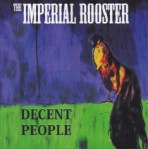
Decent People cover

Imperial Rooster – Decent People

“Anything Goes At A Rooster Show”, the lead track on Decent People, wastes no time in announcing that Imperial Rooster is a quirky, irreverent country act. Featuring L. Ron Hubbard, monkeys, and a vending machine full of raw pickled eggs, it does sound like “a good old fashioned Rooster show” would be a lot of fun.

After that song, though, the band tries to go in too many directions, few of them good. One country standby after another is embraced eagerly, from warnings about divine judgment to an enthusiastic jug solo. I still can’t tell whether the exaggerated country moan in the vocals is satirical or just over-indulgent. At least it’s obvious that the huge body count comes from a less-than-serious love of murder and heartbreak songs. This young band has some strengths, but a lot of weaknesses, and they haven’t yet figured out how to tell them apart.

The attention-craving sinners of “Anything Goes…” and “DWI Marijuana Blues” clash with the God-fearing balladeers who sing “our ignorance will block out the Sun” and warn the listener away from internet porn (with too much fervor to be taken seriously). In case that isn’t enough variety, the singer occasionally switches over to a Tom Waits-esque yell. These all clash, especially when they show up in the same song. (For example, the painfully-slow ballad about their fears for the modern world would be more tolerable if it weren’t named “Korhn Sirup Sundae”.)

If Imperial Rooster has a future, it’s probably in that Tom Waits impression. Not that they have Waits’ gift for lyrics, but the growling and energy distract from their lack of singing skill. “45 Seconds Of Blood” is actually a fun little song, and only partly because it is too quick to wear out its welcome. In fact, “The Beast On The Backs Of Our Children” is almost seven minutes long and manages to stay interesting. It could use some polishing up, but its bloody morality play grunted out over an oompah beat is unique enough to work.

Unfortunately, every decent song like that is balanced out by a few completely forgettable ones. With production that makes the album sound like an unprepared first take and failed humor that never lives up to the promise of “Anything Goes…”, many of these songs shouldn’t have even been considered for release. (Even if women abusing their husbands were automatically funny, “I Like The Way (She…)” is plodding and forgettable enough to ruin the joke.)

There’s one reason I keep coming back to this album, though: “Suzie Anna Riverstone”. This mixes Imperial Rooster’s split personalities perfectly, and results in a song I will listen to on repeat. Modeled after a traditional country tragedy, the lyrics are just too over the top to take seriously, and the shit-kicking energy makes it a fun, self-aware celebration of the genre.

Decent People is a rare thing: An indisputably bad album that still makes me interested in seeing the band live. The country pranksters behind “Anything Goes At A Rooster Show” and “Suzie Anna Riverstone” have to be fun in concert, and given that those songs bookend the album, the band clearly knows those are their standouts. It’s just too bad that they haven’t figured out how to make the rest of their songs work like that.

Grade: D+