First Looks At New Comics: Rachel Rising, Snarked!, and Thief of Thieves

I’ve been reviewing different comic series in different ways. In many cases, I post a single review after the conclusion of a long mini-series or one that had run for only a few years. For longer-running ones, I might check in with a review every 12-24 issues. With mini-series and most ongoings, I group several together for “capsule reviews”. I like this system, even if my choices are sometimes arbitrary. (Why did I review The Unwritten after 24 issues and Morning Glories after 12? Why has Amazing Spider-Man received its own reviews while other Marvel comics are grouped together? Just because, I guess.)

There is one problem, though. It’s a lot of fun to discuss new series when they first come out. It’s also probably more valuable to my readers to talk about new comics while there’s still a chance to jump on board. Therefore, I’ve decided to start writing first looks at new series that I otherwise wouldn’t review for another year or two. (Of course, if it’s not very good, this may also be my last look at it.)

This will still be somewhat arbitrary. A twelve issue miniseries would get reviewed after it finishes, and most ongoing superhero comics will still get lumped into capsule reviews. I don’t always know how long a comic will run, so I may make the wrong decision about whether it needs a first look a few months in. But I’ll do it where it seems useful.

Here are my initial impressions of three non-superhero comics. With a children’s book, a horror story, and a crime drama, there’s something for everyone.

Continue reading

The First Two Fablehaven Books

Fablehaven cover

Brandon Mull – Fablehaven

I have my misgivings about Harry Potter, but I tried out Brandon Mull’s Fablehaven series even though it was recommended to me as being “like Harry Potter“. I’m glad I did. It’s not clear to me how it will keep up the world-building without eventually getting bogged down and inconsistent, but the first two books were worth reading.

The first book, Fablehaven, introduces the central conceit: Magical creatures live in our world, but are almost extinct. A small group of people keep the existence of magic a secret while also running preserves on which these creatures still live. When thirteen-year old Kendra and her younger brother Seth discover this, they get caught up in their grandparents’ efforts to protect the haven, if not the whole world, from evil forces.

This book draws as much inspiration from dark old fairy tales as safer modern stories. The magical creatures are dangerous and inhuman. The intelligent ones are immortal, and can’t bring themselves to focus on, or even comprehend, the concerns of the brief-lived humans who are trying to save them. Most of the danger here comes from a more complex worldview than simply good versus evil.

This book taps into the mix of the innocent and the horrific that gives classic fairy tales their power. The children, especially headstrong Seth, make mistakes with horrible consequences, and the sense of danger is strong. The first hint of magic they discover is grotesque and unique, and described so viscerally that it still sticks with me. It should be said that the plot pacing is uneven, but that also serves to make the disasters and sudden plot shifts much more surprising.

Until the ending, that is. The resolution manages to fix even problems that seemed irreversible, and retroactively makes the world seem safe and fair after all. This is maybe necessary for its target age range, but felt like a betrayal of the story I had come to expect.

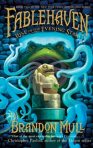
Fablehaven: Rise of the Evening Star cover

Brandon Mull – Fablehaven: Rise of the Evening Star

Fablehaven: Rise of the Evening Star shows Mull’s growing skill as a writer. I have no complaints here about uneven pacing, as the length and plot progression fit the book perfectly. He also appears to be managing the series well. Small events from Fablehaven are now growing into a larger story, and events from the first book are logically followed up on here. This avoids Harry Potter’s problem with characters or spells from one book that just seem forgotten when they could be useful in later ones. It helps that in Fablehaven, magic comes from non-human creatures. People rarely understand how or why fantastical items work, and the magical creatures have established motivations to keep them from becoming directly involved. This resolves most questions of “why didn’t someone just solve the problem with this spell?” Even so, there are a lot of powerful items and creatures on display here, given how small their ecosystem is supposed to be. I worry that that will start to seem inconsistent within a few books.

The immediate problem, though, is that between Mull’s cleaner writing and the reassuring ending of the first book, Rise of the Evening Star never finds the sense of danger that impressed me in Fablehaven. The in-book dangers are still great, and the disasters still happen, but the reader can clearly see the path to a happy conclusion.

Mull has a knack for cool ideas. I don’t want to spoil the creatures the kids encounter here or some of the things that happen to the main characters, but if you ask any young fans about this series, they will probably be bursting to tell you about all the crazy, imaginative things that happen here. That’s true in both books, but seems to be even more prominent now that Mull has found his footing in book two.

Overall, these books are fun if flawed, and their best parts are very memorable. I preferred the more chaotic, unpredictable feel of the first book, but I can see why some people think that the series improves as it goes along. Either way, I’m curious to see what happens next. I’m not sure if it will keep working for me, but it’s doing better than Harry Potter was after two books.

Fablehaven: B

Fablehaven: Rise of the Evening Star: B-


Ascending Empires (Game Review)

Ascending Empires box

Ascending Empires

When I had the chance to sample Ian Cooper’s Ascending Empires at Origins last year, I found it to be a clever mix of strategic empire-building and dexterity games, but wasn’t sure it would have staying power. Now that I’ve gotten to try it several times, I can report that each aspect would be unsatisfying on its own, but that the combination really is compelling.

The basic point of the game is to send spaceships out to colonize planets, and then add new buildings and troops to them. There are technology tracks corresponding to planet colors, and building research stations will let you improve various abilities. Of course, players will start attacking each others’ ships and planets once the galaxy gets a little crowded. Points are awarded for building, researching, and winning battles.

None of these rules are unusual, and the system is pretty simple. There are only three building types and four technology tracks, and most players will never go beyond the basic ship type. There are no engines to develop or clever synergies to build your empire around. Left alone, this part of the game would be a simple race to optimize your builds according to basic rules. However, this is all a context for the ship movement: Players actually flick the wooden ship disks around the board on their turn! This adds a decent amount of aiming skill, not to mention luck, to keep the game interesting.

I like the rules governing the ship movement, which are straightforward but work effectively. Players can choose to be either safe or ambitious in their movement, and the combat rules offer good incentives to aggressive players while giving some good benefits to the defender. Planets are heavy disks that get placed into holes in the board, so ships can’t dislodge them, and “orbital areas” surrounding planets become the goals for ships to land in.

Close-up of the game in play

Battle between the red and yellow players

Quality components matter when the game involves sliding pieces around a board, and Z-Man Games went the extra mile here. There is a large baggie to protect the board from humidity (and warping), extra stickers for the wooden pieces, and rules inserts with clear advice for using all these. (This is especially appreciated after Panic Station, whose initial rule set buried non-intuitive instructions for applying the stickers in the middle of its rulebook.) The board pieces snap together like a puzzle, which keeps it smoother than a folded board or unconnected cardboard would be. Despite all this, though, it’s still a problem that the bumps where the board pieces fit together can upset the best-aimed ship. I’m pleased to report that the pieces do wear well, and if anything fit more smoothly on game five than they did when first taken out of the box. Admittedly, it can be funny to watch the occasional ship careen wildly in the wrong direction due to these “folds in the fabric of space”, but at least one of my games was determined by a single unlucky break when going across one of these boundaries. If it weren’t for the strategy and theme, this wouldn’t hold up well next to a simple dexterity game like Crokinole – and while new Crokinole boards may be expensive, they set a standard well beyond what can be achieved with board game components such as this.

So why does this game work? Well, the main reason is that its quick turns give it a fast pace that perfectly matches its depth and slight chaos. A turn allows a single action, either adding a piece to the board, or making two to four (depending on technology level) ship movements. Even the especially careful ship moving turns will take under a minute, and the tension there is interesting for everyone to watch. If a player chooses a different action, they complete their turn in a few seconds. You’ll have a hard time finding another hour-long game that gives everyone as many total turns as this one. Once the battles start and tension rises, this pace does a lot to add to the excitement. It’s easy to overextend yourself, as every empire’s border is guaranteed to have holes. On the other hand, taking advantage of too many openings will just leave you more stretched and vulnerable than ever. Fighting off enemies on two fronts, while wondering if you can spare the time to ignore the battle for a turn and build more infrastructure, can be a tense experience that feels like it has no downtime at all. Concerns about simple, deterministic game mechanics are forgotten once they get mixed in with battles driven by aim and luck, but those strategic options still give the game an important dimension beyond “pure dexterity”.

Ascending Empires avoids problems with runaway leaders by making the game end quickly if anyone gains a strong position. The endgame is triggered once a certain number of VP chips have been claimed, so the more one player manages to dominate the others, the quicker they’ll end it. That doesn’t leave much time for the other players to sit there watching the game go on without them.

Not as strategic as most empire building games, not as crazy as most battle-heavy games, and not as elegant as most dexterity games, Ascending Empires succeeds by finding just the right combination of these elements. The result is a tense experience that still feels light-hearted and fun.

Grade: B

Neal Stephenson – REAMDE (Book Review)

REAMDE cover

Neal Stephenson - REAMDE

Though Neal Stephenson has become known for dense, 1000-page novels in recent years, he has a knack for page-turning adventure as well. REAMDE returns to that side of his writing, with an action-packed story involving Russian mobsters, spies, and a computer virus. REAMDE doesn’t completely distance itself from Stephenson’s latest works, though: It’s still 1000 pages long, and sometimes the thriller plot gets bogged down by the sheer scope of the story.

The novel is set in a world just like ours, except that a new game named T’Rain has eclipsed World of Warcraft as the dominant MMORPG. Shortly after Richard Forthrast, the game’s creator, gets his niece Zula a job with the company, a virus named “REAMDE” appears. It requires victims to transfer money in T’Rain in order to save their data. Things quickly escalate, and before long Zula is a hostage to a Russian crime lord who wants her to track down the creator of the virus. The story barrels through several unexpected changes and ends up following quite a few characters spread across different countries.

In many ways, REAMDE is structured like an especially large “airplane read” thriller. One of the things that makes it so large, though, is Stephenson’s love for detail. The fight scenes involve considerations of gun ballistics, the countries people end up in are determined by the “great circle routes” available to the airplane pilots, and of course the world of T’Rain is structured around a deep understanding of the mechanics and economics of today’s computer games. Whether these additions sound appealing or boring to you will determine whether you should read this book. They are definitely interesting at times, and even when they get a little dry, they make the story believable. Stephenson’s bid for realism may be a bit misdirected, though, given that much of the plot still depends on coincidences and characters making the right decisions to stay relevant to the book. Still, it’s an exciting story, and Stephenson has finally learned to make his musings quick and relevant to the story instead of the long lectures they used to be.

The other element that defines Stephenson’s stories is his love of geek culture. This has expanded in the past to encompass his fascination with history, economics, and philosophy. Now, REAMDE simply opens the doors to celebrate obsessives of all varieties. The computer geeks are well-represented, but the book includes everyone from Medieval re-enactors to Constitutionalist gun-lovers to cat skiiers (an elitist version of the sport that, of course, Richard’s mountain resort caters to). In Stephenson’s world, everyone worthwhile has a some special driving interest. The way T’Rain is explained in the game, It was successful because Richard chose a developer with a compulsive need to base the game’s geography on real sceince and a story-writer who believes that a consistent fantasy language is the key to the new world.

(It’s actually interesting to consider Richard as a stand-in for Stephenson himself. The book frequently mentions that Richard doesn’t understand the people around him, but his success comes from respecting their eccentricities and recognizing their skills. Is that how Stephenson sees himself relating to the fans he writes for?)

REAMDE is often good, but inconsistently so. The first few hundred pages are great. But just when the reader settles in for a crazy ride that keeps jumping from threat to threat, it turns out that the latest round of bad guys are the real villains for the entire book. I find them to be the least interesting of the conflicts that were introduced in the first third, but pretty soon, it’s focused on them with even the side plots fading away. These other plots and characters do return for the last third, though, and things get interesting again. But in the final hundred pages, they all fall apart.

Stephenson has never been good at endings, but I believe REAMDE has his worst ever. After a laborious set-up to bring all the characters back together (involving unlikely guesses among several), the scene is set for a long, long, long gun battle in the mountains. The detailed logistics don’t really matter, but people keep separating, joining up, flanking each other, and getting in shoot-outs. Most scenes in the end section could have been removed without me even noticing, and in fact I’ve already forgotten (one day later) how the conclusion played out. It felt like Stephenson just reached a point where he said “Ok, time for the bullets to stop missing the bad guy.”

Also frustrating is how small a role the titular “REAMDE” plays in the plot. The book’s title (and press) promise a mystery – what is its purpose, and what does the name even mean? (“Read me?” “Reamed?” “Redeem?”) But the answers are mundane, and resolved quickly. Stephenson actually seems to be on the side of the virus writers, even after demonstrating in the beginning that they harmed a lot of people. Meanwhile, the subplots related to T’Rain are never resolved, and the entire game could have been removed from the book with only minor adjustments to the plot. It’s obvious that Stephenson put a lot of effort into this system, but it just doesn’t mesh with the story about abduction and spies he ended up writing.

Despite its 1000-page length, REAMDE is usually breezy and exciting. For many lapsed fans, this may be the novel that rekindles their interest in Stephenson. For me, though, the boring middle and its inability to juggle all the plot threads set in motion tempered much of the thrill.

Grade: C+


The 2011 Dominion Expansions(Game Review)

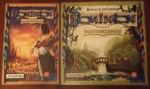
Both game boxes

Dominion: Cornucopia and Hinterlands

Cornucopia and Hinterlands, the sixth and seventh releases of Dominion, have finally found the series reaching a point of diminishing returns for me. They are still great additions to the base game, but I’m at the point where I had enough Dominion cards already that these were “nice to haves”, not vital purchases. The main reason I’m only now getting around to discussing these 2011 releases is that I mixed them in with so many other cards that it became difficult to pick them out for specific review. Of course, your mileage may vary. Some people reached this point a few expansions ago, and others are still discussing the next release with the same eagerness I was using back in the Prosperity days. It’s probably telling, though, that Rio Grande is finally slowing down their schedule to one expansion per year.

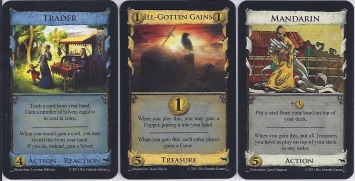
Even if it arrived too late to feel vital, Cornucopia still adds fascinating new twists to the game. It’s only a half-sized release, the same size as the unloved Alchemy expansion, but this one is as interesting as a full-sized one. It turns a central tenet of Dominion on its head: One of the first hard lessons for new players is that buying every cool card available will lead to an unpredictable, diluted deck. Good players build a strategy around only a few Kingdom cards, sometimes as few as one. About half the cards in Cornucopia, though, reward you for owning a variety of cards. Whether it’s points for the “differently named” cards in your deck, coins for the different ones you played, or bonus draws as a prize for having no duplicates in your hand, they take varied approaches towards encouraging a wide-ranging strategy. A couple other cards actually increase the number of “named cards” available in a single game: The Young Witch is an attack that can be blocked by an extra “Bane” card in the supply (which is any random 2- or 3-cost Kingdom card), and the Tournament comes with five distinct “Prize” cards for players to win.

Cards from Dominion: Cornucopia

This turns out to work very well. Though varied decks are almost always weakened, they aren’t completely crippled. A minor boost in return for the variety can be enough to make it worthwhile. This means that a strategic approach that had almost always been weak in the past is now sometimes good and sometimes bad. This is exactly what makes Dominion such a great game: The new expansions neither fade into obscurity nor completely overpower the old cards. Instead, they open up new strategic avenues that hadn’t been considered in the past, while leaving the old ones available. It’s only the timing that keeps me from proclaiming Cornucopia to be a vital expansion; As it is, it still makes the game a richer experience.

Hinterlands, on the other hand, didn’t have that effect on me. This expansion’s theme is cards that have an effect as soon as you Buy or Gain them. While not completely new, it’s still a relatively unexplored area of the game that deserves more attention. However, one-time effects rarely feel as game-changing as abilities that can be used repeatedly, such as Cornucopia’s. Further, expanding this area of the game adds to the complexity of the rules. Do you understand the timing difference between “Buying” and “Gaining” a card? How does an ability that triggers “when you would gain another card” interact with the on-Gain effect of the card you would have gained? Don’t worry, the rulebook does explain these (with the typical thoroughness that other game publishers should learn from), but this is definitely a signal that Dominion is moving in a more complex, “experts-only,” direction. I don’t mind that in theory, but I wish the release that did this would feel at least as significant as the ones that came before.

Dominion: Hinterlands cards

That said, both of these are solid expansions to my favorite game. I can play this nearly one hundred times per year, and I’m still frequently surprised by how different one set-up can be from the next. Cornucopia only offered a taste of the paradigm-shaking changes of the early expansions, and Hinterlands mixed right in without any surprise, but they maintain the current level of quality and are the reason this game will still feel varied to me a year from now. If I sound a little cynical, it’s because I’ve reached the point where I understand why some people have Dominion fatigue. I still say these games are worth buying, though, and I’m confident that I’ll be standing in line for the next one.

Dominion: Cornucopia: B+

Dominion: Hinterlands: B-


Social Distortion – Hard Times and Nursery Rhymes (Music Review)

Hard Times and Nursery Rhymes cover

Social Distortion - Hard Times and Nursery Rhymes

Though Hard Times and Nursery Rhymes is Social Distortion’s first album in seven years, Mike Ness seems to be one of the few punk rock frontmen capable of aging gracefully. He was pulling in country influences years before “punk gone country” became a trend, and always focused on slightly slower songs about life. He was never afraid to admit that life changes sometimes, and by now his fanbase has had time to come around to his point of view on songs like “I Was Wrong”. It’s time for Ness and his band to bring that same honesty to middle-aged life.

For the most part, he succeeds. Ness may not betray his age (he was 49 at the time of this release), but this obviously isn’t the work of wild kids either. Hard Times is a collection of confident songs with nothing to prove. They may be the best-produced of any Social Distortion songs yet, and Ness’ gravelly voice is one that he wears more naturally with every passing year. This may be white-trash blues rock, but it’s smooth and soulful under the rough edges.

Recent trends haven’t made the band veer towards country, but the influence is still there. Their rendition of “Alone and Forsaken” won’t attract as much attention as their old “Ring of Fire” cover did, but in reality, Hank Williams’ work was much more in need of a modern update than Johnny Cash’s. Intense and respectful, “Alone and Forsaken” could pass as a modern song if not for a few archaic turns of phrase. Social Distortion does Williams a great service by demonstrating the excellent songwriting at the core of his songs. Country lyrics seem to creep into many of the original tracks, most notably on the album standout “Can’t Take It With You”. Announcing that he has “never seen a hearse with a luggage rack”, Ness warns the listeners away from material greed with lines that would do a wholesome country singer proud.

The band experiments with a few new things, some better than others. The gospel-tinged backup singers that appear in a few songs are a great addition, but the slow, bluesy ballad “Bakersfield” doesn’t play to the strengths of Ness’ voice or the band’s instrumentation. Similarly, the 1930’s gangsters of “Machine Gun Blues” don’t seem to draw from the more personal sources of inspiration that usually drive Ness’ songs. It’s obvious that the band does best when staying close to their comfort level. That’s fine for now, since it means even the filler songs are part of the album’s core appeal, but it may be a problem in the future. Perhaps that explains the seven-year wait for this one.

Regardless of that, Hard Times and Nursery Rhymes is a consistently solid album that every fan of Social Distortion should own. Usually, I consider claims that a rock singer has “matured” to be more of an insult than a compliment. In Ness’ case, though, maturation is not a gimmick or betrayal of his past. It’s simply part of the process that he has chronicled since the beginning.

Grade: B


7 Wonders: Leaders (Game Review)

7 Wonders: Leaders box

7 Wonders: Leaders

Not long after giving 7 Wonders a great review, I got sick of the game. Everything positive that I said about it is still true, but it’s a somewhat repetitive filler based largely on guessing which cards you will get later. It’s very fun for what it is, but everyone wanted to play it all the time, instead of just as a filler. Within a couple months, I’d played it as many times as I should have over the course of a year. I’m definitely in the minority here, which means that my review turned out to be more accurate for others than for me (but also means that the game keeps hitting the table, so I stay tired of it).

Fortunately, the Leaders expansion has rekindled my interest in the 7 Wonders. It’s a simple idea and doesn’t change the spirit of the game significantly, but it adds enough variety to keep it feeling fresh. It adds a new “Phase 0” in which players draft four Leader cards. Each Leader offers a unique power, and the players hold them in their hand rather than playing them immediately. Before each of the three main phases, everyone plays a single Leader. (One of your four will never get played.)

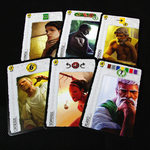
Some examples of Leader cardsSo without significantly increasing the playing time or adding new cards to the main rounds of gameplay, everyone is now in a different position. One player may receive extra symbols to support a Science strategy, while another can build Military cards more cheaply, and still another will receive points for playing certain combinations of card types. There are also cards that give immediate bonuses, or reward unusual things like having the card that lets you build a later one for free. Leaders cost different amounts of coins to play, which means money management also becomes slightly more important.

Does Leaders solve the fundamental issues I have with 7 Wonders? Mostly not. The winner will still be the person who got the most synergistic cards passed to them, which is something that skill can only partially mitigate. The Leaders arguably add another way for some people to get a much luckier combination than others. However, they also give you a new strategy at the start of each game, and make each player’s set-up much more distinct than the Wonder boards alone do. (Ignoring your Wonder is a perfectly valid strategic choice at times, but it means that your playing position is indistinguishable from anyone else’s. Ignoring your Leader cards is almost always a bad idea.)

I’m still being careful not to play 7 Wonders: Leaders too often, because I expect that it could become boring in the same way that the base game did. When just played from time to time, though, I’m happy to hear someone suggest it. I assume that for people who aren’t tired of 7 Wonders (which is most of the gaming community), the new life that Leaders adds is even more exciting. This is an excellent example of how an expansion can add something fundamental to a game without changing the elements that its fans love.

Grade: B

(Images above from Board Game Geek. Follow the links for the original and photographer credit.)


Amanda Shires – Carrying Lightning (Music Review)

Carrying Lightning cover

Amanda Shires - Carrying Lightning

Though I learned of Amanda Shires through country music fans, it actually took me a while to decide if I would categorize Carrying Lightning that way. Sure, she plays a fiddle (among other instruments), and has a banjo and upright bass in the band, but the arrangements often seem more suited towards folk. Many of the lyrics have a folk-singer’s worldliness (such as the eager sexuality in “Shake the Walls” or the acknowledgment that lovers drift apart in “Lovesick I Remain”), but the settings are pure country (consider the songs titled “Kudzu” and “Bees In the Shed”). The songs all have the honest humanity of great country, but ones like “Ghost Bird” and “She Let Go of Her Kite” obscure it with the metaphors more common to folk. And while I suspect many of her fans are more interested in Dar Williams than Willie Nelson, her voice frequently has a little tremble that I associate with country traditions. In the end, I accepted that this is country. A strict traditionalist might exclude her, but all genres need to evolve over time. And really, the important thing is that this is great music regardless of genre.

I’d say that it’s especially important to think of Shires as part of country’s evolution because she provides an alternative for people not interested in the Hank3-styled outlaw movement. Earnest, beautiful, and vulnerable, the music on Carrying Lightning sets a high standard for anyone who may be inspired by it. The music is slow and building, while the lyrics most of provide the hooks. (“Are you noticing that we’re breathing the same air at the same time?” whispers Shires about the slow, mutual seduction in “Sloe Gin”.) Her most common vocal hook is the tremble mentioned earlier, which is effective and full of personality, though sometimes it seems in danger to being overused.

Shires wears her heart on her sleeve, and is convincing with even the simplest, most clichéd messages. “Kudzu”‘s explanation of love (“and you never really get it till it’s happening to you”) seems too plain to work in theory, but she really sells it. It helps that she doesn’t restrict herself to the safe surface territory that most sentimental songs use. “When You Need A Train It Never Comes” is near-suicidal in its depiction of the narrator post-breakup, but its wish for destruction and a clean transition is universal.

Shires is an incredible new talent: Simple and catchy while intellectually satisfying, she is the only modern country singer who I honestly expect to break through to the mainstream. I certainly hope she does: Whether you call this country, pop, or folk, I would love to be discussing her influence on other musicians a decade from now.

Grade: B+


Panic Station (Game Review)

Panic Station tin

Panic Station

Panic Station features a new twist on the “cooperative game with a traitor” genre: The secretly evil character can recruit more players to his side, Invasion of the Body-Snatchers-style. It creates an unusual game experience, as players need to commit to fighting for their current side. A traditional board gamer, whose goal is to win, would be tempted to intentionally let the alien parasite infest them if the humans are losing. If you can get in the mindset to put a personal goal ahead of the strict winning and losing conditions (and shifting goals immediately if you get infected), then this can be a unique and tense experience.

Set on an alien space station, the players’ goal is to destroy a colony of parasites before they are taken over. Rooms are placed, and both players and aliens move through them, in the traditional dungeon-crawler style. This isn’t a new approach to cooperative games (see the popular Dungeons & Dragons board game series), but it is the first cooperative game with traitors that I know of based on this mechanic. It’s a natural fit, though: When the accusations and paranoia start to get too strong around the table, you can just barge in and attack the player you think is betraying you! Of course, you might be wrong…

The dungeon mechanics are well-suited to the game rules. With players having only a few action points per turn, and aliens and locked doors blocking paths off, the station stays very claustrophobic. Characters will keep running in to one another, and every time they do so they must either trade cards or attack each other. Trading is the way that the alien infection is passed. Bluffing comes in to play, as well: If the intended victim trades a gas can card, they are not affected by the infection card and can now identify the other player as a traitor. But because gas cans are also needed to destroy the parasite hive at the end of the game, humans that are too quick to trade away gas cans will lose as well.

Early game situation. The cards define rooms, and the player tokens (plus two aliens) are spread around them.

Panic Station is a collection of good ideas, but unfortunately it takes more than ideas to make a game work. First of all, it’s best with six players, so that the parasite side needs to infect multiple people to really become powerful. But waiting for five other people to finish their turn can be painfully long. Also, despite all the tension and arguments about strategy, the game will most likely be won or lost by a few key moves in which the traitor tries to infect others. Whether other players happen to block with gas cans at the right time will determine the course of the game, and even the side you end up on can feel determined by chance. I think that there is probably a little more strategy and depth to it than my first few plays revealed, but I can’t be sure: My friends have no desire to try the game any more, and I don’t have any good arguments why they should.

Chief among the reasons we gave up on it is confusion over the rules. The rulebook that came with my first edition is, without a doubt, the worst one I’ve ever seen in a professional game. Confusing and incomplete, game designer David Ausloos has admitted that the person who translated the rules to English did so without ever seeing the game. Ausloos has been very active on Panic Station’s Board Game Geek page in response to players’ questions, and he has since updated the rules with major improvements. Now at version 2.2, the game is finally playable and mostly makes sense, though the threads on BGG prove that it’s still not perfectly clear.

The problem isn’t just that the rules were poorly translated. This new version has major changes from the original, including a different game setup and an altered victory condition! It really makes me wonder how well the game was initially play-tested. At times, Ausloos and the games’ fans seem to be limited by an idea of how the game “should” play, and game-breaking strategies are dismissed with the explanation “that’s not in the spirit of the game”.

For example, the initial rules gave everyone a gas can to start with, which meant that no one could get infected as long as people always traded gas cards with each other. If anyone refused to trade a gas can, then the other player would announce that they had found the traitor. The rest of the table wouldn’t know which one to believe, but they could fight off both suspicious characters and proceed to win the game. It’s not a perfect strategy (sometimes it will be necessary to trade other items, but usually not until late in the game), but it’s foolish not for the humans to use it. I’d argue that it’s also in the “role-playing” spirit of the game: Of course the paranoid humans would try to protect themselves as much as possible! The new rules mix up the initial cards to make some people start without gas cans, injecting enough uncertainty to break this methodical strategy, but Ausloos still insists that the players who found this were not playing in the right spirit. I, on the other hand, wonder how this issue never came up in playtesting, and can only conclude that Ausloos simply told his players not to use that strategy. This goes hand-in-hand with other times when Ausloos issues rule clarifications that make sense from a thematic point of view, but seem to contradict previous things he has said.

I finally stopped trying to bring Panic Station to the table when I accepted that this is an exciting amateur work that somehow got published without any of the rigorous polishing that a successful game will need. I know that there is a fun game buried within here, but not many people will find it.

Grade: C-


Charles Dickens – David Copperfield (Book Review)

David Copperfield cover

Charles Dickens - David Copperfield

David Copperfield is the first Charles Dickens book I’ve read, other than the not very representative A Christmas Carol. The novel is the fictional autobiography of the title character, covering his time from birth to young adulthood.

Most of what I’ve heard about Dickens’ writing is correct. His chief strength is his skill with characterization. Varied, memorable, and believable, the people who populate this novel are fascinating. No two have the same motivations or personality, meaning that even the story’s villains play distinct roles from each other. Dickens does have a tendency towards catch-phrases and annoying tics in order to keep characters easily memorable, but most of the people I got tired of turned out to have new depths or went through interesting changes later in the novel.

The complaints you may have heard about Dickens are accurate, too. Whether it was due to the different standards of the time, or the fact that he was being paid by the quantity of writing, his prose is wordy and repetitive. Some of the drawn-out parts are necessary for setting the scene, but the book is still filled with extraneous asides, page-long speeches that only needed a few sentences, and adjectives that serve no purpose. With an editor cut those and make some hard choices about winding plot branches, I suspect that half of this thousand-page book could be chopped out with little loss.

Many of the story’s memorable passages happen near the beginning, during Copperfield’s childhood. Dickens captures the innocent way a kid looks at the world, but doesn’t omit the evil that is actually there. Mean people lie and take advantage of Copperfield, while good ones hide harsh truths from him, and the reader gets to experience both the child’s and adult’s view of the world at the same time. His childhood is by turns both funny and tragic.

Given the strength of characters in this book, it’s a little frustrating that Copperfield himself at first has less personality than anyone else. He’s positioned as a silent observer of those around him, and even goes through many different names to reflect the identities that others project onto him. Eventually, a personality does begin to emerge, though it’s still very passive. As a reader who was at least discussing this story with others, I sometimes felt that I was taking a more active role in his life than he was himself! If the point of the story is to see his personality forming in response to the world, though, then it succeeds.

Dickens could write in a variety of styles. His preferred one seems a bit too melodramatic today, though when he dials up the emotions for “retrospective” chapters (which brush over the emotional impressions that he carries from that time in his life, and writes in the present tense to emphasize their lasting impact), it actually works well. A confused chapter capturing the jumbled experiences from a drunken party is my favorite, with a style that actually seems somewhat modern. I’m left wishing for an editor’s intervention again, because I wonder what Dicken’s could have produced with a little more stylistic focus.

The plot is at times realistic and at times exaggerated Victorian fantasy. From today’s perspective, it’s difficult to tell exactly when Dickens was bucking trends, but it is obvious that he included some challenging social commentary and at times made characters realistic enough to force readers out of their comfort zones. At other times, though, everything comes together in perfectly clichéd ways, with the deus ex machina and dramatic speech required to give us a morally satisfying outcome.

Unfortunately, this weakens the last couple hundred pages of the book significantly. Characters have sudden life changes necessary to give them the expected closure, the rate of coincidental meetings skyrockets, and one dies for no other reason than the narrative convenience of letting Copperfield move to the next chapter of his life. (Ok, that character’s death is given an in-story reason, but it was predictable even before the vague illness begins.) Copperfield’s own adult successes feel entirely unearned. He becomes a famous author, but glosses over the hard work it must have taken and any details about what he actually produced, simply saying that it isn’t interesting to him to narrate that part. By the end of the story, others are frequently proclaiming his greatness and success, but we never get to see how it grew out of the hundreds of pages that were supposed to be establishing him.

By turns excellent and flawed, my final impression is that David Copperfield is the thousand-page first draft of a great five hundred-page novel. We only get to see hints of what that could have been.

Grade: C