Young Adult (Movie Review)

Young Adult movie posterAfter Juno, it was difficult to tell whether screenwriter Diablo Cody was a future star or a gimmicky one-hit wonder. A few years later, her new movie Young Adult makes it clear that she truly has writing talent. The cutesy slang that drove Juno is gone, but the believable characters and interesting situations remain. Of course, those characters and situations are still overly clever, but without insulting our intelligence like most dramas do.

The only real flaw left in Cody’s writing is her lack of subtlety. The characters are complex and nuanced in a manner of speaking, but it’s all on the surface. Charlize Theron plays Mavis, a Young Adult fiction writer who – surprise! – hasn’t grown beyond her own days as a young adult. Her stories bitterly try to justify her past as a self-absorbed prom queen, every night she drinks until she passes out with her clothes and the TV still on, and her first act in the morning is to chug from a bottle of Coca-Cola without bothering to close the refrigerator. When she hears that her high school boyfriend (played by Patrick Wilson) is a happily married father, she returns to her old hick town on a mission to win him back.

The plot and dialogue are smooth and witty enough to seem like a feel-good comedy at first glance, but Mavis’ darkly funny self-destruction is for an artsier, feel-bad audience. The characters look frumpy and realistic, and the camera wavers with a calculated lack of polish. Theron and Wilson play their roles perfectly and realistically as the protagonist obliviously sails through a world of genuine people she can’t comprehend. The real star, both in acting and as a character, is played by Patton Oswalt, who is literally crippled from his days as Mavis’ classmate. Shunned at the time, he’s now the only person bitter enough to understand Mavis, and he plays his role with a perfect mix of adult confidence and self-loathing.

It’s frequently difficult to believe that Mavis could be oblivious enough to stick to her course of action, but some (unsubtle) hints of mental problems may explain it. With just a little generosity on the part of the viewer, this builds naturally to a surprisingly awkward climax and an appropriate, but unexpected, resolution. Young Adult is a tragically funny slice of life. exaggerated but feeling true despite that.

Grade: B

2011 Stats

Happy New Year, everyone! 2011 was my first year blogging, and I’m happy with how it went. Now I want to take a moment to look back on how my overall grades worked out.

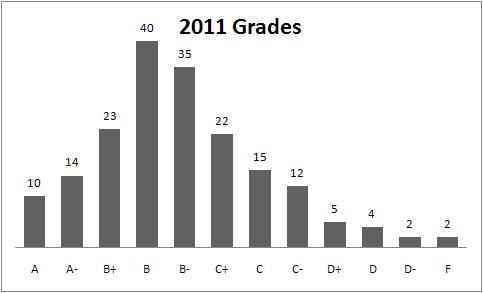
Over the course of 128 posts, I assigned 184 grades. (This is for letter grades only. For example, I refrain from giving grades in my webcomics posts, and my Origins report used number grades to avoid “final” decisions.) Here is how they broke down:

That’s actually a much more consistent curve than I was afraid I would see! It looks like the grades are fairly distributed, with the average being a B/B-. I think I’m a fairly tough grader (the Bs are still recommendations, while a B- is a mild recommendation), but I also review the things that I choose to buy for myself, so it’s not surprising that I usually liked the things I chose. I expect to see this average drop slightly now that I’m becoming more comfortable with assigning lower grades, but as long as I’m choosing my own material, it shouldn’t shift much.

If you’re curious about details, I have my grades broken down by category with more commentary below the fold.

Continue reading

Best Albums of 2011

It’s traditional for end-of-year lists to start with a self-aware apology. I’ll gloss over the standard part, because I assume you already know how silly and arbitrary this process is, that it’s only meant to reflect my own opinion, and so on. The only part that really gives me pause is how incomplete it is. I do this as a hobby, which means that I’m generally only reviewing the albums I’ve chosen to buy (or in a couple cases, borrowed from friends). This year, I reviewed 67 albums, only 32 of which were actually from 2011. I still have about 15 more from this year that I have yet to review. Now, I listened to part or all of a couple hundred albums online before I decided I was interested in the ones I bought, but it’s still a limited sample.

So, I’m sure I’ve missed a few gems. But at this point in my life, I’m pretty confident in my ability to find the music I’m most likely to enjoy. So I think it’s fair for me to pick a top 5 for the year. Even if I did buy and review a couple hundred more of the year’s popular albums, I think that these ones would manage to stay within the top 10.

I don’t really feel like there was a runaway #1 this year, but I’m comfortable defending each one’s position near the top. Yes, even the albums that no one else picked.

Continue reading

Paths of Doom Books

The Lost Sword coverSete-Ka's Dream Quest coverRealm of the Enchanter cover

Coincidentally, after writing about Choose Your Own Adventure (CYOA) stories, I happened to find three “Paths of Doom” books that I’d been given and stashed away years ago. They didn’t look like something I’d normally pay much attention to, but it was a perfect time to check them out.

For the most part, this line of books doesn’t stray too far from the classic CYOA formula. The simple journeyman writing leads to choices with often arbitrary consequences, the only real innovation being that the reader must find the single happy ending. I also found it interesting that these books are written in the third person, though most CYOAs are about the adventures that “you” have. The settings are consistently high fantasy, and are probably best for slightly higher age levels than the original CYOAs, due to the larger word count and frequent deaths.

Overall, I thought that these minor tweaks worked well. By featuring protagonists who were not supposed to be me, the books were able to offer a little more variety than I expected. The single ideal ending also gave them a puzzle-like quality, which should work well for anyone who carefully bookmarks the branching points and tries to read it all. It would probably be more frustrating for people who just want to read through a few times from the beginning. And while the writing certainly isn’t very good by the standards of standard linear stories, these do read more coherently than most branching plot books. However, the final result is still a little too silly and similar to the gimmicky 80’s books for me to truly recommend them, either.

It’s also worth noting how inconsistent the formats of these different books are. Two feature storytelling text in the bold sentences that offer choices, while one simply says “If the hero does this, turn to page XX.” One fits the instructions about how to use the book on the same page that the story opens, while the others separate those two parts. One uses a different font size than the others. And all three take a different structural approach to how the stories branch and whether two different threads can rejoin each other. While those don’t necessarily make the books worse, they do make me doubt that there was any real planning or long-term support for this line. It’s not surprising that, as far as I can tell, it went out of print almost immediately.

Here are my impressions of the books that I read.

Continue reading

Jason Shiga – Meanwhile (Comic, Game AND iPhone Review!)

Meanwhile cover

Jason Shiga - Meanwhile

After looking at the way that some computer games played with the Choose Your Own Adventure mechanics, I searched around to see what other ways the genre had evolved. For the most part, it was disappointing. Books in that format are strongly influenced by the original ones, and seem to be poorly-written and arbitrary children’s stories. But I did find one work worth noting: A comic by Jason Shiga named Meanwhile.

Meanwhile is structured so that each panel has a line leading to the next. When there are choices to be made, that line branches, presenting two or more simple choices to follow. Each page has a tab on the side, so that a line that leads off the page can easily be followed to a tab on another page. It sounded a little confusing at first, but turned out to very easy to follow.

Continue reading

Marvel Comics Capsule Reviews

Here are some reviews of new and notable Marvel comics from the past few months. (Well, “new and notable” in the sense that I bought them. This is likely not a representative sample of all the Marvel comics that have launched recently.)

By the way, look for reviews of the new DC series to start in January. I’ve been giving them some time to establish themselves, but that is nearly up.

Continue reading

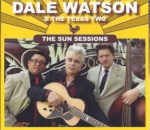
Dale Watson & The Texas Two – The Sun Sessions (Music Review)

The Sun Sessions cover

Dale Watson & The Texas Two - The Sun Sessions

With a band named “The Texas Two” and an album called The Sun Sessions, it could be easy to think that Dale Watson’s new album is a collection of rarities from the classic days of Sun Studio. He even does a passable imitation of the rockabilly that made Johnny Cash and The Tennessee Two famous while recording there. Only a few modern references and the mature perspective betray this as new material. Whether this approach is a gimmick or not is a matter of opinion, but every sign is that Watson takes this perfectly seriously. He and his band never stretch themselves trying to sound more like Cash than they can handle, and the songs legitimately fit alongside the ones from that era without feeling like simple copies.

According to the liner notes. Watson wrote half of this album in a rush after spontaneously scheduling the studio time, and the band had almost no chance to practice. This shows in the simple nature of some of these songs, especially the music. However, this style is not meant to be complex, and there is a thin line between simple and iconic. Even the most basic songs such as “Gothenburg Train” and “The Hand of Jesus” could find a place as filler on the classic Johnny Cash recordings, and that’s no small feat. The fact that Watson managed this on  short notice is a testament to his songwriting skills.

Averaging two minutes each, the band barrels through the expected variety of country themes. The heartfelt songs about love and religion fit in alongside suicide and vengeance, and Watson covers the trains, trucks, tributes, and life lessons on other tracks. “My Baby Makes Me Gravy” is a fun slice of life that doesn’t feel as gimmicky as the lighthearted songs of many country greats, and the self-destructive “Down, Down, Down, Down, Down” is a passable shot at Watson’s own “Folsom Prison Blues” or “Mama Tried”. But the song that should truly enter the country canon is “Elbow Grease, Spackle and Pine Sol”. Despite the awkward name, it’s a heartrending new take on a traditional country topic, and a vivid character study as well.

Even if the songs seem dashed off, there is not a bad one on this album. I wouldn’t encourage anyone to simply imitate their inspirations forever, but for the length of The Sun Sessions, the results feel pretty nearly perfect.

Grade: B


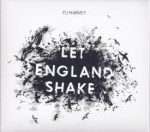
PJ Harvey – Let England Shake (Music Review)

Let England Shake cover

PJ Harvey - Let England Shake

Calling PJ Harvey’s Let England Shake a return to form is misleading. After all, she has reinvented herself with each new album. The first sign of her recent decline was when Uh Huh Her reprised past sounds instead of creating new ones. So this new album is a “return” only in the sense that it is nothing like what she has done before, and therefore sounds vital and natural.

Let England Shake is different not only in sound, but in focus. Harvey has turned her intense gaze away from herself and towards humanity in general. Specifically bemoaning her native England’s decline, she lays the blame on its destructive wars. Harvey’s singing here is mellow and restrained, admittedly not playing to her strengths, and the unusual (for her) backing vocals are a little flat, but that hardly matters: This is a vision as arresting as any she has presented yet.

In fact, the vision is unrelentingly bleak. Harvey’s western audiences may not often think about violence around the world, but this album offers no alternative to the idea that our time is dominated by war. Her quiet voice seems lost in a tide of nationalism and forces outside her control, telling stories of doomed soldiers and civilians fleeing through sewage. The mood is incredibly effective, offering no moments of anger to provide catharsis. The closest it comes to release is in the sarcasm evident on the propaganda-styled chant of “The Glorious Land”. (This is one of the standout songs, by the way, twisting a children’s chant about their rich, fertile nation into one in which the land is plowed by tanks and produces orphans.)

The songs cover wars past and present, confusing the message about England’s current decline. All the war portrayed here seems equally hopeless, with “On Battleship Hill” highlighting the unhealed damage that remains even after nature has reclaimed a battleground. However, this change in focus, which lets Harvey’s stories shift between survivors, victims, and observers, provides the main source of variety on the album without ever letting up on its point.

Let England Shake is far from Harvey’s best album, and not all fans of her rougher, more personal work will find the spark that they’re hoping for here. Despite that, this is an incredibly affecting document of our times. It’s difficult to listen to repeatedly, but that’s actually a testament to its songcraft. PJ Harvey is back in excellent form, and if it isn’t exactly with the sound you would expect, how can that be a surprise?

Grade: B+


The Coathangers – Larceny & Old Lace (Music Review)

Larceny & Old Lace cover

The Coathangers - Larceny & Old Lace

The Coathangers are an all-female punk group with the brusque intimacy of someone shouting at you from across a crowded room. Their simple song structure and deliveries occasionally give way to influences from classic pop and soul, and even a country-style ballad, proving that their style is more of a fundamental melting pot than a limitation. Larceny & Old Lace is their third album.

The drums and more electronic-sounding music almost appear to be pre-programmed, at odds with the full-throated shouting and chaotic guitar fuzz. This is a very unfortunate distraction. As it is, they are best in quick hooks and soudbytes, such as the suddenly-intense declaration “such a shame we say goodbye” or the bratty schoolyard chant of “well, Johnny’s going to hell for what he did”. Those highs are rarely maintained over the length of a whole song, though. (For example, “Johnny” loses me when the second verse turns out to be about a mass-murdering woman going to hell as well. It takes on a seriousness that doesn’t suit the irreverent start.)

More problematically, the songs rarely seem to be about anything memorable. I’m not asking for anything deep, but most songs are forgettable beyond a couple catchy lyrics. This needs more tracks like “Go Away”, a simple song about needing space from a not-quite-boyfriend. Humanity and a relatable situation come through, in spite of (or because of) the fact that it isn’t trying to be anything more than an everyday slice of life. Punk’s strength is in how easily a sloppy, basic song can seem to reflect the human condition, but its weakness is that if it misses that mark, it seems to be posed and unnatural.

It’s frustrating to review The Coathangers, because they frequently approach true genius. The hooks are raw and pure, and the modern indie craft they bring to a wild, unhinged genre provides real moments of frisson. But the songs are ultimately forgettable, without the ability to keep the listener coming back after the initial attraction. I could easily see myself hailing the band as essential with just some small tweaks to the format, but as it is, I’m disappointed.

Grade: C


Scott Westerfield – Goliath (Book Review)

Goliath cover

Scott Westerfield - Goliath

Goliath concludes the trilogy that Scott Westerfield began in Leviathan. That first book was a revelation, being both a thrilling adventure and the introduction to an original world. The pace faltered a little in Behemoth, if only because the sequel couldn’t seem as new and surprising as the first one. But this third book makes good on the promise of the series, bringing everything to a fun and satisfying conclusion.

The alternate-WWI premise, with a steampunk empire battling against genetic engineering, is now well-established, so the book jumps right into the plot. Girl-disguised-as-boy Deryn finds her web of lies becoming more difficult to maintain, and Austrian prince in hiding Alek finds a new hope as he struggles with mixed loyalties. However, Goliath would have benefitted from more introductory action. While the other two books had life-or-death struggles within the first couple chapters, this just sets up the long-running plots for the books. Even when Deryn comes face-to-face with vicious Russian bears of war, it feels strangely safe.

Yes, there are Russian bears which have been engineered as war machines. There are also mechanical walkers in the Mexican revolution, flying platforms over New York City, Japanese war-beasts, and a burgeoning film industry. Goliath may not have a new world to introduce, but it explores as much of it as the previous two books put together. It’s intriguing and, even more importantly, easy to accept, as Westerfield has made a world that feels internally consistent and fits cleverly in with real history. (The afterward, as always, is well worth reading, as it explains both the little elements of reality that the book makes use of and the places where it deviates from our history. While no one would mistake this for a historical novel, it has real things to teach and makes the actual events as intriguing as the fictional ones.)

Fortunately, the slower beginning pays off. The plots it sets in motion mix with the arc of the full trilogy to create an exciting, high-stakes second half. There was always an pleasant fantasy to the story of children hiding their identities in a war, but the reality of this is deadly not just for them, but for the people and nations they love. These dangers seem real by the end, and both heroes find themselves needing to decide a new future path for themselves. They grow up without betraying the characters that they have always been.

The romantic subplot that began to form in the second book plays a larger role here, and it is also effective. I am not generally a fan of storybook love, and I even groaned a little when I read the opening dedication (“To everyone who loves a long-secret romance, revealed at last”), but I have to admit that it worked here. There are no easy answers or convenient plot devices. Every step forward in the potential romance involves sacrifice and in-character decisions.

One defining part of the Leviathan trilogy has always been Keith Thompson’s illustrations, which give the books a period atmosphere and also help the reader visualize the stranger aspects of this world. Though the series no longer introduces completely new concepts every chapter, the art is still an integral part of the book. This book actually provides more illustrations than either of the previous ones, fleshing out the story and providing visual hooks.

Goliath is an appropriate ending to a standout Young Adult series: Providing payoff to the initial hooks and interesting new elements of its own, this deftly guides the story (both for our heroes and the alternate war-torn world) to a well-earned ending that never feels easy to predict.

Grade: B+