Tim Timebomb’s New Songs

One big piece of musical news last week was that ex-Operation Ivy bandmates Tim Armstrong and Jesse Michaels recorded a new song. But for me the big surprise was that Armstrong, under the name “Tim Timebomb“, has been been releasing new songs every day for almost a year. Every one is free on YouTube, though you can buy them as singles. I’d seen that name before (Armstrong used it for his half-successful “RockNRoll Theater” show a while back), but somehow this new project slipped under my radar.

I’m not going to formally review this collection, since it doesn’t fit into a standard album format, and I don’t think it’s intended to be bought as a whole package anyway. (It’s pretty scary to think about how much that $0.99/day would have added up to by now!) But I’m a huge fan of Armstrong, from his harder punk to his Joe Strummer-inspired musical fusion efforts. Even if a lot of these songs are unimpressive, it’s still a lot of fun to browse through them.

These are mainly in the vein of his laid-back solo effort a few years back, with a smooth voice and strong reggae/ska influence. If you listen to too many at once, they all start to run together pretty quickly, especially since the majority of them are covers or remakes of his older songs. But he does manage to include a very impressive variety in there, and you’ll find enough new songs and surprise guests to keep the search fun.

I’m sure that the daily schedule keeps the quality down and the production repetitive. His recent duet with Lindi Ortega, for example, should be incredible, but you can tell that their bands didn’t have enough time to figure out how to merge their sounds. And some songs are disappointing – I can’t believe he couldn’t do anything special with “Jockey Full of Bourbon” or “Summer of 69“. On the other hand, this is the only way he ever would have changed up “Django” and “Not to Regret” so much, or discussed his appreciation for classic country.

This may be uneven, but it’s a great project, and I’m glad to see a man like Armstrong experimenting with new distribution methods. It seems like a great creative project, too, with Armstrong planning new Rancid and Transplants albums this year. If he can release that much polished work, then all this dashed-off music is serving a great purpose. And meanwhile, I still have hours worth of new songs that I can’t wait to explore.

Revisiting Trajan and Castles of Burgundy

As a general rule, I don’t change grades once they’re posted. Reviews are supposed to reflect my opinion once I’ve first gotten familiar with something. If things that I’d known for years were graded alongside new items, it wouldn’t be fair. But on the other hand, if something that turns out to be a real classic after I’ve gotten to know it better, I don’t want to ignore that. So, half a year after initially discussing Castles of Burgundy and Trajan, I’m revisiting the reviews.

Trajan box

Trajan

My B+ grade for Trajan holds firm. It’s a clever, fascinating system with a lot of well-balanced aspects. As I said initially, its action selection system requires you to plan several moves in advance, while the amount of activity means you’ll often have to look for ways to change mid-plan. This is best with the full four players, since that makes it a lot more interesting to try to stay on top of the chaos. Depending on how you count, there are five or six ways to earn lots of points in the game. You’ll need to focus on a few of them each time. But they all take focus, and it’s really common for half of them to be impossible for you by mid-game. With poor planning, you can end up with no real opportunities for a long stretch of time.

In short, I’ve gotten used to it now. The initial overwhelming feeling is gone, with no new depths to replace it. However, it remains innovative and well-balanced after a lot of plays, and it continues to be fun.

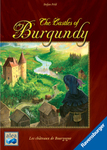
Castles of BurgundyCastles of Burgundy really surprised me with further plays, though. In some senses, it does feel generic – You play a bunch of tiles that score in different ways, like a parody of Euro games circa 2012. It’s a perfect implementation of that “generic Euro”, though, with everything still feeling balanced after a couple dozen games. I’ve seen every major strategy succeed and fail, always for fair reasons. While Trajan has a limited number of ways to score big points, Burgundy always provides multiple opportunities. The trick is to recognize which ones will pay off the best, as well as figuring out how many different directions you can afford to go in at one time.
In contrast to Trajan, I find Burgundy most interesting as a two-player game. You can pay close attention to each other’s boards, and it’s a zero-sum fight to earn the most points.

Even after all this time, Burgundy is more interesting than it was when I wrote the initial review. One initial complaint still holds, in that there can be a lot of downtime simply while waiting for opponents to figure out how to allocate their two dice. It is well worth playing, though, and I now consider this to be one of the classics of the past few years. I’m raising its official Cult of the New grade to an A.

Neil Gaiman – The Ocean at the End of the Lane (Book Review)

The Ocean at the End of the Lane cover

Neil Gaiman – The Ocean at the End of the Lane

The Ocean at the End of the Lane is a surprising book. It’s Neil Gaiman’s first adult novel in years, but it actually feels reminiscent of his younger stories. Coraline makes the best comparison: A young child stumbles into a world beyond his own and faces a magical being that threatens him through his family ties. The story moves along with comfortable fairy tale logic, and no one who is familiar with Gaiman’s influences will be surprised by the way the plot unfolds. The half-explained cosmology is intriguing, though. Being a Gaiman story, the writing has a slightly lyrical, twee sensibility, and it’s simple enough to fit the child protagonist, but it always makes the story’s otherworldly logic seem perfectly natural.

Ocean is an adult novel, though, and not just because of the slightly gruesome death early on. It’s told from memory by the adult narrator, and he understands some things that had gone over his head at the time. One theme of the novel is the different perspectives of children and adults. It opens with a quote from Maurice Sendak saying that children know terrible things that would scare adults, and the story seems built around that. The narrator can’t tell the people around him what’s going on, but shoulders the responsibility with a strength that few adults remember. Gaiman does appreciate that aspect of youth, and again, that makes it seem pretty comfortable to its readers. It’s a metaphor for childhood, and we understand what’s going on even though adults aren’t supposed to. We’re in control of the story, right?

But that’s why I introduced Ocean as a surprising book. Things slowly but surely go off the rails for us, even as the fairy tale heads towards its predictable happy ending. The magical threat is a childish horror that wasn’t supposed to scare us after all – there are other surprises here that the kid doesn’t even notice but that did unsettle me.

At the end, we’re treated to a discussion of what it all meant, and it turns out that simple fairy tale logic doesn’t translate to simple answers. We’re left to draw our own conclusions about life’s meaning and value, and how childhood experiences define us as adults.

Like Gaiman’s best stories, Ocean is a slow-building book that doesn’t seem too impressive until all the pieces start to fall together. In this case, the real payoff is in your thoughts for the days after you finish. It’s a very quick read, though, so you can expect that to happen right away. I finished it two weeks ago, and I can say that the haunting thoughts about life faded after only a few days. The book is still there as a faded memory, though, and one that tugs at me. I hardly ever re-read books, but I’m expecting to come back to this one in a few months. Much like the narrator, I need to see what turns up when I reexamine the memories.

Grade: A-


Steve Earle & The Dukes (& Duchesses) – The Low Highway (Music Review)

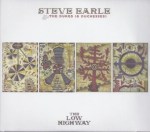
The Low Highway cover

Steve Earle & The Dukes (& Duchesses) – The Low Highway

Two years after the excellent I’ll Never Get Out of This World Alive, Steve Earle returns with a solid but unexciting album. The Low Highway does everything fans will want from Earle, but has no real standout songs.

This time performing with “The Dukes (& Duchesses)”, Earle’s band makes this his countriest album in years. Confident, polished, and sticking to a familiar style, this easily fits in with the pop-Americana resurgence of these post-Mumford years. But, while the album mixes his blues-rock with everything from harmonica to fiddle to jazz piano, it’s usually comfortable with slow ballads that fit Earle’s age and his pain. It’s a good choice, and one that stands out next to younger, less soulful bands. Again, it’s just missing those couple great songs that would define it.

So what songs are on this? Well, one of the highlights is “Invisible”, a heartfelt story of homelessness. Earle is one of the few people who still seem to remember that country has a tradition of sympathy for the downtrodden. He sometimes comes across as over-earnest, though, as on “Calico County”‘s description of a poor, meth-blighted town. It’s the rock track on this album, but his heart doesn’t seem in it. Somewhere in between is “The Low Highway”. His personal daydream of hitchhiking mixes in scenes of poor folk on the road and damaged veterans, but they sometimes feel shoehorned in.

Every Earle album has a duet with a woman, and “That All You Got?” is an energetic, swinging track that leads into the equally upbeat “Love’s Gonna Blow My Way”. It’s the most fun part of the album, but there are a couple other sections that come close. On the other hand, those stand out against a couple disappointments. “21st Century Blues” tries to rail against the injustices of today, but his complaints too often sound dated. Missing “flying cars”, “teletransporters”, and Kennedy’s promises, he overlooks the wonders that today does offer. The old promises of jetpacks and Dick Tracey watches have been completely outdone by the reality of smartphones and internet. Not that that is Earle’s main point – there are plenty of injustices around us as well – but his lighthearted comments serve to make him sound out of touch instead of humanizing his political complaints.

Overall, Earle is still refusing to settle down, and he’s a good songwriter who (usually) knows how to play to his strengths. The Low Highway is a nice change of pace, if not one of the albums that stand out over his career.

Grade: B-


Hanabi (Game Review)

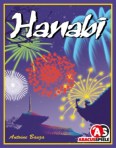
Hanabi

Hanabi (picture from BoardGame Geek)

Today we learned that Antoine Bauza’s Hanabi won the 2013 Spiel des Jahres. The Spiel is the most-followed award in the gaming industry, even though it’s focused on family games in the European market. Therefore, every year at this time we get to hear lots of confusion and anger from serious gamers who don’t care for the latest SdJ winner at all. This year, though, something strange happened: the game that won was actually great for gamers of all skill levels! (Also today, Legends of Andor won the Kennerspiel, which is for games that are more serious, but still on the light side of what I usually play. I don’t expect to play Legends of Andor again any time soon, but I have added some new thoughts to my first impressions from Origins.)

On first glance, Hanabi is a pretty simple game: Everyone at the table works together to play cards in order from 1 to 5 in each of five colors. (There are multiples of cards, giving you the chance to discard for a new one if there is nothing immediately useful in your hand.) The gimmick is that you hold your cards backwards, so that you see everyone else’s hand but not your own! As an action, you can choose to give someone a hint, but you are restricted to telling them only about a specific rank or color in their hand. If you do, you must tell them the location of each card matching that rank or color. (So, for example, if you want to let them know about the Red 2 that is playable, but they also have a Green 2 and a Red 3, there’s no way to point out just that one card.) Hints are a limited resource that must be replenished by discarding. Just remember that discarded cards are lost forever, so don’t give up the wrong one!

At first, Hanabi is a fun, silly change of pace from other games. It really is weird to hold a hand of cards that you know nothing about, while looking around the table wishing you could shout out advice to the others. But it quickly becomes tense and tricky. It’s possible to infer a lot of information from what other people say within the allowed system of hints, as well as how they act when they know your cards.

The reason for Hanabi’s wild success, winning over both the Spiel des Jahres jury and hardcore gamers, is that different groups can experience it very differently. If you’re playing with social gamers or kids, you can allow a good deal of table talk. People can groan or cheer when they see a card drawn, publicly talk about how “you really need to hint to Bob about that card he just drew”, or even put emphasis in their voice to say a little more with their hint. It’s still a fun, unusual game that will make you feel clever when you win. On the other hand, more serious gamers can outlaw all table talk, and even refuse to give reminders if someone forgets an earlier hint. Also, it’s easy to finish the game without losing outright (playing three bad cards), but difficult to complete all five colors, so in between is a scoring system that lets you decide what is a “good” or “bad” result for your group. It scales from a silly game that can make kids feel clever all the way up to a many-layered one with logic and communication conventions similar to Bridge. That’s quite a range! (And then there are extra cards to add a twist when the game gets too simple.)

If Hanabi has a flaw, though, it is that range. With most tabletop games, I can sit down at a convention or with friends of a friend, and know what I’m getting into. Here, subtle differences in players’ expectations can completely change the game experience. If you play strictly but someone shares extra information, the game is basically ruined, but if you like to laugh at silly plays and talk through tough spots, anyone who stops you is spoiling it. Regardless of whether everyone has the same approach, you still probably won’t all agree on the conventions used to legally share information. Even within my game group, there are definite disagreements about what is fair, and half of the discussions about this game on BoardGame Geek seem to be about different expectations.

I think that Hanabi is rarely going to be a go-to game for random gatherings. For a known group of friends, though, it’s an excellent experience. Unique, challenging, and fit for whatever level you want to play. Don’t let this Spiel des Jahres winner pass you by.

Grade: A-


Glen Duncan – I, Lucifer (Book Review)

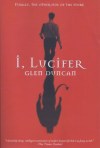
I, Lucifer cover

Glen Duncan – I, Lucifer

Glen Duncan’s I, Lucifer is the story of Satan, after God offers him the chance to possess a mortal body for a month. Rather than take the chance at redemption, he splits his time between the pleasures of the modern world and writing his side of the story for us all to read. Naturally, Lucifer’s version of things differs slightly from God’s.

In general, there are two ways to write stories about the devil. Either his rebelliousness can be cool, setting him off against an out-of-touch God, or he can be the scapegoat for all pain and suffering. This book tries to have it both ways, and fails. Lucifer’s writing is confident and collected, and he expects us to identify with his freedom-loving worldview. But then he keeps interrupting that narrative to brag about persuading people to rape and murder. These aren’t kept abstract, either. He’s especially proud of the damage these crimes do to innocents. If you can’t handle scenes of child rape and very detailed descriptions of Medieval torture, this book is not for you.

Of course, even if you can handle those scenes, there’s no reason why this book should be for you. I can enjoy stories about anti-heroes, and even about villains. But I don’t automatically like them just because they’re about bad people. And I, Lucifer doesn’t offer any reason to read it. Possibly worst of all (if you’re not one to get disturbed by the scenes in this book) is how boring he actually is most of the time. When he’s not being the original rebel or the reason for torture, he’s just in over his head in the human world, sounding a lot more like a hedonistic mortal than a deity who has seen ages pass.

Duncan is a great writer. Allusions and economical turns of phrase flow through the prose, and he can set scenes and describe people very insightfully. This book is not well-written, though. Lucifer’s tendency is to wander off on tangents constantly, jumping between philosophy, the “real” versions of Biblical stories, and the modern-day events. Almost no time is dedicated to the plot, and all these aspects end up feeling disjointed. Many individual scenes are good. There’s one digression near the end that justifies the contradiction between Lucifer’s roles as freedom-lover and a perpetrator of suffering. If that had come earlier, and been supported throughout the book, it would have been a very different, much more interesting, story.

I, Lucifer has very good moments, but they’re all temporary. For all Duncan’s skill, the book he wanted to write just wasn’t very good. The main character merges the worst parts of unlikeable and uninteresting, the other characters barely exist, and there’s almost no plot to speak of. I do find myself vaguely curious about what Duncan’s other novels are like, but unless someone promises me that they are very different than this, I won’t be giving them a chance.

Grade: D+


Vampire Weekend – Modern Vampires of the City

Modern Vampires of the City cover

Vampire Weekend – Modern Vampires of the City

Like everyone, I found Vampire Weekend’s debut to be a surprise hit. Also like everyone, I intended to check out their follow-up, but never got around to it. It didn’t seem too important to buy another literate-but-light-on-meaning pop album with affected African vocal inflections. Now the band has a third album, and, like everyone, I was surprised to hear people talk about it in the same surprised, glowing terms they used for the original Vampire Weekend. So I come to this one without much expertise, not knowing how much of the growth I’m seeing would have been evident had I been paying attention a few years ago. However, I can say that Modern Vampires of the City is an incredible album.

Yes, you’ll have to get past an awful album title. And a drab cover photo of New York City in 1966. And the first track, “Obvious Bicycle”, is not going to grab your attention. But after those first five minutes, all of the album’s weak points are out of the way. What’s left is a masterfully crafted set of songs that make the band’s gimmicky sound and themes seem perfectly natural. If you don’t think you’re interested in pop albums, Modern Vampires may be especially for you. Vampire Weekend doesn’t seem to see any conflict between catchy, hook-filled songs and intelligent lyrics that reward attention. For example, “Ya Hey” is a fun track with a nonsensical-sounding refrain, but it’s actually about “Yahweh”. The band confronts the Hebrew god who wouldn’t even give His name clearly, faulting Him for the distance between Himself and His creation. The “Ya Hey” of the refrain is distorted in varied ways to play with the unpronounceable name.

Distortion also plays a center role in “Diane Young”, possibly the best pop song in years. It’s a mix of “baby baby baby”, lyrics about living fast, breaks in the tension that are practically a cappella, and sudden releases driven by an upbeat drum machine. In addition to all those blended aspects, the vocals are sometimes slowed down and run through cheap studio tricks that create a strong contrast to the otherwise-sugary song. Imagine a power-pop hit by Ween, and you’ll have a good idea of how this works.

It’s amazing to see the evolution from Vampire Weekend to Modern Vampires of the City. It’s obviously the same band, but where their early songs’ meanings were basically “Google what a ‘mansard roof’ is and you’ll understand”, these ones have a lot going on. (Atheism or discomfort with religion come up frequently, as in “Ya Hey”, but many songs are just general tales about life. Aging seems to be a secondary theme, as well.) The production and songcraft are excellent, with even the flow between songs feeling carefully engineered. It’s a varied but cohesive album with obvious care put into every moment. Whatever your past experiences with Vampire Weekend, this is a must-have.

Grade: A


Webcomics Roundup: Q2 Miscellany

I have (as always) been inconsistent lately about my monthly webcomics articles. Not a lot of new ones have grabbed my attention lately, though. Comic Chameleon, which I reviewed on Sunday, is about the only new notable event in the webcomics world that I know of. But I do have several items that seem worth mentioning, even if they aren’t strictly new. Here is a quick list of webcomics miscellany.

(And yes, I did time these articles so that this one could refer to the just-reviewed Comic Chameleon, but they would each count as a different month’s webcomic article. Not that anyone cares but me, I’m sure. You don’t write for an amateur blog in 2013 without being a little bit obsessive, though.)

Continue reading

Comic Chameleon (iPhone App Review)

Comic ChameleonThough Comic Chameleon isn’t the first iPhone app devoted to web comics, it bills itself as the first one made with the comics creators’ permission, and to share revenue with them instead of stealing their audience. That’s an admirable goal, and I was excited about this project. Unfortunately, so far it’s just not worthwhile. It’s telling that I put this review off for a while, always telling myself that I should use the app more before writing about it. I’ve finally accepted that I’m just not going to use it much more, because it doesn’t offer me a good comic reading experience.

Looking at individual comic pages isn’t a bad experience. I mean, the comic is there on the screen. You can read it just like you would in a web browser, and swipe to move through the archives. It does let you view alt text, which is something that is otherwise inconsistent on the Safari app. But if you want to read the news posts and comments that go along with the posts, see the jokey titles that each episode of Dinosaur Comics gets, or otherwise see more than the comic, this app will not match the web site experience.

The big innovation in Comic Chameleon is that it lets you browse panel by panel instead of scrolling and zooming manually. This is an impressive achievement, as I’m sure it took the creators a long time to mark each panel (sometimes with creative choices when the divisions aren’t clear). I use this feature sometimes, but usually prefer not to. The layout of a comic is important, and these comics were designed to be viewed one page at a time. You could make a comic designed to be viewed panel by panel, but these ones weren’t. If the page doesn’t fit on the iPhone screen, I prefer to zoom and scroll myself. At least that keeps my relationship with the page intact. The knowledge that I’m the one looking at a piece at a time allows me to appreciate the page as a single unit in the end. Yes, that usually requires one hand to hold the phone and another to pinch and zoom, so the app’s system is better if I’m holding something in one hand and want to scroll through comics with only one hand free. But that’s maybe too specific a niche for this app to target.

A webcomics app should do more than just let you browse through comics, though. As a way to keep up with your favorite works, Comic Chameleon fails. The main screen is a scrolling list of every comic supported by the app. There’s no way to make a list of favorites or hide the ones you don’t want to read. It also doesn’t track what you’ve read in each comic, so you have to open up a comic to find out if it’s been updated. If the comic tells a story, and you are more than one update behind, then too bad! You’ll start at the most recent one and have to scroll backwards through possible spoilers to manually find the right point. (Yes, you could also find the sub-screen that lists all comics by date, but do you really remember the exact date you last checked in on the comic?)

Comic Chameleon arguably works as a hub to check out comics you might not have heard of before, but honestly, I have no need for that. I don’t have enough time to check out all the recommendations I already get. What I want is a simple way to find out which comics I like have updates, and to see those updates in order. Right now, a basic RSS reader works a lot better than this dedicated app.

So far, the only comic that has been interesting to follow through this app is A Softer World. The comics are short enough to be readable on my phone in landscape mode, there is no plot so I don’t have to worry about reading backwards until I have caught up, and since the website only has new news posts every few weeks, I don’t feel like I’m missing anything. Also, it comes alphabetically at the start of the list, so it’s not a pain to get to. No other comic can replicate those benefits, though.

It feels churlish to complain about a free app, especially since the ads go towards people who deserve the money. But it makes comics harder to follow, not easier. I’m still hopeful about this concept in general. It’s always been difficult for webcomics to find revenue streams, and inexpensive apps sound like a perfect fit for them. In fact, I don’t even count Comic Chameleon out yet. It could easily add subscription features in the future. It seems that all the work for version 1.0 went into setting up the technical features, including the (significant) effort of a protocol to let it see full comic histories and panel breakdowns. Right now, though, it has the building blocks but no useful UI. I worry that as it is, the app just won’t bring in enough ad revenue to keep them working on it. If they do, I’ll definitely follow up with a new review. For the time being, though, keep reading your favorite webcomics on RSS and websites, and find other ways to support them.

Grade (version 1.0): C-


John Scalzi – Redshirts (Book Review)

Redshirts cover

John Scalzi – Redshirts

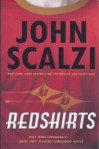
It’s a running joke that the bit characters on Star Trek get killed cheaply, but what do they think about it? Redshirts is the story of the crewmembers on a ship very much like The Enterprise who realize that they’re always the ones to die on missions. They look for an explanation and a way to save themselves.

It’s no secret that I dislike John Scalzi’s writing style, but I still had high hopes for this. Redshirts didn’t need to be brilliant, but just the clever, well-structured sci-fi adventure that Scalzi does best. And I assumed that his writing had probably improved over the years.

How wrong I was.

Oh, it’s clever at times. Scalzi takes a metatextual nerd joke and builds a story around it that actually makes sense at times. But the characters are flat and pointless, and the writing usually doesn’t feel right for the content. Redshirts should either be a light farce that doesn’t take its situation seriously, or a psychological horror piece about people who can’t escape the force that is killing them one by one. This dallies in both extremes (some death scenes are played for laughs, while at other times characters betray each other to save themselves), but it usually ends up stuck in an awkward middle. The story is played seriously, but without the pathos it needs. And I’m never given much reason to care about anyone in the book, which makes it awkward when the story stops to give a minor character some growth.

Seriously, this is what passes for character development in Redshirts:

“Man, I owe you a blowjob,” Duvall said.

“What?” Dahl said.

“What?” Hester said.

“Sorry,” Duvall said. “In ground forces, when someone does you a favor you tell them you owe them a sex act. If it’s a little thing, it’s a handjob. Medium, blowjob. Big favor, you owe them a fuck. Force of habit. It’s just an expression.”

“Got it, Dahl said.

Yeah, I get it. Light, funny, sexually-charged banter can be fun. But this scene feels lifted from a C+ paper in a class called “Character Quirks 101”.

It’s not just the characters, though. The plot and its resolution, which seemed like another good Scalzi effort at first, eventually go completely off the rails. Redshirts jokes about the nonsensical science in Star Trek-like dramas, which is fair enough. But after establishing the bad science rules, the characters proceed to solve their problems in ways that barely follow from that! Let that sink in: Scalzi presumably meant his writing to rise above the sci-fi hackwork he jokes about, even if it was working in the same system. But instead, he makes fun of those systems, and then proceeds to do a worse job himself.

Seriously. One of the most important actions the characters take comes a few pages after they discuss the fact that it wouldn’t work. They don’t find a way around it. One of them just pops up in the next chapter and says “Hey guys, it’s time to do this.” Some major later plot points also don’t follow from the established rules. (I can’t talk about them without spoilers, so I’ll put them below in the comments.) This book is supposed to work because it plays around with sci-fi clichés in clever ways, so it’s a real problem that the cleverness fails after the first hundred pages.

Then there’s the rest of the plot. It ends abruptly, with a twist that barely makes sense. It’s then followed by three codas, named (and written in) “First Person”, “Second Person”, and “Third Person”. Each one fleshes out a character who only appeared for brief moments in the main story, giving us closure about something that doesn’t matter at all. And yes, one is written with an irritating second-person point of view, for no discernible reason other than the writing gimmick. The final coda would be a pretty good short story on its own, but in context it just reminds us of the single awkward scene its person appeared in: Witnessing a moment of growth for another character that no one cared about.

Yes, I know Redshirts is up for a Hugo award right now. I can’t imagine why. It has an interesting set-up, but it falls apart thanks to flat characters, inconsistent events, and a plot structure that barely even makes sense. Save yourself the effort.

Grade: D