Other Lands (Book Review)
“Elenet, the first man… learned enough of the Giver’s tongue that he became vain. He tried to make his own creations, but because he was not the Giver, nothing he tried came out right. It was always twisted… To warm himself, he made fire, not noticing until later that fire consumes all it touches. To put out the fire, he lifted water from the rivers and created storms. To quell the storms, he blew the sky clean and found he had created deserts.”

Other Lands
The second book in David Anthony Durham’s Acacia trilogy continues its exploration of the gray areas of morality and the way that even well-intentioned people will propagate evil. This isn’t always subtle: The opening scene in Other Lands features Princess Mena Akaran hunting down magic-spawned beasts that were a side effect of the wars in the first book. Durham doesn’t let his point bog down the story, though. A strength of his writing is that he can feature a huge number of point-of-view characters, some directly opposed to each other, but almost all with sympathetic motivations.
This novel picks up nine years after the end of Acacia, but the plot follows smoothly from the last page. With the cultures and history of the “Known World” now fleshed out, the scope expands to include the “Other Lands” across the sea. The great sin of the protagonists’ empire is a long-standing slave trade with that land, but no one knows what happens to the “quota children” once they are sent there. Without giving too much away about the status quo after the first book, it’s safe to say that new threats challenge the empire in both lands.
Looking back at my review of Acacia, I see that my chief complaint was “the plodding pace that derails so much epic fantasy”. This is thankfully gone in the new novel. Durham shaves 150 pages from the first book’s 750-page length (measuring by the mass market paperback), and narrows the timescale from a full generation to a few action-packed months. But some of the first novel’s strengths are also lost. Most notably, while Acacia presented major actors on every side with good intentions and a conflicted morality, Other Lands shows us some important people who are easy to dismiss as simply evil. The moral conflicts still do add rich layers to the story, but it’s much easier to root for a winner this time around.
Other Lands also focuses much more on magic and other fantastic elements. This is not a surprise, as the stakes steadily climb throughout the trilogy, but one notable feature of Acacia was how firmly rooted the book was on the mundane and human. Most people, even royalty, knew of no magic beyond their ancient legends, and this was a refreshing approach for an epic fantasy. The fantastic elements in Other Lands are interesting and appropriate to the story, but it doesn’t feel as unique on my bookshelf as Acacia did.
The plot itself is well done, though. As well as being interesting, it does an excellent job of keeping its various elements balanced and moving. Unlike many epic fantasies, every indication is that Durham will be able to deliver a satisfying, timely ending without needing to stretch the series out into additional books. However, it should be noted that while Acacia worked as a satisfying, standalone story, Other Lands is obviously all set-up for the final book. That doesn’t make it bad, but it is always preferable when a book can work both on its own and as part of a larger story. (Also, while Acacia sent the world through major upheavals and could kill off main characters at any time, Other Lands seems to tread more carefully. The status quo evolves slowly, and characters that survived from the first novel seem to be under the author’s protection now. I suspect that this is mainly because the story is building up towards the next climactic chapter, and not because Durham is softening.)
In short, Other Lands continues a fantasy series that is more notable for its unique moral and humanistic concerns than for an especially thrilling story. However, the solid writing and thoughtful build-up make it clear that the next book will be timely and at least as good as the first two. These days, not many fantasy authors can give their fans confidence of that.
Grade: B-


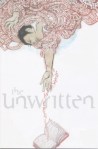 Note: So far, I’ve only reviewed comic series after they concluded. I’d to occasionally examine ones that are still ongoing, as well. As issue #24 of The Unwritten was just released, it seems like a good time. This is the point where most Vertigo titles are cancelled, so it’s now safe to say that this series should have have a long life ahead of it. In this case, it also happens to be the point where author Mike Carey says the first act is concluded. In a happy coincidence, as I was writing this review, I got word that volume 2 of this series had been nominated for a Hugo award.
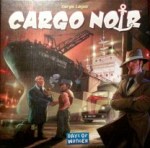 While bidding games are incredibly common in the current board gaming scene, Cargo Noir manages to find a new twist on the mechanic. Each turn, a player has a few ships that they can send out to offer money for a set of tiles. Those tiles won’t actually be purchased until the player’s next turn, which gives every other player a chance to make a higher offer on those same tiles. If the initial offer is outbid, the player who made it will need to either withdraw or raise their bid on their next turn. Because this is a new offer, it will be yet another time around the table before the tiles are actually won.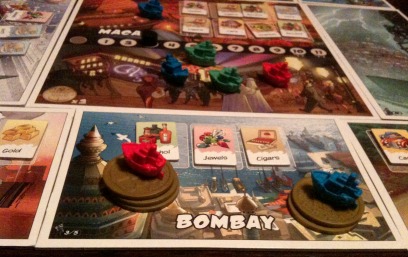
 I just read the first chapter of the webcomic


 Cult of the New