Archive for 2011

Slackeye Slim – El Santo Grial: La Pistola Piadosa (Music Review)
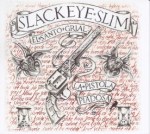
El Santo Grial: La Pistola Piadosa cover

Slackeye Slim - El Santo Grial: La Pistola Piadosa

It’s interesting that I’ve recently bought two story-focused concept albums. The first was Fucked Up’s David Comes To Life, and now I have Slackeye Slim’s El Santo Grial: La Pistola Piadosa. It may be a coincidence, but I’m wondering if this is an emerging trend. Concept albums are a logical response to the modern focus on cheaply-purchased singles.

Albums like this have always had a tricky relationship with their stories. The repetitive verse-chorus-verse pattern of songs works against standard narrative structures, and song lyrics are generally expected to be circuitous and vague. El Santo Grial takes a very different approach to storytelling than any other album I’ve ever heard, basically by making the story a priority. Songs are either monologues or outright narration, with no almost no hidden meanings to be parsed from the lyrics. This is effectively a radio play set to music.

However, even radio plays have trouble attaining the sense of place and storytelling that Slackeye Slim manages here. The song structures are very simple, but the music and atmosphere are rich and beautifully textured. Nominally a gothic country-western work, this eschews traditional musical tropes to incorporate samples with a modern producer’s flair. Neighing horses, rambling town drunks, and haunting flutes set every scene from busy towns to deserted plains. The vision of a dangerous, mystical western land is firmly established in the music alone, leaving the lyrics free to focus on story.

That story is of a man who rants about the unfairness of life until being granted the holy Pistola Piadosa, which will make him the instrument of God’s vengeance. Silly but unique, this idea works largely because of its darkness and “be careful what you wish for” twist. The lyrics are compelling and often clever, driven by frontman Joe Franklin’s gravelly voice. He has a Firewater-meets-Tom Waits flair which is sometimes focused too much on the spoken word, but is nonetheless attention-grabbing.

The story drags at times, letting multiple songs cover plot points that a single one could have handled, but the varied soundscapes make up for these shortcomings. The ending is also a bit unsatisfying: There is a complete plot arc here, but the conclusion feels more like the beginning of something larger. The story itself ends up being entirely about one man’s struggle and self-discovery, without the larger battles and action that seem promised at times. But this truly is worth repeated listens all the way through, and how many albums can say that in this single-driven era?

A gothic “weird country”, Slackeye Slim won’t necessarily appeal to the people who normally listen to country music. Their sound is built on an honest appreciation for the sounds and traditions of the genre, though, and the result is something startlingly original.

Grade: B

Michael Kupperman – Mark Twain’s Autobiography: 1910 – 2010 (Book Review)

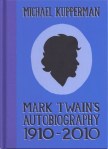
Mark Twain's Autobiography: 1910 - 2010 cover

Michael Kupperman - Mark Twain's Autobiography: 1910 - 2010

Michael Kupperman is a comedian best known for the surrealist Tales Designed To Thrizzle comic book. (I also recommend his Twitter account.) With Mark Twain’s Autobiography: 1910 – 2010, he tries his hand at a (barely) full-length book. Based on the premise that Twain was actually immortal, this tells of the adventures that the man has had in the hundred years since his death was “exaggerated” again.

It turns out that Kupperman is naturally fit for the short-form humor of Twitter or comics that change every few pages. This book features 36 chapters in 150 pages – with half of those pages being illustrations. And the longer chapters even contain sudden shifts, such as the time that Twain investigates a ghost in Einstein’s lab, decides to go time-traveling, meets Cyrano and zombies, and then ends up in a movie studio.

Example of inside pages

Fortunately, the absurdist humor works, frequently providing laugh-out-loud moments. But make no mistake: absurdist humor is the reason to read this. The book is aimed at people who are automatically amused by “Hobo Mark Twain” and “Mark Twain in Space!”, not people looking for humor based on the real Mark Twain. The prose is laughably simplistic, with none of the intelligence or satire that Twain would have brought to an autobiography, and the book generally ignores what we know about the man’s personality. There are occasional references to his love of rafting or his books, but the fiercely opinionated and moral man is replaced with a foolish and self-centered lover of adventure.

Mark Twain’s Autobiography works best as a bathroom reader. It’s quick and amusing, only demanding a couple minutes of attention at a time. With its strange approach and truly funny stories, it stands above most of the humor books that market themselves that way. But in the tradition of bathroom readers, it will be forgotten ten minutes later.

Grade: B-


Blitzen Trapper – American Goldwing (Music Review)

American Goldwing cover

Blitzen Trapper - American Goldwing

When I reviewed two previous Blitzen Trapper albums, I focused largely on the significant changes between each one. The way I saw it, there was an unusual but linear path from their weird stoner anthems to folk and classic rock, and then to a more complex folk sound. With American Goldwing, though, it becomes apparent that the band is actually circling around a larger territory. So large, in fact, that it took four albums to stake out the region. This resurrects the classic rock influences that Destroyer Of The Void largely dropped, with guitar riffs and white funk dominating.

The big surprise with American Goldwing is just how straightforward it is. While Blitzen Trapper’s lyrics are typically circumspect and seemingly made for our post-ironic time, this sincerely mimics past styles. Most of these songs would have sounded perfectly normal blaring from a muscle car’s speakers in the mid-70’s, preferably with the open road of the album cover stretching ahead. (The spaceman on the road might have seemed a little out of place, though. The band hasn’t given up all their affectations.)

This style fits the band naturally. In fact, the first three tracks all sound like they could have been chart-toppers in their target era: “Might Find It Cheap” is a cleverly-worded call to the men out their to respect the ladies, and “Fletcher” recalls the danger and potential that seemed to buzz behind lazy youthful days. “Love the Way You Walk Away”, a regretful ballad intended to show a rock band’s softer side, is the album’s highlight. The creative energy that could have been used to write inscrutable lyrics is instead directed towards finding a new perspective for these traditional topics. Though the songs stay within well-tread territory, they never feel like retreads of old hits.

A few songs stretch on a little aimlessly, giving the impression that Blitzen Trapper was keeping themselves restrained in order to fit their chosen style. Perhaps that is why “Street Fighting Sun” is such a standout track: Coming near the end of American Goldwing, it merges the funky classic rock with all the modern weirdness of the band’s last couple albums. It would have been a good song on their earlier works, but here it sounds positively therapeutic. It’s a reminder that Blitzen Trapper can’t be tied down, even by their own design.

Grade: B


New Albums From Jonathan Coulton and They Might Be Giants

Artificial Heart cover

Jonathan Coulton - Artificial Heart

Jonathan Coulton has become one of the stars of geek-rock, thanks mainly to his empathetic songs about the softer side of monsters and mad scientists. With his easygoing charisma and strong online presence, he’s the cool big brother to a legion of (well-deserved) fans. However, his strength is in the power of singles, amplified by downloads and social media links. In album format, he seems a lot less impressive. Artificial Heart demonstrates this.

The new hits are there: Coulton zeroes in on geek culture obsessions both trendy (“The Stache”) and standard (“Nemeses”). The latter is the closest to his “classic” standards, playing up the needy motivations behind a storybook arch-nemesis. But most of the songs are quiet, introspective, and even occasionally realistic. Coulton’s second fascination has been with the banality of modern existence, and he hits those beats on “Alone At Home” and “Good Morning Tucson”.

These songs will all work great in concert, but seem less impressive mixed into an album. Tracks like “Fraud” and “Today With Your Wife” are a little too slow and focus on emotions that never seem as genuine as they do in Coulton’s more fantastic songs. That is the issue in a nutshell: Coulton is intelligent and clever person capable of making songs that rise above their gimmicky surface, but he frequently attempts more “serious” work that never reaches the same heights. He’s a skilled performer, but it’s the creative spark that separates him from your friend’s cousin who plays at coffee shops. That spark appears here, but too inconsistently and too subtly to make a great album.

Grade: C+


Join Us cover

They Might Be Giants - Join Us

They Might Be Giants, the longstanding rulers of geek-rock, also have a new album. Join Us is in many ways a fairly comfortable, standard TMBG release, but remains consistently good. It’s true that the band has kept themselves from becoming stale by mainly releasing children’s music these days – this is their first adult album since 2007 – but the important thing is that they are not stale even after all these years. These songs are clever and interesting.

The band has a wide range, from folksy to slinky to rocking to the ballads and the just plain weird evolution of 1990’s alternative. These are tied together by the distinctively nasal vocals and a feeling that we’re in the studio watching music geeks play around. That impression excuses them from questions of musical quality.

The lyrics are the same as ever, ranging from the cleverly phrased to the inscrutable. They run every idea through a process that ensures even straightforward topics require attention from the listener: Circumlocution, complex sentence structures, and an advanced (but natural) vocabulary make their lyrics annoying for some people but thrilling for others. Contrary to Coulton’s work, it gives even their mundane songs a sort of uniqueness. “Judy Is Your Viet Nam” and “You Probably Get That A Lot” may cover completely standard relationship topics, but they’ve never been worded this way before.

They namedrop everything from Banksy to Sleestaks, and talk about Swamp Thing only one verse after evolution. Sometimes it helps to understand the references, but often those are only the starting points for the strange topics: “The Lady And The Tiger”, for example, has very little to do with the classic story (unless I’ve forgotten the talking animals and laser vision).

As always, the band undercuts their potentially snobby image with self-deprecation and macabre humor. “Can’t Keep Johnny Down” features an obviously crazy protagonist who rails against “all the dicks in this dick town”, but names that character after the two bandleaders. “When Will You Die” is an upbeat celebration about an enemy’s eventual demise. And while “2082” may be an indecipherable time-travel story, it’s climax is a surprisingly disturbing murder.

They Might Be Giants has matured without changing significantly. If people find them repetitive by now, the best defense is to show that their quality standards are as high as ever. It is probably best for the band to maintain this pace of four or five years between adult releases. This keeps the albums feeling like special events, and gives them time to find new twists to their established style.

Grade: B


Patti Smith – Just Kids (Book Review)

Just Kids cover

Patti Smith - Just Kids

An autobiographical tale intended to be about another person, Just Kids is an unusual sort of dual memoir. It’s really about the author, Patti Smith, but told through a lens where the main thing that mattered in her life was Robert Mapplethorpe. The atmosphere of the book is defined by their relationship to each other, and the years they are apart slip by as if irrelevant. Really, showing how one’s own life was defined by another person is a much more sincere and moving tribute than simply writing a book about them.

It’s a beautiful story on its own, of course, with an inside view of New York City’s arts scene to add to the human interest, but the book’s hook comes from who these two people were: In their own ways, each became one of the defining artists of the 20th century, but the bulk of the story takes place before this. The reader’s knowledge of their success contrasts with the simple, desperate lives the two were actually living, just as foreknowledge of tragedy (the book opens on the scene of Mapplethorpe’s death) gives weight to every scene.

Smith is a poet, but not an author. Accordingly, her prose is lyrical and captivating, but the story sometimes feels frustratingly incomplete. Every person she pays tribute to throughout book, and there are many, come alive as beautiful and meaningful friends, even when prosaic descriptions would have made them seem strange or pathetic. But at times, it becomes apparent that many pieces of her life have been glossed over without that attention. For example, when she first visits CBGB, she casually mentions that she’d hung out nearby at Hunter S. Thompson’s house many times. She is often painfully honest and self-revealing, which makes the coyness about some stretches of life, relationships, and sex seem strange. The lasting impression is a pointillistic vision of life defined through vibrant events, but often with holes between them. However, that is probably a more honest portrayal of memory than more complete memoirs provide, and it certainly feels as if Smith’s choices are focusing on the elements that are truly important to her.

I read this book over the course of a month, and finished it another month ago, but nearly every scene is easily recalled to memory and comes alive again when I page through the book. That’s a rare thing, and a sign that Smith’s approach was the right one for her.

Mapplethorpe’s evolving art style and eventual rise to fame is told excellently, with Smith describing both it and its impact on her. As a very close observer, she provides one of the best possible introductions to and celebrations of his work. It touches them both in the same way as the many people who played roles in their lives. Smith’s own artistic development seems less deep, though. Whether it’s so second-nature to her that she doesn’t think to describe it, or she still can’t believe in her transition to a rock star, the mentions of this seem more matter-of-fact than personal. While the reader never forgets Mapplethorpe’s obsession with art, sometimes it’s surprising to be reminded that Smith was doing her own work at this time. It would probably take another person with a close, but still outside, view to do for her career what she does for Mapplethorpe’s. Otherwise, they are both described thoroughly as people.

Just Kids is a rare thing, largely in how successfully it conveys the author’s vision and mood. That this personal vision also provides a sensitive window into public figures’ lives is a bonus. The celebrity memoir and personal story complement each other without getting in the way. Whether the reader is a fan of one, both, or neither of these artists, the book is educational and affecting.

Grade: A-


Rock Capsule Reviews

I review new things on this site, but that includes anything that is new to me. I have a pile of rock and punk CDs I recently bought that range from two to ten years old. A couple are disqualified because I already knew them from years ago, but there are five that I hadn’t heard before.

“New to me” doesn’t necessarily mean new (or relevant) to you, and not all my readers want to read about a bunch of rock bands anyway. Also, I’m going to be posting a lot of music reviews in the next couple weeks, as I try (and fail) to get through my 2011 backlog before the obligatory best of the year article. So to keep my music reviews from dominating the site, I’ve written up short ones for these older albums, combined them into one post, and hidden them below the fold.

Continue reading

Indie Comic Capsule Reviews

I haven’t done a lot of reviews for comics not from DC or Marvel. It’s not that I don’t read any, but I’ll admit that my reading has become more superhero-heavy since the economy cut the legs out from under many small publishers. Meanwhile, DC and Marvel have doubled down on their bid for market share by adding more titles to their lines. But also, too many small press titles fizzle away on their own or are obviously bad enough for me to drop them before I have enough material for a review.

Here are reviews of five new or recently-completed series, and as mentioned below, the amount of time that some of these took is a good explanation for why I can’t do more regular indie comics reviews.

Continue reading

Thoughts on Lovecraft

The Best of H.P. Lovecraft: Bloodcurdling Tales of the Horror and the Macabre

H.P. Lovecraft’s stories are well-known, but not frequently read. I personally had only read a few before I went through the Bloodcurdling Tales short story collection last month. Given that, I’m more interested in discussing the stories than giving them a formal review.

So, in brief: This is a collection of classic horror stories that often manage to be atmospheric and creepy. They seem clichéd, though, with flowery prose and predictable last-paragraph twists. As with many classics, the aspects that made it influential can be found everywhere now, and the flaws (as well as the things that simply didn’t age well) have been left behind in those new works. You can still see what made these stories so great, but they aren’t the must-reads they once were.

Grade: C+

Ok, now that that’s out of the way, here are my thoughts on these stories. Basic familiarity with Lovecraft and the Cthulhu Mythos is assumed, but this should be pretty easy to follow even for those (many) people who haven’t read them.

Continue reading

Screeching Weasel – First World Manifesto (Music Review)

First World Manifesto cover

Screeching Weasel - First World Manifesto

It’s been eleven years since Screeching Weasel’s last album, enough time for their pop punk sound to dominate the music industry and then fade away. A few years too late for a shot at mainstream success, they are back with First World Manifesto. Founding member John Jughead is missing after legal squabbles, but the other 40-year-olds are here and projecting youthful brattiness as if it never went out of style.

The band is at its best when frontman Ben Weasel acknowledges his role as an aging standard-bearer of a dying scene. In “Follow Your Leaders”, he describes the band as “frat boys with sillier haircuts” and urges the fans to “fall into line like you do all the time”. “Little Big Man” features a tongue-in-cheek lyrics about how Weasel will sic his lawyers on anyone who doesn’t acknowledge his punk rock cred. Self-deprecation is a common punk rock trick, but Manifesto takes it one step further by acknowledging that they’re expected to do so. (“See? Please notice, I laughed at myself” sings Weasel, apparently with checklist in hand.) It’s an appropriately mature and self-aware bid for relevancy in the 2011 punk scene. That’s a relief, because their only attempt to branch out from the traditional themes of punk rock is the somewhat embarrassing love song “Dry Is The Desert” (which never manages any emotional or lyrical depth beyond what the name implies).

For the most part, the band is content to churn out pretty standard songs. They don’t have much to say, but are saved from irrelevance by surprisingly catchy hooks. Tracks about self-destruction (“Bite Marks”), rebelling against scenesters (“Friday Night Nation”), and breakups (“Frankengirl”) manage to be a little more memorable than the comparable songs from other bands. The only one that tries to say much, though, is “Come And See The Violence Inherent In The System”: It contrasts the most fun, lighthearted music on the album with an over-the-top laundry list of complaints about the state of the world, only to spend the second half of the song making fun of the people who issue such complaints.

For the most part, Manifesto succeeds by setting the bar low and clearing it easily. If you’re looking for new pop punk, this may be one of your better bets. It doesn’t break any new ground, but it also never seems like a cynical cash-grab. For a comeback album, that’s not bad.

Grade: B-


Spider-Man: Spider-Island (Comic Review)

(This review covers Amazing Spider-Man #666-673, along with several other titles that tied into the storyline.)

Amazing Spider-Man #670 coverA few months ago, I praised Dan Slott’s current work on Amazing Spider-Man as one of the comic’s definitive runs. It has its ups and downs, of course, but the overall feel is perfect for the character, and the release schedule (twice per month) allows it to fit large, satisfying plots into a short timeframe.

Of course, all long-running comics have their ups and downs, and usually the big “events” are some of the most notable disappointments. The “Spider-Island” storyline that just ran through Amazing is arguably its biggest event in years – at least, it’s the only to feature so many related mini-series and tie-in comics – and surprisingly, it managed to maintain the quality of the series leading up to it. This may not have been one of the series’ highlights, but it was fun and felt true to both the ongoing series and the hyped “event”, and that’s a rare success.

The “Spider Island” of this story is Manhattan. A supervillain infects the borough with a virus that gives everyone the same powers as Spider-Man. At first, this is just about the chaos that results from people having “all of the power and none of the responsibility”, with a look at how it impacts Peter and his supporting characters. But as the virus continues to progress, the victims fall under the control of the villainous “Spider Queen” and the true threat becomes apparent.

As usual, Slott juggles several sub-plots, this time also tying in with several other spin-off titles and cross-overs. Since most of the Marvel community revolves around New York, this effects a lot of the heroes. At times, the story suffers a little for having to remain coherent and interesting whether or not the reader is getting the tie-ins, but is generally succeeds. Most importantly, all of the side titles feel like legitimate stories in their own right – There are no cliffhangers that say “Be sure to read comic ____ for the exciting conclusion!” as some events do. I read most, but not all, of these supporting comics, and they are a part of the overall grade I’m giving this storyline.

The art is by Humerto Ramos, who has become one of the major Spidey artists in recent years. I have mixed feelings about his work: He’s a skilled and dynamic artist. However, his people look incredibly cartoony, with inconsistent proportions and exaggerated body language. It isn’t necessarily less realistic than some of the trends that have dominated comic art at times, but it is different enough to seem out of place in a Marvel book. Even after seeing his work in Amazing Spider-Man for a few years now, it sometimes strikes me as distracting and off-model. I have to admit, though, that if I read through quickly and let his art flow by, those exaggerations create action scenes that feel natural and varied. Ramos’ style is definitely rooted in an understanding of the human form.

Spider-Man stories are a continuous soap opera, for the hero and the ordinary people around him. The ongoing stories continue to progress, with yet another plot-line that started over 100 issues ago (that of the characters Venom and “Anti-Venom”) coming to a close. This remains the only modern comic series that can manage that sort of long-form storytelling, and it’s one of the reasons why I’m not bothered by occasional annoyances in the short run. In the long run, this is always excellent. (There were a couple of those annoyances in this storyline. The sight-seeing Madame Web is one of the most frustrating characters out there, just popping in from time to time to drop intentionally vague hints that don’t help anyone. Also, after recent issues that celebrated Spider-Man’s refusal to kill, the workaround at the end of this story felt cheap.) It is unfortunately that most of the changes that came up at the conclusion to this were actually returning things to a previous status quo, but even there, the changes came up organically and didn’t feel like the editorial fiat that normally dominates high-profile events.

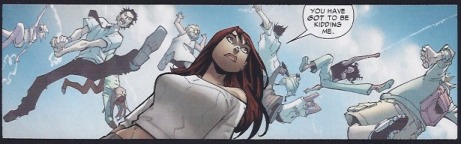
Panel from Spider-Island

“Spider-Island” is far from perfect, and it’s definitely not the place a new reader should start. However, I can say that it is the only event comic I can think of in recent years that I actually enjoyed and would recommend to others. Most events seem focused on “Get from point A to B, introduce these arbitrary changes the corporate office asked for, and be sure to sell all the cross-over issues!” Storytelling isn’t a priority, so they mask it by repeating over and over how important everything is. This comic, on the other hand, still put the story and characters first. The “importance” all flowed naturally from that.

Grade: B-


Though they were factored into the above grade, here is a brief discussion of the other comics that were a part of this event:

Continue reading