Archive for the ‘ Books ’ Category

Lev Grossman – The Magician King (Book Review)

The Magician King cover

Lev Grossman – The Magician King

It’s difficult to review Lev Grosman’s The Magician King without spoiling major events from The Magicians. In fact, you shouldn’t even read The Magician King’s book jacket before finishing the first book. But since spoiler-free reviews of this second book are so rare, I’m going to do my best to provide one.

The Magicians was a sort of twisted, adult Harry Potter, replacing the wizards with autistic nerds who found that magic didn’t automatically give their lives meaning or direction. This may sound like a formula for cynical, overly-clever trash, but it worked thanks to its mix of literary sensibilities and a sincere love of the source material. The Magician King is the continuing adventures of Quentin and his friends. The main character is now (slightly) more mature and (usually) less whiny, but no more satisfied with his life. Despite a fast-moving plot that takes several sudden turns, this feels in most ways like a true sequel to The Magicians. Clever and incisive, it manages to capture both the joy of fantasy children’s stories and an understanding of the real world waiting when you grow up.

In fact, this book starts out even stronger than the first, with the characters and status quo already established, and the reader very invested in what happens next. I laughed out loud twice in the first chapter. Also, a frustrating loose plot thread from The Magicians is explored, with a character’s full backstory explained.

As the book goes on, though, it seems to be missing some of the elements that worked in The Magicians. Where that book second-guessed its genre trappings, this one embraces them fully. The Magicians hinted at logical systems that drive magic and the magical society; The Magician King just says that of course the world is filled with beetles who poop gold and beloved fairy-tale Kings who rule with unquestioned authority. One of the defining scenes of the first book had its characters reject a magical figure whom children would have accepted; in this second book, that character is right and unassailable. In fact, the main plot of The Magician King centers around a Quest, and once our protagonists are called to it, they learn that Quests are just a matter of wandering around waiting to stumble on to the MacGuffins.

Despite all that, The Magician King succeeds very well on its own terms. Each of its four parts is dense enough with story to feel like its own novel, and the characters are a lot of fun to follow. Though I have quibbles with a few character portrayals late in the book, the conclusion is nearly perfect. Unlike the somewhat-arbitrary ending to The Magicians, this one gives each character exactly what they deserve with the precision of a fairy king meting out judgment. Exactly right for the characters, fair to the readers, and with some knowing commentary on what it means to be a responsible adult in reality, those final pages show Grossman at his best.

Grade: B
Lemony Snicket – “Who Could That Be at This Hour?” (Book Review)

"Who Could That Be at This Hour?" cover

Lemony Snicket – “Who Could That Be at This Hour?”

Lemony Snicket’s Series of Unfortunate Events started out as a breath of fresh air for children’s literature. This was not just because of its repeated reminders that good people were doomed to a life of misery, but also due to the unique atmosphere: Snicket’s world is populated half by idiotic adults who advance the plot with foolish, but internally consistent, logic, and half by parentless-but-capable children who take on the roles of private investigators and secret agents in order to stay one step ahead of the conspiracies that drive the world. Also, of course, there are the vocabulary lessons.

The series fell apart in the final act, though, as it turned out that Snicket wasn’t just writing a sad series, but an intentionally unsatisfying one. The ending didn’t even provide a basic resolution, let alone one worthy of the convoluted backstory that had been repeatedly hinted at. Despite that, I had high hopes for his new series, All the Wrong Questions. It goes back to Snicket’s youth, so it would ideally answer more questions than it raises, and it’s only planned to be four volumes, so it shouldn’t turn in to the shaggy-dog tale that Unfortunate Events was.

I’m disappointed, though, to learn that Snicket apparently didn’t see any problem with the way Unfortunate Events played out. This new series may be shorter, but book one (“Who Could That Be at This Hour?”) jumps right into the mess that the last one was at around book nine. It opens with Snicket as a young boy, fleeing murderous pseudo-parents, and already part of a complex organization that ranks every chaperone in town and needs to measure the local wells. He goes out of his way to avoid explaining why they do any of this. That was at least somewhat cute when he was writing about the Baudelaire orphans, who were just as in the dark as the reader, but there’s no excuse for his personal memoir to refuse to share pertinent details. It’s just frustrating, and Snicket’s decisions about what to tell us feel arbitrary.

That’s not to say there aren’t many bright spots. Snicket introduces the unique and colorful town of Stain’d-by-the-Sea, along with characters that are just as memorable. This is a world of faded actresses, vigilant reporters, and even a young femme fatale to frustrate our hero. It features illustrations by indie cartoonist/design genius Seth, whose cover treatment probably made this the most attractive new book on the shelves in 2012. And Snicket is deft with his postmodern tricks: Apparently this entire series is built around the theme of people asking the wrong questions at key times. (People twice fail to ask “Who could that be at this hour?”, but there are plenty of other discussions of right and wrong questions.)

There are plenty of interesting, compelling, and even hilarious moments here. If I had any confidence that the series was building toward a resolution that would explain some of the mysteries, I would have loved it. But once it became clear that this is in the same vein as his last series, every new hint just felt hollow and mocking. Like Charlie Brown and Lucy’s football, it’s easy to imagine how wonderful Snicket’s stories could be. Only a fool would keep holding out hope forever, though.

Grade: C


Max Brooks – World War Z (Book Review)

World War Z cover

Max Brooks – World War Z

One strange aspect of zombie fandom is people’s desire to take it seriously. You can’t talk about them for long before someone asks about your “zombie escape plan” or remarks on how defensible the place you’re currently standing is. No one takes this as far as Max Brooks, though. World War Z is his “oral history of the zombie war”, composed of interviews from people all around the world who survived the zombie apocalypse. Never once does the book admit that this is all fiction, or that Brooks isn’t really doing research for a United Nations report.

World War Z can be judged either by its quality as a zombie story or by how “realistically” he handles this hypothetical situation. His realism is impressive. I think he goes past the point where I care, but Brooks definitely thought this through carefully. He uses classic zombies, except that the infection spreads more slowly and humanity eventually wins. But this seems entirely plausible when the story’s scope is the entire world instead of a single town. It makes sense for the infection to incubate and travel like a disease, and it also makes sense that the combined might of the world would eventually be able to save a small number of people. The book covers many different ways nations could react and be changed, and includes perspectives from islands, frozen northern regions, and even the International Space Station. It truly is a global scope (other than a curious lack of African interviews), and the migration of people and armies is an important aspect that normal, caught-in-the-moment, zombie stories fail to catch.

I wish it had less of a militaristic focus, though. Obviously, the armies of the world played a big role in the battle, and even the civilian survivors tended to be good in a fight. But the most powerful stories generally come from the individuals who were caught up in scenes of horror, not the soldiers explaining tactics. This makes the first half of the book stronger, when people are still running around without plans. Once governments manage to reclaim certain areas, we hear only about how they handled the civilian population there, not what it was like to be one of those civilians. When one soldier mentions liberating communities that survived under siege for a year, I wanted one of those people to tell me how it was possible. And major environmental changes are mentioned repeatedly, but even though those may be a bigger long-term risk to humanity than the zombies were, no one takes much time to talk about them directly.

The writing sometimes breaks the illusion, as well. Too many people have perfectly-structured stories, with ironic twists or big reveals at the end. There are no unreliable narrators: If an interviewee wants to lie or dodge a question, the transcript will either note body language that makes the truth obvious, or the teller comes back to it at the moment that the explanation will have the maximum impact. You can tell yourself that Brooks only included the interviews with the best stories, and that the consistent style (which reads more like prose than conversation) comes from edits that he added in, but it’s still hard to pretend that this is not really a novel.

Fortunately, though, it is a very good novel. There are dozens of individual stories, most of which we only get pieces of, but they fit together to make something that really does feel like it has worldwide scope. Brooks takes advantage of the fact that we have internalized so many zombie stories that we can fill in the gaps after reading about a portion of someone’s experiences. By jumping around, he includes more scenes of panic and general inhumanity than a typical zombie story could handle, and by laying realistic groundwork in other sections, he makes those scenes matter. This has some powerful moments of zombie horror, and the structure of the book makes them pop up at unexpected times.

Don’t think that humanity’s (costly) victory makes this less of a zombie story, either. In the typical Romero tradition, mankind’s selfishness is what truly dooms us after the dead rise. Here, though, our capacity for cruel calculation saves us, and that’s more disturbing than the pleasant fiction that we pay for our sins. This story is dark, affecting, and surprisingly difficult to argue with.

World War Z is far from a perfect book, but its unusual format is interesting despite the flaws. Both as a zombie story and a meta-zombie story, it will stick with you.

Grade: B


Cormac McCarthy – No Country For Old Men (Book Review)

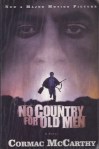
No Country For Old Men cover

Cormac McCarthy – No Country For Old Men

Cormac McCarthy is a strange author: Justly lauded by the most sophisticated people in the literary community, he writes taut, engrossing books that are also perfect for the sporadic reader to take along once a year on an airplane flight. If you like seeing the lines blurred between “high” and “low” art, he may be the best example you can find. His unique quirks (a lack of quotes in contractions and dialog, with long scenes driven by evocative dialog without other descriptions) work as both a formalist experiment and a way to keep the story focused on visceral events without slowing down for introspection.

This is especially evident in No Country For Old Men, which is structured so perfectly as a thriller that the Coen Brothers later made it into a movie with almost no changes. It is a testament to the book that nearly every scene calls to mind vivid memories of a film I saw once over five years ago. (Also, a testament to the Coen Brothers and their actors that such vivid memories were there to be summoned in the first place.) It’s the story of Llewelyn Moss, a good ol’ Texan boy who stumbles upon the aftermath of a multi-million dollar drug deal gone bad. He takes the money and goes on the run. The story is split mainly between the viewpoints of Moss, the psychopathic Anton Chigurh, and sheriff Ed Tom Bell. No Country is unapologetically realistic, with Moss’ hopes for survival resting on his no-nonsense aptitude for guns and DIY repairs, and Sheriff Bell sadly putting everything he sees in the terms of escalating gang wars.

The difference between the book and the movie is in their focus. The Coen Brothers, with their love of violence and exaggerated characters, lavished attention on Chigurh. A man who dispassionately murders everyone around him but holds to an unexplained code, he executes victims with a tool designed for cattle and treats his own wounds with veterinary equipment. In McCarthy’s book, though, Chigurh is less his own man and more of a symbol for the devastation strewn by the drug war. This starts out as a thrilling crime novel, but as the plot moves forward, it becomes more about Sheriff Bell and his conviction that this is a preordained tragedy.

The Coens didn’t know what to do with Bell, and left him a cipher similar to the cowboy in The Big Lebowski. This left me very confused when watching the movie, since the title comes from Bell’s worries about the world changing for the worse. I remember thinking that there were important hidden messages behind his speech near the end, but I couldn’t figure them out. It turns out that they were meant to be taken at face value, but just seemed confusing since the movie had abridged them so much and essentially removed his detailed thesis.

This attitude is what makes the book so great. Bell is an amazing character, trying to keep his community safe while sadly admitting that he’s only alive because he’s too ineffective to be worth killing. On the surface, he sounds like every crusty old man who thinks the world is going to hell, but the words McCarthy puts in his mouth are very convincing, especially in the context of Moss and Chigurh’s story. I could quibble (violent crime is actually declining, and the terrifying Chigurh isn’t a realistic character), but mostly I just found myself wishing Bell were a real person I could talk to.

This is a depressing novel. By way of comparison, the only other McCarthy work I’ve read is The Road; Many people find that depressing, but I think it’s about the perseverance of human goodness even in the worst of times. In contrast, No Country for Old Men is about the unstoppable rise of evil in our world. Even if McCarthy stacks the deck to demonstrate his point, it weaves an inescapably somber spell over the reader.

It’s a great book, though. A complete thriller, a powerful message, and interesting character portraits are all crammed into one novel that reads faster than most books that try to do half of all that. Not a single word feels wasted: Though McCarthy’s dialog sets scenes of languorous Texans taking their time with life, every word also feels like it’s propelling the story and its themes forward. This book is a classic. A surprising, depressing classic that draws you in on false promises of a fun heist story, but it’s nonetheless classic for all that.

Grade: A


John Lindqvist – Let Me In (Book Review)

(Note that this has been published in English both as Let Me In and Let The Right One In. The author prefers “the right one”, and I also find that to be the more evocative title. I bought the copy with the title Let Me In, though, because I liked its cover much better.)

Let Me In cover

John Lindqvist – Let Me In

A while ago, I wrote an essay about the appeal of horror. After reading John Lindqvist’s excellent Let Me In, though, I notice an important aspect that I missed before: Horror plots remove all our preconceived notions about whether things will end the way they “should”, letting us truly experience the story without knowing where it will go.

As someone who loves getting lost in stories but doesn’t automatically like blood and gore, this may be a major part of horror’s draw for me. I think that most modern stories (especially movies) have abused this feature to the point where it loses its meaning. The shocking notion that the heroes could lose eventually turns into the expectation that they have to lose, and eventually we end up with plots just as formulaic as the ones they replaced. (My least favorite one is where the hero appears to win a standard victory, but then the final scene has the surprise revelation that they actually lost.) It’s yet another example of horror’s subversive potential being turned into something safe.

Let Me In has none of that, though. While I had a lot more knowledge than the characters, and could therefore mutely witness some of the tragedies unfolding, I really didn’t know how the larger plot would go. It ends better for some people than others, but it’s not immediately obvious who will get what conclusion. And, of course, these endings have little to do with what the people “deserve”. Sure, there are clear (and very satisfying) plot arcs in retrospect; Just because a story is unpredictable doesn’t mean it should be chaotic. The important thing is that I don’t feel like Lindqvist was following a clichéd path.

This book is definitely not for the squeamish, though. It starts by establishing a triangle between a cold-blooded child vampire, a pedophile too hesitant to act on his urges, and a bullied young boy with a growing obsession for serial killers. From there, it introduces a cast of related characters in the neighborhood, and heads off in some unexpected directions. If you feel that any of that could make you uncomfortable, you’re probably right. It never feels exploitative, though. This simply unfolds naturally from its unsettling premises.

Fundamentally, Let Me In is about people more than the supernatural. Alcoholism, abuse, and broken relationships do more damage than actual vampire attacks, and those are all presented as part of the same dirty world. (The unrealistic elements, helpfully, remain understated, with just enough details to help us accept that vampires exist but remain rare and unknown.) It’s a coming of age and love story in the tragic vein that Robert Cormier might write, with a perpetually-twelve-year-old outsider and a typical bullied kid giving each other strength. Characters are never detailed, and the writing feels a little stilted at times, but Lindqvist uses peoples’ actions to sketch out believable character portraits. Though the children feel more fully realized than the adults, everyone is sympathetic. Horror is most effective when you can feel for everyone involved, even the ones on opposite sides of a fight, because then you know that someone will get worse than they deserve.

An enjoyably disturbing work, and most of all fair (within its cynical worldview), Let Me In is a story that I would recommend most of all to people who want to get carried away in a good story. There’s no larger moral or philosophical question to be discovered here, but it does provide a completely fresh look at a tired premise.

Grade: A-


Shakespeare: A Discussion and Review

This might be a weird article, because it’s the one where my geeky pop-culture blog discusses Shakespeare. And after praising a lot of trashy modern works, I might not have much credibility when I say that I’m not a fan of his.

In general, I have a complicated relationship with classic works. I think it’s very important to understand the past, and there is a lot of good that comes from a shared cultural knowledge for modern artists to reference. On the other hand, I believe that most art is and should be ephemeral. Whether it’s for pure entertainment or a deeper understanding of the human condition, a person picking up a book or listening to a song has different needs and cultural touchstones today than they did in past centuries. There’s nothing wrong with that. And while my personal rating system can be arbitrary, the most important thing is how much entertainment I get out of a specific work. (Being me, “entertainment” might be anything from amusement to deep thoughts and new ideas, but it has to be something.) If a story gives me an appreciation for its time and place, then that is a mark in its favor, but if it assumes that I already know the events it refers to, or the language of the time, then I’m not going to cut it slack for that. Half of the works that I give A grades to today will probably be irrelevant in 20 years, and many of the classics that I dislike would have seemed great if I’d lived in the right place and time. I’m ok with that; If I think that art is ephemeral, I can’t expect anything more from the opinions on this blog.

Continue reading

The Last Three Fablehaven Books

When I read the first two Fablehaven books, I was struck by how differently I would describe both of them. The first was a wild, dangerous fairy tale, and the second was a safe children’s book driven by cool ideas. I’ve now read the rest of the five-book series, and even though the narrative style has stayed consistent, I would still describe each one pretty differently.

Overall, Brandon Mull has written a very good series that I would recommend to younger “Young Adult” readers or to adults looking for a fun children’s fantasy.

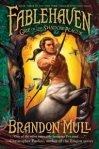
Fablehaven: Grip of the Shadow Plague cover

Brandon Mull – Fablehaven: Grip of the Shadow Plague

Grip of the Shadow Plague is driven by a lot of ideas, but none of them are as memorable as the grossest and coolest moments of the previous book. Instead, the impression I took away was that this is a tightly plotted series with a lot of threads and characters being juggled at once. Many things from previous books are developed here, and many more are left hanging for later. Mull does this very well. The plot progresses smoothly despite the number of things going on, and nothing is left for too long without a payoff.

The plot is more about quantity than quality, though, with two new regions of the Fablehaven preserve, time travel, another set of magical challenges hiding a MacGuffin, another preserve, and the titular “shadow plague” being only some of the significant features. Everything feels consistent within its world (a huge step up from most Harry Potter-inspired stories), and if none set the imagination on fire like the previous book, the story is consistently enjoyable.

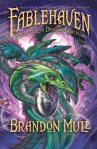
Fablehaven: Secret of the Dragon Sanctuary cover

Brandon Mull – Fablehaven: Secret of the Dragon Sanctuary

Though it’s just as tightly plotted, Secrets of the Dragon Sanctuary is where the series feels like it’s unravelling. This isn’t just because it’s the third book in a row with that MacGuffin hidden behind a series of challenges. It also begins to fall into the Harry Potter trap in which an an ever-expanding magical world becomes inconsistent. In this case, the story opens up by revealing that of course there’s a magical attack that perfectly circumvents the good guys’ defenses, but that no one has thought to prepare for. In fact, the villains would have won in the opening chapters if an inexplicably foolish action hadn’t revealed them.

This beginning also involves the main characters dealing with a significant tragedy, and the story simply skips forward several days rather than portray their reactions. Whether its a weakness of Mull’s writing, or simply a lack of interest, he puts no effort into what should have been the most important character-building scenes of the series. That’s strange, given that the one big strength unique to this book is Seth’s continuing development, retaining his impulsive character as he grows and learns from past mistakes.

I had other quibbles with this book, as well. For example, Seth taunts an opponent with obvious falsehoods even though he spends a section of the book wearing a device that will kill him if he ever lies. A surprise near the end of the book involves the Society “crossing an unthinkable boundary”, which, honestly, would have been one of the first things a villain fighting the status quo would do. And most importantly, I had serious doubts about the morality of the heroes’ actions by the end of their quest.

Secrets of the Dragon Sanctuary gets by mainly on the strengths of the previous books, and it puts all the pieces in place for an interesting conclusion. On its own, though, it is the weak point in the series.

Fablehaven: Keys to the Demon Prison cover

Brandon Mull – Fablehaven: Keys to the Demon Prison

Fortunately, Keys to the Demon Prison does pull everything together for the ending that the series deserves. With Mull’s excellent plot management, it’s not too surprising that just about everything is wrapped up in a satisfying way.

The big difference in this book is that it takes on many more trappings of swords-and-sorcery epics.With its matters of honor, fantasy royalty, and even dragon-slaying, the book loses a little of its focus on Kendra and Seth’s family. There are also some unnecessary history lessons that provide belated world-building with oddly specific details. (A couple speeches stand out so much that I’ve wondered if they are allegory for Mormon stories. I know nothing about that, though; Can anyone weigh in? Mull does arguably let his beliefs show through in the series’ moral lessons. Note that these are presented as good conversation-starters, and are all unobjectionable for children’s literature regardless of your religious beliefs.)

Don’t let the shift towards the epic scare you away, though. Fablehaven closes on a strong note, and it’s easy to forget about some missteps in book four when thinking back on the series as a whole.

Fablehaven: Grip of the Shadow Plague: B-

Fablehaven: Secrets of the Dragon Sanctuary: C

Fablehaven: Keys to the Demon Prison: B


Two Parenting Books: Cinderella Ate My Daughter and Free-Range Kids

I’ve been trying to post book reviews every Friday, but I completely missed this past one. I have a good excuse, though! My first child was born early on Saturday morning.

To commemorate the event in a way appropriate to this blog, here are my thoughts on two books I read while preparing for it.

Cinderella Ate My Daughter cover

Peggy Orenstein – Cinderella Ate My Daughter

Peggy Orenstein’s Cinderella Ate My Daughter argues that girly-girl culture has gotten out of hand. While society has always treated girls and boys differently, Orenstein believes that it has reached a new extreme. In a casual style, recounting her own trips through malls, concerts, and board rooms, she paints a picture of how corporate marketing and parental indulgence has created a culture where every aspect of a girl’s life must be pink and fit for a princess. Despite talk about equality and girl power, Orenstein believes that we are teaching girls from birth to be helpless and disconnected from any practical thoughts about what their adult life will be like.

Orenstein doesn’t really sell her own point well, though. She portrays herself as a concerned parent just trying to make sense of the overwhelming influences around her to figure out what is best for her daughter. I can identify with that mindset, but I’m not writing a book on the subject. I wish she could come to a more definite conclusion. Instead, the book is mainly tied together with anecdotes about our culture and the occasional story of the frustrated, inconsistent way she tries to deal with her own daughter’s interests.

There are some effective parts. A chapter on child beauty pageants avoids blaming those involved and instead presents them as an extension of our everyday focus on dress-up and fashion. Some sections that focus on corporate trends (especially the recent, and lucrative, “Disney Princesses” branding effort) make a great case that these trends are increasing, and starting at younger ages, because of marketing efforts.

Mostly, though, this book failed to give me any great insight or arguments for Orenstein’s thesis, even though I agreed with her before I read it. In fact, the book did a lot to make me less concerned about this as an issue: Plenty of the stories reminded me of events from my own childhood, reassuring me that things have always been this way, and kids still grow up ok. That argument is the very one that Orenstein needs to argue against most clearly. But instead, it just shows her fumbling around, failing to reach a conclusion, and seeing her own daughter find her way through the “princess phase” without any need for worries.

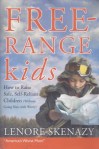
Free-Range Kids cover

Lenore Skenazy – Free-Range Kids

In contrast, Lenore Skenazy’s Free-Range Kids movement has a much more well-defined diagnosis and list of suggestions. Skenazy’s main concern is that we overreact to every minor chance that our children could get hurt, and our well-intentioned changes to protect them from strangers and accidents are robbing them of their childhoods. Ironically, this presents new risks (obesity, lack of confidence, over-reliance on parents) that are much more likely than the freak accidents we feel we must prevent. Let your children play outside beyond eyesight, go trick-or-treating, and make their own plans, Skenazy says, and the skinned knees you can’t prevent will be part of a memorable, educational, and still safe, childhood.

She keeps a blog about this subject, mainly filled with letters from like-minded parents, that I can highly recommend. It’s sensible, topical, and maybe most amazingly, has a great comments section. Most parenting message boards are depressing even by the normal standards of internet comments, with parents tearing each other down and assigning blame for everything that does (or could) go wrong. In contrast, the positive, confident contributors to the Free-Range Kids site are a great indicator of how healthy this movement is.

She fumbles a bit in the book, though. It’s still very much worth reading, but when given the opportunity to provide an introduction/manifesto for the topics her website covers, Skenazy didn’t have a great plan. The bulk of the book, “The Fourteen Free-Range Commandments”, feature sections that sometimes seem repetitive and space-filling. Many examples are great, but others seem like exaggerations as crazy as the culture she derides. Her stories about the things children survived in the past or in other countries make the point that kids are incredibly resilient, but she glosses over their stresses and high death rates. Though she says that of course she doesn’t advocate those exact systems, and her own personal anecdotes make her seem rational and protective at appropriate times, those sections will probably convince some people that she’s not taking dangers seriously.

It might actually be best to start with the last third of the book. The “Safe Or Not?” section, which runs through an encyclopedic list of parents’ fears and provides facts for each one, it a lot more amusing and readable than it sounds. It’s followed by an essay (“Strangers With Candy”) and conclusion that zero right in on the main points that I felt were obscured by the rest of the book. That essay repeats some material from earlier, meaning that it was probably intended to be published separately, but it also means that it works as a convincing, stand-alone read. After being hooked by that, the fleshed-out material in the rest of the book might work better to reinforce the points.

I read both these books a couple months ago, and time has reinforced my initial impressions. I still have no firm conclusion about the ideas expressed in Cinderella Ate My Daughter, while the lessons of Free-Range Kids have stuck with me, reinforced by the blog and by daily events it primed me to notice. That book may have its structural flaws, but in the end the points came through well for me.


Cinderella Ate My Daughter: C

Free-Range Kids: B+


Caleb Carr – The Alienist (Book Review)

The Alienist cover

Caleb Carr – The Alienist

While police procedurals are a staple of television today, one of the things that makes The Alienist unique is how seriously it takes the mystery. While the investigation progresses unevenly, every step is believable and feels hard-earned. The culprit is a fully realized character long before he actually appears in person, with the clues slowly forming a complete person. This is especially important here, because The Alienist is set in 1896, and is a story about the emergence of psychology as a crime-fighting tool.

Though this is a novel, author Caleb Carr approaches it with the rigor he puts into his historical non-fiction. The New York City of this time comes alive, sometimes with anecdotes that Carr is obviously eager to tell, but also with an atmosphere that feels distinctly different from the world today: The city is dirty, life is cheap, and high society is completely separated from it all. The book finds an excellent balance between feeling appropriate for its era and meeting our modern expectations of a crime thriller. Its uncompromising view of this culture makes for a pretty good hook at the opening, especially when combined with the gruesome murder. Either it seems less shocking after that, or I adjusted quickly, because the story never turned out to be as disturbing as I expected. It drew me in very effectively, though.

The historical setting and the exploration of a serial killer’s character are the selling points of the book. Other elements are less consistent, as if they weren’t Carr’s main focus. A subplot about conspiracies to stop the investigation appears sporadically, and narrator John Moore’s personal struggles (he’s a fallen member of a good family, now a bitter gambler and familiar with low society as well) rarely play a role after the opening chapters. That’s too bad, because they really do tie well with the book’s main themes: That conspiracy hints at fascinating insights into the way people viewed psychology, as well as the way powerful interests cynically manipulated the lower classes. A story entirely about the battle to suppress this investigation would have been worthwhile in itself.

I often get annoyed with historical novels, because they go to unrealistic lengths to bring their heroes in line with modern morals. The Alienist does that quite a bit: The protagonists treat everyone as equals regardless of race, gender, or sexual orientation, and are also on the right side of history when it comes to science, psychology, and even techniques like fingerprinting. At least their background – especially for Laszlo Kreizler, the psychologist (“alienist”) of the title – helps to justify their forward-thinking ways. And my other pet peeve with historical fiction, that characters encounter or remark on things that just happen to be significant to modern-day readers, is alleviated by the conceit that Moore is writing this decades later, with some knowledge of how history progressed.

Overall, it’s a powerful and memorable book. I do wish the ending had been stronger: After all the careful and realistic build-up, it rushes through the final discoveries by giving Kreizler impossible insights on par with Sherlock Holmes. It has a realistic, if unsatisfying, lack of resolution once the killer is caught. Despite that, I wish that the logic and rigor of this case was the standard of crime fiction, and I’m glad to see the past brought alive so effectively. I approached this from a different point of view than most readers probably do, as I read mostly science fiction and fantasy. But I found here the sort of world-building that I like to see in those genres: Thorough and consistent without requiring lots of effort to take in. I wonder how well historical fiction could play the role I usually expect from fantasy if it were always executed like this.

Grade: B+

Three Solo RPG Books

After trying a few (generic equivalents of) Choose Your Own Adventures last year, with mixed results, I was interested in seeing what else is out there. This time, I tried some solo RPG books, where stats and dice rolls play a part along with the branching choices.

I was surprised by how different the role-playing elements make these books. I always approached traditional CYOAs as something between a puzzle and a quantum story, where of course I’d keep placeholders at previous branches and go back and forth as necessary. The end result was a non-linear meta-story, in which I knew of all possible plot-lines at once. Once I have dice and a number of hit points, though, the book doesn’t work like that. These books were more about the adventure itself, and became a legitimate game instead of a story. I couldn’t jump around without invalidating my character, and that completely changed the experience.

However, the sudden deaths that are common in these books were very frustrating. I don’t mind them at all if I’m flipping through every path of a CYOA, but when I’m actually trying to follow a storyline, and my focus is on keeping a health stat above zero, it feels very unfair to have success ripped away by a single unpredictable choice.

Below the fold are the reviews of the three books I tried over the past several months.
Continue reading