Image Comics First Looks, Part 2

As promised, here is part two of my look at new ongoing Image comics. It is, of course, limited to only the ones that I chose to read, but with the sheer number of new series coming out from them, it would have to be limited in some way no matter what.

Continue reading

Ray Bradbury – Something Wicked This Way Comes (Book Review)

Something Wicked This Way Comes cover

Ray Bradbury – Something Wicked This Way Comes

I’ve read a lot by Ray Bradbury, but not for years. I just tried Something Wicked This Way Comes, his most famous work that I hadn’t read yet. I’m glad I did; The style was, if anything, more lyrical and over-the-top than I remembered, but he writes with a confidence that makes it work. As a meditation on aging, both for young boys growing up and men looking back on their youth, the unironic intensity of his purple prose is effective. It’s a heady, memorable read.

The book does get weaker as it goes on, though. It starts as a beautiful description of the unknown territory that comes with growing up, and gradually turns into a fairly clichéd story about good versus evil. While it’s lowest points still make a satisfying 1960’s pulp novel, I feel like I only got glimpses of the book that the opening chapters promised.

The initial protagonists are 13-year old friends Will Halloway and Jim Nightshade, whom the book comes right out and introduces as a innocent do-gooder and a darker, wild spirit. (You can guess which is which from the names.) But at that age, their incompatibility is abstract and they are great friends, despite the stresses it sometimes causes. Best of all, their entire world is viewed through a lens much like a Bradbury fantasy. Even before the coming of the mysterious, sinister circus that gives the book its threat, Jim and Will act like they are in a world of magic. (For example, a nearby house referred to as “The Theater” is apparently a home for mundane swingers, but after catching a glimpse through the window, the boys see hints of mysteries that threaten to tear their friendship apart.)

As the story goes on, Will’s father Charles Halloway takes the lead. A fairly obvious stand-in for Bradbury himself, Charles confronts his own midlife crisis with circumspect, flowery speeches and becomes the perfect hero for the boys when their struggle turns out to hinge on the philosophy behind morality. (Debate still rages on about whether Bradbury was a science fiction or fantasy writer, and this book makes a good summary for each side. The story is purely fantastical, but it portrays the love of ideas, and even more so of talking about those ideas, that dominated classic science fiction.)

Charles’ speeches are often ridiculous, especially when he admits he’s rambling away while they are under a tight deadline. However, the changing relationship between the father and son, especially the aspects they can’t express, is probably the best part of the book. Bradbury’s abstract prose is the only way I can imagine to portray that existential longing crossed with old-fashioned familial love.

Something Wicked is well worth reading despite its disappointments. In fact, those failures help to emphasize the open-ended nature of the book’s big questions. In a paradox that feels very appropriate, I want to say that this story will stick with me for a long time even as I feel it slipping away like a dream a week after finishing it.

Grade: B


Kingdom Builder: Nomads (Game Review)

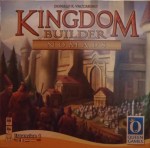
Kingdom Builder: Nomads box

Kingdom Builder: Nomads

Donald X. Vaccarino’s Kingdom Builder is a light but decent game, whose main draw lies in the promise of variety that later additions will offer. Kingdom Builder: Nomads therefore has a much larger responsibility than most game expansions do. The results are inconclusive; Nomads offers a good variety of new features, but it doesn’t seem to open up the Kingdom Builder system in the way that I’d hoped.

Nomads has four boards, each with a new building on it. Since each game uses four random boards, this adds to the variety of combinations available. These also put more effort into the mountain and water layout, making it much more interesting to plan around impassable terrain. The abilities of the new buildings vary. The Quarry, which lets you add “Stone” to block off tiles on the map, is a fun ability. The Caravan, on the other hand, is surprisingly confusing. While it plays a similar role to the Stables of the original game, it slows down turns and even causes good characters to make occasional mistakes.

Instead of Castle spaces, these boards include the “Nomad” spaces that give the game its name. Each of these holds a single tile that grants an ability slightly more powerful than the standard buildings. However, the tiles are used a single time and then discarded from the game. This is a great addition, since there are now more items to go for on the board, and new considerations about which ones will be the most valuable for the game.

The heart of Kingdom Builder is really the fact that the scoring changes completely from game to game. (Imagine playing a Chess variant where one game is a race to move your Pawns the furthest, the next is based around controlling specific spaces on the board, and so on. That will give you an idea of the variety of strategies that different sessions of Kingdom Builder offer.) Here, the expansion also has a good twist. Three new possible scoring conditions are added which award points for actions during the game instead of at the end. They are well balanced, and offer interesting new choices.

The only bad addition in the Nomads expansion is, fortunately, completely optional: Pieces for a fifth player may be welcomed by some, but I found the game to have too much downtime this way. Kingdom Builder is a fast-playing filler, and I don’t want to wait for four people to make moves between each of my turns.

Early in a Nomads game, with Quarries and Nomad tiles in use (plus the new red player pieces)

So if Nomads fleshes out the game in multiple ways, why am I somewhat disappointed? Well, part of it is the price. After adding a $35 MSRP expansion to a $60 MSRP base, I still feel like I have a light game that offers direct comparisons to Dominion but doesn’t have anywhere near the variety. Queen Games offers high-quality production along with its high prices, but that just makes me frustrated that the backs of the cards and boards don’t match the original. Apparently I have the American version of Kingdom Builder and the International version of Nomads, so everything has different backs. It can be worked around, but it feels shoddy given the price.

More importantly, though, is the nagging impression that Kingdom Builder is already running out of steam instead of promising new ideas yet to come. In a behind-the-scenes look at the game, Vaccarino flat-out admits that the number of scoring cards we’ve seen so far has been limited not by what Queen could afford to print for the game, but by what he could actually think of that played well. Having exhausted the basic possibilities in the first set, he now covered in-game scoring for Nomads. But what’s next? Will the next expansion need to add entirely new concepts just to justify three more scoring cards? This game already had to replace some existing score cards so that references to “Castle spaces” now say “Castle or Nomad spaces”, and it can be confusing for players to notice the distinction between them on the boards. It seems like the new ideas will increase complexity quickly.

If you like Kingdom Builder, Nomads has several clever additions that will double the game’s lifetime for you. It still dampens my hopes about the future of the game, though. At this point, I’m not sure if I’ll stick with it through the next expansion or not.

Grade: B-

Image Comics First Looks, Part 1

It’s been amazing to watch the resurgence in Image Comics in the past couple years. They’ve always been a well-regarded publisher, but Image went a long time with just a few hit series, and the rest of their catalog filled out with low-profile comics plagued by delays and cancellations. I suspect that a combination of factors helped them out: The contraction in the comics industry pushed most people out of the “independent” business, and Image is the only major publisher build around experimentation and creator rights. And despite that contraction, interest in comics as a medium beyond superheroes has been growing, with Image providing a safe, accessible gateway to that world. Whatever the reason, the number of small press titles I’m reading has dropped to an all-time low, while the Image ones keep increasing.

Also interestingly, many new Image titles are bucking the miniseries trend that has otherwise dominated comics outside of DC and Marvel. Plenty of Image series have become hits (Invincible, The Walking Dead, and even newer ones like Morning Glories), and it’s a path that other creators apparently want to follow.

In fact, I’ve started reading so many new Image series this year that I’ll need more than one First Look article to go through them all. Here is the first.

Continue reading

The Postman Always Rings Twice (Movie Review)

Movie poster for The Postman Always Rings TwiceAfter enjoying James M. Cain’s The Postman Always Rings Twice, I watched the 1946 movie version of it. There have been other adaptations, but this is generally regarded as the best. After watching it, I’m not sure why. If anything, it gave me a twisted sort of relief to know that Hollywood was ruining books even back then.

The contrast between the book and the movie is evident right away. The novel begins with Frank Chambers getting thrown out of a truck, trying to steal food, and ending up with a job after ascertaining that his new boss is a sucker with a hot wife. Portrayed in the movie by John Garfield, Chambers is a neatly-dressed man who just walks up to a restaurant to take a job. His only nod to character building is an awkward speech about how his “wandering feet” might not let him stay.

Lana Turner plays Cora Smith, not Cora Papadakis. The movie took out the racial elements probably not out of concern for Greek sensibilities, but to avoid a mixed-race relationship. Her husband Nick was defined almost entirely by this in the book, and actor Cecil Kellaway was left with no material to build a character with. He’s a foolish pushover with no clear motivations, and the heavily character-based drama suffers for it.

Ironically, the attempts to clean the characters up actually make them seem like worse people. With the mistakes of Cora’s past removed, her marriage made bland, and her new affair equally passionless, her only apparent motivation for murder is to move up in the world.

It’s understandable that the studio would want to make this movie palatable for a mass audience, but the book was a success because of its sleazy characters and raw passion. Without that, there wouldn’t be much reason for it to exist. The resulting movie is solidly within our expectations for a film of the 1940’s. I understand why it was popular then, but it hasn’t aged well at all. It’s stilted, self-censored, and features a few baffling mistakes. (For example, the D.A. tries to break Frank by referencing an event that had happened in the book but had been omitted from the movie.) The novel, despite being over a decade older, has aged wonderfully due to its focus on believable characters.

There’s nothing wrong with a work being of its time. Most of the things I review positively, for example, will be less interesting ten years from now. I would expect a reviewer then to judge them fairly based on the standards of that time. By the same reasoning, there’s really no reason left to watch The Postman Always Rings Twice.

Grade: D


Two From James M. Cain (Book Review)

I haven’t had very good luck with the older books I’ve read lately. I’ve read a variety, from 1850’s David Copperfield to 1943’s The Little Prince, and been consistently unimpressed. I finally enjoyed some, though: James M. Cain’s formative noir novels.

I read The Postman Always Rings Twice and Double Indemnity, which even combined are shorter than most modern young adult stories. Both had many of the recognizable characteristics of the genre, though they were also suspiciously similar: In each, the narrator begins seeing a married woman and decides to help her kill her husband. Insurance money is involved, and things don’t end well for everyone. (In the noir genre, I don’t consider that a spoiler.)

I prefer The Postman Always Rings Twice. Double Indemnity is still fun, especially since it only takes a couple hours, and the details of its crime are much more clever. However, I never quite believed in Double Indemity’s characters or their motivations, and a week later most of the plot is already muddled in my memory. Postman, on the other hand, has great characters and remains firmly in my mind even though I read it several days earlier than the other book.
Postman is the story of Frank Chambers, a restless drifter who starts working at a diner after he meets Cora, the owner’s wife. Their passion is believable enough to explain the way they act throughout the story, and their personalities create as much tension as the murder plot does: Frank can’t stay tied to any place long, while Cora is dedicated to making something of herself, but they can’t bear to break apart from each other.

One reason this works for me when other books from past generations is that the characters remain entirely believable. Sure, they’re obviously products of their society, and they’re racist, sexist, and just plain anachronistic by today’s standards. Still, they are perfectly believable. The voice of the book is Frank’s, not the author’s, and any perspectives that seem skewed are realistic when coming from a 1930’s anti-hero. Cain’s own perspectives, right or wrong, would be easier to dismiss 80 years later. (Notably, those racist and sexist elements are gone from Double Indemnity, supporting the idea that they’re products of the characters rather than the author.)

The part that ages less well is the conclusion. One story relies on an unlikely, ironic event in the final act, while the other features a confusing infodump about what had really been happening the whole time. The tragic ending may still be a staple of noir, but now it usually comes from the author’s choice. With the way Cain’s books shoehorn the twists in, it’s obvious that he didn’t have a choice. The stories are designed to give the readers a vicarious thrill, but to reassure them in the end that morality will win out.

Despite that, these are both well worth the time to read. Cain’s love of the sordid may be credited with spawning a genre, but his understanding of human nature is the reason that these got any attention in the first place. Almost a century later, that still feels fresh.

The Postman Always Rings Twice: B+

Double Indemnity: B-


Brave (Movie Review)

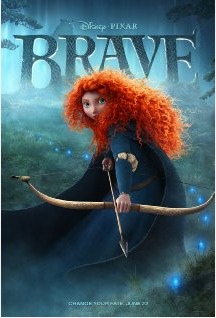
Brave is about a princess who doesn’t want to have to be a princess. Ironically, it’s the first Pixar movie that really feels like it wants to be a Disney movie. It features inspiring musical interludes and characters one step removed from the traditional funny sidekick. Even the central gimmick of rebelling against the princess lifestyle is less subversive than it’s made out to be; In reality, Princess Merida’s wonderful life is entirely due to her royal family. All her needs are met, she’s surrounded by servants who are never presented as equals, and her main complaint is that all that leisure time can’t take up 100% of her life. It’s a pity this couldn’t be bolder, because the novelty of featuring (gasp!) a girl in a starring role raised a lot of people’s hopes. This may not have everything I hoped for, but I think it still does more good than harm for gender roles in movies.

That’s because, even though it features a princess, this is still unmistakably a Pixar film. The visuals are stunning, even more for their design sense than the technical underpinnings, and the characters are given believable human emotions instead of stock lines. Pixar’s writing strength has always been in applying that depth to simply-defined characters, though, and this approach rings a little hollow here. Merida and her parents are the only characters not defined by a single quirky characteristic, and in line with their royal privilege, everyone else seems to exist only to be laughed at. Fortunately, the relationship with the parents is the focus of the movie. Even if Merida’s mother and father are taken directly from modern sitcom archetypes, those Pixar emotions make them worth caring about.

Brave’s plot will surprise no one, but it doesn’t always take the easy path. It’s willing to portray Merida as a bit selfish, and a couple scary scenes are very bold for a children’s movie. The Celtic culture never feels as well-defined as Pixar’s made-up worlds of talking cars and fish, though the beautiful landscapes and exotic touches are satisfactory for a fantasy movie.

If this review seems to be going back and forth a lot, then you have an accurate impression. The Pixar magic is definitely still here, but for the first time in years, it feels like they’re coasting along on habit instead of taking chances. A very good movie for kids and an enjoyable one for adults, Brave will entertain you for the evening. Just remember to hold it up to normal movie standards rather than those set by Toy Story and The Incredibles.

Grade: B-


Comic Capsule Reviews: Ongoing Indie Series

My recent comic reviews have focused mainly on “First Look” reviews of new series, and I’ve fallen behind on reviewing some existing ones. Here are my looks at the latest chapters of several independent (or at least non-superhero) ongoing series. Most of these are actually miniseries that pick up where earlier miniseries left off. That has become the trend for independent comics lately. Most people are unlikely to start reading unless they have a “#1” to reassure them on the cover of an issue, and the delay between miniseries also gives creators a chance to take a break for a few months, either to take on other work or to build a buffer on the next series.

Continue reading

Friday (Game Review)

Friday box

Friday

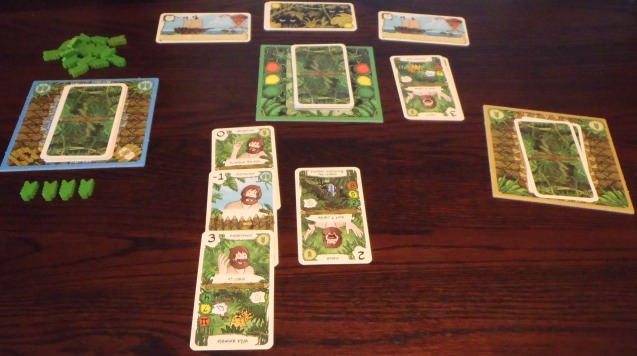
As I said in my Origins re-cap, Friedemann Friese’s Friday is the first deck-building game since Dominion to truly work, and it does this by not trying to copy Dominion at all. Most notably, you don’t hold a hand of cards. After choosing a challenge to fight against, you draw a certain number and see what total strength they provide. Winning gives you that card in your hand – half of the card describes the challenge, while the other half has a fighting strength or special power to use later. If the drawn cards aren’t enough to win, you can either pay a health point to draw another, or you can give up, losing one health per point that you lost. But these losses are an important part of your strategy, because for each health lost in this way, you can trash one drawn card. With a theme based on Robinson Crusoe, you start the game very healthy, but weak. The goal is to get rid of the bad cards you start with and gain stronger ones, essentially turning into a tough survivalist who is just a few accidents away from death. Every time you go through your deck, a bad “aging” card gets shuffled in, adding another threat to stay on top of.

The middle of a game of Friday

The deck-building mechanic isn’t the only clever aspect, though. Friday is also a solitaire game. While some new games come with optional solitaire rules, this is the first modern one I’ve seen intended only for one player. As such, it’s a little difficult to judge. One friend I loaned it to pointed out that the various things you needed to keep track of felt too fiddly, and he’d rather use a computer if he’s playing solitaire. Personally, I thought the fiddliness was much easier to handle when I’m just counting points and special abilities in my head instead of justifying them to the table. Obviously, though, opinions about Friday will depend on factors different from multiplayer games.

I will say, though, that if you want a strategic solitaire game, this seems like the right approach. It’s inexpensive, can be packed in a purse or laptop bag, and plays in about thirty minutes. (If you lose, it may end more quickly.) On top of that, the four difficulty levels keep the game challenging but winnable for all players, as well as making sure that you experience the full arc of the gameplay in those early learning games.

The gameplay is streamlined but offers some worthwhile choices. Like a good deck-builder should, Friday works because its strategy involves more than just taking whatever you can. That 0-strength card that lets you draw two more for free is pretty good in the late game, but useless in the beginning when the cards it draws will probably also be 0s. Balancing the need for fighting strength with the cool powers that some cards have is a major tension, even more important than the balance between destroying bad cards and retaining health.

I don’t see this becoming a Dominion-style juggernaut. You play with the same cards every time, get the chance to put almost every card in your deck, and I haven’t found a better strategy than the one that I figured out early on. But there’s a good deal of replay potential within that strategy, and I can play Friday at times when other board games just aren’t an option. Friday is a good game regardless, but if I also give it credit for filling a new niche and doing deck-building right, then this is obviously a must-play.

Grade: A-

First Looks at New Vertigo Comics: Dominique Laveau and Saucer Country

Four months ago, DC’s Vertigo imprint launched four new comics. I’m not reading one of them (the Fables spin-off Fairest didn’t interest me, since I don’t read the main title), and New Deadwardians is a mini-series that I’ll review once it ends. (I’ll provide a spoiler, though: You should be checking it out.) The other two are ongoing, so it’s time for my first look reviews. The one I like will receive further reviews down the line. For the other one, this will have to be my final say.

Continue reading