Screeching Weasel – First World Manifesto (Music Review)

Screeching Weasel - First World Manifesto
It’s been eleven years since Screeching Weasel’s last album, enough time for their pop punk sound to dominate the music industry and then fade away. A few years too late for a shot at mainstream success, they are back with First World Manifesto. Founding member John Jughead is missing after legal squabbles, but the other 40-year-olds are here and projecting youthful brattiness as if it never went out of style.
The band is at its best when frontman Ben Weasel acknowledges his role as an aging standard-bearer of a dying scene. In “Follow Your Leaders”, he describes the band as “frat boys with sillier haircuts” and urges the fans to “fall into line like you do all the time”. “Little Big Man” features a tongue-in-cheek lyrics about how Weasel will sic his lawyers on anyone who doesn’t acknowledge his punk rock cred. Self-deprecation is a common punk rock trick, but Manifesto takes it one step further by acknowledging that they’re expected to do so. (“See? Please notice, I laughed at myself” sings Weasel, apparently with checklist in hand.) It’s an appropriately mature and self-aware bid for relevancy in the 2011 punk scene. That’s a relief, because their only attempt to branch out from the traditional themes of punk rock is the somewhat embarrassing love song “Dry Is The Desert” (which never manages any emotional or lyrical depth beyond what the name implies).
For the most part, the band is content to churn out pretty standard songs. They don’t have much to say, but are saved from irrelevance by surprisingly catchy hooks. Tracks about self-destruction (“Bite Marks”), rebelling against scenesters (“Friday Night Nation”), and breakups (“Frankengirl”) manage to be a little more memorable than the comparable songs from other bands. The only one that tries to say much, though, is “Come And See The Violence Inherent In The System”: It contrasts the most fun, lighthearted music on the album with an over-the-top laundry list of complaints about the state of the world, only to spend the second half of the song making fun of the people who issue such complaints.
For the most part, Manifesto succeeds by setting the bar low and clearing it easily. If you’re looking for new pop punk, this may be one of your better bets. It doesn’t break any new ground, but it also never seems like a cynical cash-grab. For a comeback album, that’s not bad.
Grade: B-
 A few months ago,




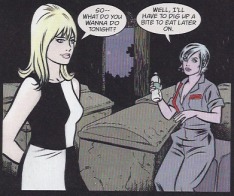 humanity, but will lose it if she doesn’t eat at least one brain a month. So she works in a cemetery that specializes in natural burials to gain access to the still-fresh brains of people she won’t need to kill. The catch is that eating a brain gives her the memories of that person, and she feels obligated to help them complete their unfinished business. The comic interweaves several plots involving the supernatural folk living in her area. Among others, Gwen hangs out with a ghost stuck in a 1960’s mindset and a wereterrier (like a werewolf, but unthreatening), and a sorority of vampires outside the town run a paintball business to attract their victims.
 In short, this is a series in love with its own cleverness, where many of the interests that drive the characters are geeky pop culture elements. This could work, especially given the atmosphere created by Allred’s art, but it would be more effective if the ideas were more original than friendly werewolves. At the very least, the story needs to be less driven by random coincidences and characters who don’t act at all like believable people.
 Cult of the New