The DC Re-launch, Month One
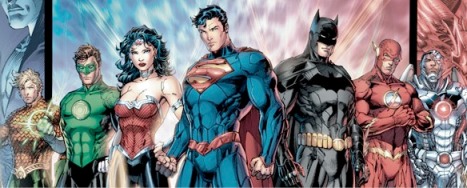
September is coming to an end, which means that all 52 comics in DC’s relaunched line have now been released. They’ve sold incredibly well, proving my more cautious ideas wrong. Of course, now that they’re out, the thing that matters for the future is quality. How many readers will stick around for issues #2, #3, or #25?

I’ve read 20 of these, along with online news and commentary about pretty much all of them. My opinion can be split into two contrasting views:

  • DC had the opportunity to fix any problem that they could think of and re-focus their line in a way to stay relevant to 21st-century readers. Given that, it’s incredibly disappointing that they just shuffled their heroes around among their existing creators, with the truly awful ones keeping their jobs. Most of the titles feel like generic superhero stories, with no ambitious ideas. When they did take chances, they were as likely to just make them more violent or unbelievably sexy as they were to actually try something to make the comic better. There is no line-wide ideal driving this reboot, either. Justice League and Action both take place “five years ago”, when superheroes first appeared to an untrusting populace. But all the others take place today, and they make no attempt to reconcile that brief five-year timeframe with the extensive continuity that they’re keeping for the fans. (As one of many examples, how has Batman had four Robins in this time, even ignoring the fact that the most recent one was born after he began his hero career?) Looking beyond the hype, it appears that DC’s grand plan to invigorate itself is “more of the usual, but with a big ‘#1’ on each comic!”
  • On the other hand, coming up with 52 new titles did force DC to cast its net a bit wider than usual. Most of these may be the same characters and creators that have been presiding over the company’s slow decline, but there is now room for several new ones as well. And even if most people squandered their opportunities, some of them did jump at the chance to try something new. The result is that out of 52 books, there will probably be at least 10 good ones. A few of them could even be great. Maybe this sounds cynical, but I don’t expect every comic to be good, and this is an improvement over their line-up before. Even better, the high profile of the launch and the huge number of people buying the comics means that the good ones have a chance to pick up a following. Even if DC’s overall creative direction is as lackluster as ever, I’m a lot more excited about my specific choices than I was before.

It’s always been true that the quality of superhero comics depended on how you looked at it. Just like books, music, and everything else, there’s a lot of crap. Since the comics industry is so small and depends on interrelated titles, it’s a lot harder to ignore the bad stuff. But if you do, you’ll find some great stories. This new direction for DC seems to have emphasized both the good and bad extremes.

One thing that surprised me was how dark many of the good titles were. In recent years, there has been a pretty strong correlation between how violent and gory a comic was with how lazy and poorly-written it was. There are always exceptions, but among this month’s titles, it seemed that the best ones incorporated horror elements, while the ones that stuck to (relatively) clean superhero action felt like just more of the same. I don’t know if this dark turn is intentional or not, but I expect that it’s here to stay.


If you are thinking about trying out some of these comics, there are definite right and wrong choices. Fortunately, reviews of these are all over the internet. You should be able to find out which ones sound right for you. As usual, I’m going to wait until there are a few months’ worth of releases before I start doing official reviews. If you want some quick recommendations, though, here are the first issues that I would recommend:

Hank3’s Four September Releases (Music Review)

Though Hank Williams III, or Hank3, revitalized the country music scene with his metal-influenced outlaw approach, he’s seemed to be on a slow decline ever since the seminal Straight To Hell. Though even his lesser output was still notable, everyone has been wondering what would happen once his contract with Curb Records finally ended and their legal and creative feuds would finally be done. As 2011 began and Hank3 was free, though, there were several months of no news at all. When news finally did come, it made up for the long silence: Hank3 released four new albums on the same day in early September, showcasing the variety of directions he was now free to go in.

The albums are out now, and they definitely do have an impressive variety and dedication. They sometimes make an argument that his corporate controllers had kept him from embarrassing mistakes, but they also have some pretty amazing moments that could never have been accomplished as long as he was forced to play it safe and worry about commercial concerns. These may not be the best albums of 2011, but it is the biggest musical event of the year.

Continue reading

Webcomics Roundup: Pushing the Boundaries

What makes something a webcomic? For the most part, the answer is obvious, but the actual significance of webcomics might not be as clear-cut as their literal definition. I first realized this years ago when a comment on the short story site Hitherby Dragons said that most people visited it as part of their daily webcomic rounds. I’ve fallen years behind on Hitherby’s stories (tragically – it used to be one of my favorite websites), but that thought has stuck with me.

Here are a few other sites that stretch the definition of webcomics.

Continue reading

Confusion (Game Review)

The elevator pitch that I usually hear for Confusion is “It’s like Chess meets Stratego“. While this does cover a lot of the game’s basics, it’s also somewhat misleading. Because you can see what your opponent’s pieces can do instead of your own, it’s actually the opposite of Stratego. It will probably be easiest to show how the game works, and how cleverly the components support this structure, with pictures.
Continue reading

Suzanne Collins – The Hunger Games (Book Review)

The Hunger Games cover

Suzanne Collins - The Hunger Games

There’s a lot of buzz around The Hunger Games right now, with the entertainment industry hoping that will be the next Harry Potter– or Twilight-style phenomena. I’ll be surprised if it reaches that level, but it’s easy to see the appeal of this young adult book about a dystopian system that drafts random children into deathmatches. It’s Battle Royale with the rough edges sanded down and made (just barely) appropriate for a younger audience. Quite an audacious idea, really.

While the novel’s prose is nothing memorable, it is definitely a page-turner. Author Suzanne Collins has a great sense of pacing, and fills the story with more events than the simple premise leads one to expect. The tension ratchets up throughout the story, and this can be a very difficult book to put down. She also has an incredible character in Katniss, the narrator. Katniss is a tough, practical 16-year-old girl who has had to support her family in what is effectively a third-world country, and as such she doesn’t seem at all like a typical female protagonist. It only takes a couple pages for the book to establish her as shockingly unsentimental and out of touch with our “civilized” morality, but also to put that in context with her harsh living conditions and love for her family.

Most of the book is developed with the same eye to a strong and original characterization, though it is rarely fleshed out as well as Katniss’. It was never clear to me why the government drafts children into an annual fight to the death. The explanation is that they do it to keep the people of the “Districts” down and remind them that they are under the thumb of the “Capitol”, but this seems to be an ineffectual method that would cause more resentment than compliance. To the privileged people of the Capitol (who are portrayed as one-dimensional characters, obnoxious in every way), this is a thrilling televised contest. In fact, Katniss spends more time in the book trying to appease a fickle audience than she does focusing on the other children who are trying to kill her. Depicting these deathmatches through the lens of reality TV is a good approach for the novel, as it gives the readers a distraction from the violence while also highlighting its pointlessness. But it’s not clear what factors make the show successful for the audience, when most of the people watching are poor District citizens being forced to view it against their will. Somehow, being an interesting character can lead to sponsors airdropping gifts just at the right time to advance the plot or resolve a conflict.

The disparities between the enslaved Districts and the rich Capitol set up a political theme that looks to be the focus of the rest of the trilogy. At least so far, the logistics of this tyranny seem to be simplistic even by the standards of young adult books. I hope that this is simply a reflection of Katniss’ limited knowledge, and not really the extent of the worldbuilding. I’ll find out in the next book, but fortunately it is not a major problem now: The Hunger Games is focused on an immediate fight for survival, and the half-drawn world we are introduced to stays in the background.

Katniss’ immediate world is easier to accept. Her district and its people paint exactly the picture needed to make us accept this desperate, scrappy girl. She is believable despite the many coincidences and unexpected kindnesses that help her throughout the story. And the battle itself takes place over weeks in a large forest, which becomes a fully realized setting through Katniss’ search for water, shelter, and food.

While The Hunger Gameshas both serious strengths and weaknesses, Collins designed the book to take advantage of the strengths. This is a surprising character study, a brutal battle for survival, and an exciting novel that I didn’t want to stop reading. I have no idea if I’ll continue to like the series once it broadens its scope, but this is a great, memorable book on its own. Read this book now while everyone’s talking about it, not just for that reason, but because it’s actually worth talking about.

Grade: B+

Justice League #1 (Comic Review)

Justice League #1 coverYesterday, I explained why I was disappointed with the Flashpoint event that ended the current DC Comics universe. Fortunately, though, the new universe kicked off on the same day with Justice League #1, and it makes me more optimistic. This is far from a perfect comic, but it’s fun.

It’s written by Geoff Johns, the same person who weighed down Flashpoint with an unfocused mess of fan-pleasing ideas. Here, he finds a more appropriate avenue for some of the guilty pleasures of superheroes: By starting over in a new timeline, he gets to introduce popular characters and have them spar as they learn to trust each other. The conceit of this reboot is that superheroes have been around for only five years, and the world was very suspicious of them when they first appeared. So this shows Batman and Green Lantern running from cops, and the heroes get to be edgy while also being perfectly good.

This issue focuses on Batman and Green Lantern’s first meeting, with Superman appearing at the end. (Relatively low-profile Cyborg also gets a few pages, but the other three founders of the Justice League are not in the story yet.) Johns’ glee at letting these heroes bicker with each other is palpable.

Of course, this is what he does best. The characters are witty and iconic, the plot is simple but smoothly paced, and it feels appropriate to the heroes. Unlike most of Johns’ writing, though, it actually doesn’t require any knowledge of previous comics. This is a very important sign for this DC initiative, of course, as it needs to be accessible. (Well-versed readers will recognize the name of the big villain that is hinted at, but that’s in no way necessary to enjoy it. It’s amazing how rarely comics get that balance right.)

Jim Lee’s presence as an artist really sells this as an event. Not just because of his art, but because he works in comics so rarely now. One of the superstars of the 90’s, his art contains everything that was wrong with 90’s comics but generally does it right. Yes, the characters are all hyper-muscled, grit their square jaws, and make every pose dramatic, but Lee can make the scenes dynamic without just reusing a few poses over and over. He isn’t known for subtlety or expressive figure drawing, but in a book like this, it’s good that even the dialog-driven scenes are fraught with tension. The one flaw that comes through here is that the pages tend to be a little too busy and packed with action. Most comic fans won’t even notice, but that may be an issue for any new readers who decide to try this out.

Really, that’s the problem in general. Johns and Lee do everything right for their established fanbase, giving them a new story in a familiar world. They make the right motions towards writing a story for the rest of the world, as well, but only get halfway there. It will make sense to anyone with a passing knowledge of the major heroes, but I don’t know if it will feel compelling enough to bring them back next month. It’s a partial story, ending on a cliffhanger, and it’s only a satisfying read in itself if you share Johns’ love of these characters and can find their interactions interesting.

It’s dangerous to read too much info a single issue of a comic, so I’ll just say this: Justice League #1 resolves many (though not all) of my cynical concerns about DC’s relaunch and shows that at least some of the creators are taking it seriously, but it doesn’t resolve my concerns about whether DC can actually bring in new readers to stop its slow decline. If you were a fan of superhero comics at pretty much any point in the past, this is probably going to be worth checking out for you. If not, then hopefully next week’s Action release will be a better place to start.

Grade: B-

Flashpoint (Comic Review)

Flashpoint #1 coverToday marks the big turning point for DC Comics. Instead of their usual fifteen to twenty new comics, they only released two: Flashpoint #5 completes the event that ends their current universe and Justice League #1 kicks off the new era. I’m going to review Flashpoint (the entire event) today, and look at the opening to Justice League tomorrow (update: here it is).

(This article avoids any specific spoilers of Flashpoint’s plot, but it does discuss the structure of the DC Universe at the series’ conclusion.)

Continue reading

Scott Westerfield – Behemoth (Book Review)

Behemoth cover

Scott Westerfield - Behemoth

It takes some real talent to make alternate history, steampunk, and weird science all seem perfectly comprehensible, especially in a young adult book. But Scott Westerfield pulled it off and combined it with an exciting adventure, making Leviathan one of the best novels I read last year. In some respects, the sequel can’t help but fall short of the standards set by the initial book. Behemoth has to remain in a world that is now familiar, rather than dazzling its audience with new ideas in every chapter. However, that doesn’t mean it disappoints, either. This is a worthy sequel to a very good book.

Behemoth continues a story that, from a brief description, sounds like a pretty formulaic young adult book: A prince is in hiding from the conspiracy that killed his parents, and a young girl is disguised as a boy in order to enter the military. Though they should be on opposite sides of the war, they overcome their differences, become friends, and succeed at more adventures than any person (child or adult) should ever run into. This somewhat clichéd core is what grounds an otherwise too original book, though: This is an alternate-history World War One, in which the Germans and their allies have a strong steampunk culture, and the British side has perfected the biological arts to the point where even their warships are giant animals.

This technology was well thought-out and thoroughly examined in Leviathan, providing enough technical and cultural details to suspend any disbelief. It was aided immensely by Keith Thompson’s illustrations, done in the style of children’s novels from around the WWI era. The straightforward depictions of one or two scenes per chapter gave a face to all the marvels that the readers were being asked to accept. In some situations, a picture really can be worth one thousand words, and in this case, Thompson made all these elements work by effectively provided another novel’s worth of world-building.

Unfortunately for Behemoth, it doesn’t have an entire new world to flesh out, and it can’t help but suffer in comparison.That’s not to say that it doesn’t try, though. The warring powers continue to roll out new technology, and the heroes visit the exotic city of Istanbul. The way this city has incorporated both the biological and mechanical sciences into its culture, along with historically-based interactions between it and the warring powers, make this a fascinating addition to Westerfield’s world. He already proved that he can build a compelling system that is consistent down to the details, but here he manages the tricky task of expanding on an entire book’s worth of details while honoring the ones already established.

The plot is, of course, breezy and exciting. It focuses heavily on a self-contained plot arc, with new elements introduced at the start of the book and resolved by the end, but it still definitely is the second book of a trilogy. The overarching plots, both personal and world-shaking, all progress without ending, and the uneasy alliance between the Austrian and British characters is tested without being broken nor resolved. It’s fun, but it’s obviously setting up for the big payoff in the next book. Most of the plot, including the major struggle within Instanbul, is important in theory, but could probably be ignored without dulling the impact of the upcoming conclusion.

Yes, Behemoth suffers from a bit of a sophomore slump. There’s no real way around that, though, when the originality was part of what made the first book so great. Thankfully, that wasn’t the only thing that made Leviathan work, and all of the action, character building, and respect for the details of the world are present in this sequel. Behemoth adds as many new ideas as it can manage without seeming like a betrayal of the world it already established. For fans of the first book, there is no reason not to read this one.

Grade: B

Blitzen Trapper – Wild Mountain Jam and Destroyer of the Void (Music Review)

Like most people, I discovered Blitzen Trapper with their 2008 album Furr. I was impressed enough to check out two more of their releases: Wild Mountain Nation and Destroyer of the Void. This creates a tricky situation for this blog, though: Since I only review works that are new to me, I’m in the position of examining one that pre-dates Furr and one that is more recent, while my main point of reference for Blitzen Trapper’s work is not being reviewed. Hopefully that doesn’t make things too confusing.

Wild Mountain Nation cover

Blitzen Trapper - Wild Mountain Nation

It’s amazing to see how different Wild Mountain Nation is from the breakout album that came a year later. The elements that would eventually make Furr are all there, from Eric Earley’s simple, high-pitched voice to the weird folk approach of the music. But while Blitzen Trapper now seems like a pretty straightforward indie-rock band with folk and classic rock trappings, Wild Mountain Nation sounds much more like the work of a stoner band.

In some ways, this helps to explain the band’s songs a lot. The hard-to-parse lyrics and meandering styles of Furr make a lot more sense if you imagine a bunch of stoners playing around instead of taking them at face value. Of course, Wild Mountain Nation is much further more out there, with lyrics that don’t seem to be concealing any deeper meanings (“She had a sweet tooth: Kiss-and-tell phone booth”). The music is much rougher, but there is actually more variety throughout the album. “Woof & Warp of the Quiet Giant’s Hem” revolves around a simple synth line with lyrics of “yeah, yeah, yeah, yeah”, while “Summer Town” is a heartfelt ballad whose harmonies and guitar-plucking could have come from any time in the past forty years. “Wild Mtn. Jam” sounds more like a country version of Ween than Ween’s actual country album, but “Murder Babe” could be a testosterone-filled hard rock song if the singer dropped an octave and the band slowed down by about 1/3.

The songs vary from pleasant to jarring, without ever delivering something that truly stands out. It’s not always successful (“The Green King Sings” occasionally sounds like a passive-aggressive band trying to drown out their oblivious singer), but the skill is definitely there. Blitzen Trapper just hadn’t nailed down their sound yet. The only surprise is how suddenly the then-four-year-old band was able to find the right mix for Furr the following year. The experimental, unserious nature is a welcome change from the styles that dominate the indie scene these days, but by coating it in a more staid, folk sound, the band managed to fit in with the modern scene without losing the subversive edge.

Destroyer of the Void cover

Blitzen Trapper - Destroyer of the Void

Once they found that mix, Blitzen Trapper apparently liked it. 2010’s Destroyer of the Void goes further along the path of rich folk-pop with a classic rock influence. The abrasive sounds and occasional yelps are gone, and the epic 6 minute opener makes a sharp contrast to Wild Mountain Nation’s OCD. The strange perspective is still present, along with lyrics that seem to make sense until you try to parse the specifics. It seems like the best way to explain it might be that they have changed from a “stoner band” to one with “psychedelic influences”.

Destroyer doesn’t have any tracks to match Furr’s standouts. Really, Furr’s first half had a more energetic edge that made it immediately appealing and earned some radio play. Destroyer takes its cues from the softer songs. Fortunately, though, it gives them more appeal: Furr seemed to lose its direction whenever the band calmed down, but this new album avoids the lows even if it doesn’t have the highs. It’s consistently good, even if it wouldn’t serve as the catchiest introduction for a new listener.

The sound might be more consistent now, but Blitzen Trapper continues to write interesting new songs instead of revisiting specifics of the past. The only exception is the strange “The Man Who Would Speak True”, a close cousin to Furr‘s “Black River Killer”. Both are murder ballads whose narrator is undeniably evil, but references a moral code that doesn’t quite make sense. The soulful vocals and soft music would normally be used for songs about introspective heroes, putting them at odds with the song’s actual theme. It’s a clever trick, but it mainly works because it is so rare for the band to revisit past styles.

I’m glad Furr led me to try out these two albums. They provided a lot more variety than I expected, and also gave me a new perspective of the album I already knew. Neither were quite as good as Furr had been, but Destroyer did manage to come close. It’s only a few weeks until this band’s next release, and I’m looking forward to it now that I know both how skilled and how experimental they can be.

Wild Mountain Nation: C+

Destroyer of the Void: B

“Old” DC Comic Capsule Reviews

This Wednesday begins the huge re-launch of the entire DC Comics universe. While I remain cynical about their approach, I have to admit that I’m now more interested in DC than I have been for a few years. Looking over the titles I’ve been buying from them, I can see why: I’ve pretty much drifted away from their core comic line, and at this point, I’m just reading the one that are on the fringes of the company’s main stories. Even if the relaunch is only half-successful, it’s still a chance for DC to draw me back into the fold. I can see why they aren’t too worried about cynicism from people like me.

At this point, the final issues from all of their “old” titles have now shipped. Below the fold are capsule reviews of the few that I was still reading.

Continue reading