Fucked Up – David Comes To Life (Music Review)
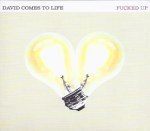
David Comes To Life cover

Fucked Up - David Comes To Life

It seems that there’s always one band to take up mantle as the potential savior of punk rock. Of course, they rarely seem to impact as much as expected: Where are all the bands inspired by The Refused or The New Bomb Turks? Regardless of their future legacy, though, Fucked Up has stepped into this role with the perfect approach for today’s music scene. From the radio-unfriendly name to the literate lyrics, this is legitimate punk for hipsters. The style works perfectly for people who might not normally listen to such hard music, as well: Vocalist Pink Eye just shouts the words in his throaty voice with a constant high energy level that could be almost a parody of punk. It can sound like noise at first, but after reading through the lyrics once, it sticks in the mind easily and the listener is inducted into the secret club of those who understand Fucked Up.

The band has a flair for the dramatic, and their experiments push the boundaries of what one would expect from their straightforward punk sound. Even knowing this, I don’t think anyone expected their 2011 release to be a rock opera. Over the course of 78 minutes, their character David falls in love, falls out of love, despairs, rails against the very concept of love, and then finally learns to open himself and accept pain as part of living life fully. David Comes To Life is possibly the most ambitious album of the year.

Most rock operas are confusing, showing the artistic overreach of classic and prog rock bands. This happens at times here, because Fucked Up is certainly capable of following their muse into strange territory. However, they are also grounded by a solid punk foundation, so quite a bit of the story is based on simple descriptions of emotions and events. The interplay between these two aspects of the band gives David an unpredictable feel, with every line like “He’s a ship on the sea, setting sail to perfidy” balanced by a catchy, heartfelt declaration like “Maybe it was my fault and I deserve to be upset, maybe the price of being wrong is a lifetime of regret.”

The first half of the album focuses especially on the literal story of a relationship and its aftermath. It’s so centered on the emotional rewards and costs that the plot specifics are barely given; The characters meet with a simple “hello, my name is David, your name is Veronica, let’s be together, let’s fall in love”, and the troubles begin two songs later with a perfunctory “right on time, here’s the other shoe”. It’s not a satisfying story, but the emotions, good and bad, come through with a clarity that few concept albums have ever conveyed.

As the story continues, it becomes more abstract and even metafictional. David’s anger leads to him directly confronting the narrator of the story, and the band seems to consider their own culpability in creating unhappy characters, but not before literally defeating David in battle. David is accused of murdering Veronica by people who sometimes seem completely literal, but other times imply that the actual crime was one of forgetfulness. Being only a character in a story, Veronica can’t survive if David blocks out her memory. These conceits are still peppered with a believable portrayal of emotions, though, and while I’d be hard-pressed to explain the details of the plot, David’s eventual healing and maturity feels like it was legitimately earned.

David Comes To Life is occasionally guilty of the ambitious failures that plague all rock operas, but it’s an impressive work overall. Fucked Up certainly put everything they could into it, too, with their lyrically dense songs filling up a CD to capacity. (As if that’s not enough, the liner notes include two additional poems, one providing an in-story introduction to go with the opening instrumental, and the other a tongue-in-cheek greeting to the fans.) However, it does fall short of the high bar set by the band’s last full-length, The Chemistry of Common Life. The focus on story and lyrics means that, despite the quantity, there is a lot less musical variety than an album of standalone tracks would have. And given that fans expect a high level of meaning out of all Fucked Up songs, the ongoing story is in some ways less dense in meaning than Chemistry was. Here, several songs might run together to say a single thing, rather than providing something new every few minutes.

There is no reason to complain too much about the flaws in this album, though. Fucked Up continues its reign as the Great Hope of Punk, giving their all for a work whose ambition only slightly outpaces its accomplishments.

Grade: A-


Webcomics Roundup – On Broadcasting

A few weeks ago, Warren Ellis posted his thoughts on the current state of webcomics. In short, he drew a line between “webcomics”, which are freely available, and “digital comics”, which people must buy through a service like Comixology. He regrets, but understands, the fact that attention seems to have shifted away from webcomics in recent years, as people realize that selling them up front is still the best way to make money. The problem is that only webcomics have the ability to “broadcast” themselves. As soon as a webcomic is updated, it’s “surrounded by an expanding sphere of URLs and shortcodes, of RTs and Likes and +1s” that you can’t get from the other side of a pay-wall. The implication is that webcomics offer a free, no-pressure space for artists to develop masterpieces, but that the most skilled people are going to need to migrate over to the digital comics side in order to survive.

My thoughts about this are below the fold.

Continue reading

Old 97′s – The Grand Theatre, Volume Two (Music Review)

The Grand Theatre, Volume Two cover

Old 97's - The Grand Theatre, Volume Two

Judging by the album artwork, the Old 97’s latest release tries to draw a sharp contrast from The Grand Theatre, Volume One. While that one featured a sweeping picture of a stately theater, Volume Two uses the high-contrast, washed-out aesthetic of DIY punk photocopies. The choice arguably has some merit, since this volume is focused more on the simple, repetitive rock that makes up the core of the Old 97’s sound. If it was meant to define the album, though, it’s a little disappointing: Volume One was most notable for its broad range, including a few songs in this very style. Volume Two, though it still features strong songwriting, feels more like a step back than an alternate approach.

The basic approach is a straightforward country-rock beat with simple vocals and upbeat guitar. These songs are usually showcases for clever lyrics, but when those fall flat (“You call it rain/I call it the parking lot gets a bath”), there’s little left to justify the song. However, the band’s best songs are noteworthy. “The Actor” is a catchy but despairing character study whose sparse style fit the washed-up title character, and “White Port” is a punk sea shanty that provides a welcome exception to the mostly-consistent sound of the album. “No Simple Machine” is a crowd-pleasing story about women and men who want more than the standard shallow love interests. I question the motives of the narrator of that song, who seems a bit more bitter and boastful than may have been intended, but it’s an example of the band’s lyrics at their finest.

Both Grande Theatre volumes have made the perhaps questionable choice of filling the middle of the album with standouts while starting and ending with the more generic or less notable songs. It’s not the best way to grab listeners, though it did make both albums fun to discover over time rather than all at once. Volume Two doesn’t quite live up to the standard set by the first, but it’s always great to hear a band with such excellent pop instincts refusing to stand still.

Grade: B-


Interactive Fiction Competition: Keepsake and Fog Convict

Here are my next two reviews of games from the 2011 IFComp: Savaric’s Keepsake and Andrew Metzger’s Fog Convict. Though I try not to reveal all the games’ secrets, there are spoilers, so I’ve hidden them below the fold.

Continue reading

Interactive Fiction Competition: Andromeda Awakening and Blind

Like a lot of people, I still have fond memories of old text adventures. You know, the games like Zork, that describe your surroundings to you with text. You enter commands like “go west”, “examine the vase”, or “hide wig under troll”, and the game responds with more text explaining the results. Though text adventures stopped being commercially viable decades ago, they are still being made today by a dedicated community of enthusiasts. Now usually called “interactive fiction”, a name that reflects an interest in the literary possibilities of text that responds to the reader, these free games are often better than the ones people used to pay for. The biggest event of the year in this community is the annual “IFComp“, which accepts any interactive fiction games with the caveat that they should be completable within two hours.

I’ve drifted away from the interactive fiction world in the past decade or so, but every couple years I try to use the IFComp as an opportunity to get involved again. This time, it looks like I really will succeed: 15 days into the 45-day voting period, I’ve played 5 of the 38 entries. I’ll get to slightly less than half of them at this rate, but I’m pretty happy with that. And, of course, I’ll be reviewing them here.

If you are new to text adventures and interested in getting started, they can be a little confusing at first. Fortunately, there are a lot of resources out there to explain them. And while some games are specifically aimed at beginners, probably the best thing you can do is check out the IFComp games. Since they’re intended to be shorter works, and they all contain walkthroughs to help you out when you’re stuck (either in standalone text files, or with the “HELP” or “HINT” commands), you can learn a lot by exploring as much as possible and then turning to the help when needed. The IFComp games range from unplayable messes to masterworks, so start out by trying out the winners from past years.

Also, of course, I’m not the only person reviewing this year’s games. A lot of other discussion can be found from the relevant IFWiki page. I recommend Emily Short’s reviews, which are very well-written and often focus on interactive fiction as a narrative tool.

Below the fold, (slightly spoilery) reviews for Andromeda Awakening and Blind.

Continue reading

Ray Wylie Hubbard – A. Enlightenment B. Endarkenment (Hint: There Is No C) (Music Review)

A. Enlightenment B. Endarkenment (Hint: There Is No C) cover

Ray Wylie Hubbard - A. Enlightenment B. Endarkenment (Hint: There Is No C)

Ray Wylie Hubbard has been around for decades, but his country-blues style has never found popular appeal. On 2010’s A. Enlightenment B. Endarkenment (Hint: There Is No C), he seems perfectly comfortable with his place in the industry. This is the sound of an experienced, confident artist making the music he wants.

Hubbard’s sound is calm and even, singing over rhythmic, bass-heavy music that recalls the days before country and blues evolved into separate genres. His voice betrays his age, but in this genre, trading energy for soul is always worthwhile. His attitude feels perfectly authentic to his Texas home and blues influence, though it is rarely found in mainstream country. Hubbard is as likely to sing about drugs and wayward women as everyday country life, and these two sides to his persona keep the songs varied and interesting. Bridging the gap are the occasional songs celebrating the music itself (“Down Home Country Blues”) and religious tracks that go beyond the lazy cliches of the genre (“The Four Horsemen of the Apocalypse”).

Hubbard maybe gets a little too slow when he channels the quiet country life (“Tornado Ripe” goes nowhere, and “Wasp’s Nest” is frankly boring), but that’s as close as the album comes to a misstep. It’s an easy one to forgive when he’s willing to go just as far in the opposite direction, with a couple experiments (such as a guest vocalist groaning “Cada día es la Día de los Muertos” over halting drums and electric guitar) that only work due to his laid-back attitude and the wide ground he covers.

Among the most notable songs: The title track’s dreamlike lyrics fit its name and set the tone for the album. “Loose” is an upbeat story reminiscent of John Prine that examines the word “loose” and turns it into an empowering description for a woman. “Black Wings” is a mournful dirge that hints at how important music is to Hubbard when he mixes references to specific instruments and songs in with the emotional lyrics.

A. Enlightenment shows Hubbard arguably at his peak, and makes his lifetime out of the spotlight seem like a crime. Music, life, religion and sin coexist in a string of honest songs that celebrate what country music should be.

Grade: A-


Morning Glories (Comic Review)

(This is a review of issues 1-12 of the Image comic Morning Glories. These can also be found in the first two collected volumes of the series.)

Morning Glories issue #1 cover

Morning Glories

Students usually feel like they are fighting against their school, but what if that school really were trying to kill them? That is the central hook of Morning Glories, a comic about six students newly recruited to a prestigious, but sinister, private academy.

It’s a silly idea even on its face, because any school with the body count shown here would end quickly. It might make for a fun miniseries, but Morning Glories is intended to be a long-running series. Amazingly, author Nick Spencer seems poised to make it work by not only examining the “what if?” question, but also considering why a school would want to kill its students. Twelve issues in, we don’t have a lot of answers, but there are quite a few hints about a centuries-old movement (possibly religious, possibly looking for an answer to a legitimate threat) testing children to find ones with some sort of special power. With enough suspension of disbelief to assume that their secret society could cover up the deaths and maintain their school’s prestigious reputation, this actually makes a twisted sort of sense.

Artist Joe Eisma does a passable job portraying the often dialogue-heavy story, with distinct characters and expressive faces and postures (even if he does favor a few generic body types).His linework features the occasional jarring angle and could definitely use a strong inker to give it depth, but it’s better than many DC and Marvel artists. Best of all, he is one of the few Image artists who can keep anything close to a monthly schedule .

But the art is really just a delivery mechanism for the story that dominates this comic. It’s defined by the many mysteries and constant twists, with each new issue providing a good chunk of plot and new information. Though the story is not unfolding in any hurry, it certainly can’t be accused of decompression or padding. Reading it as a serialized work, it delivers something new every month.

The plot points offer a lot of variety, from tweaking everyday aspects of school life (teachers, cheerleading squads, and guidance counselors) to completely unexpected surprises (ghosts, underground prisoners, and a strange device that intrigues cutting-edge physicists). Spencer almost seems scared to go a single issue without defying expectations, and the tone of each issue varies widely, too, from horror to graphic violence to understated suspense.

The characters started as a typical Breakfast Club-style collection of cliches. Though they haven’t gotten much deeper (this comic’s strength is in unexpected twists, not character development), they have defied expectations. In these first twelve issues, every one has either turned out to have a shocking history or faced things within the school that played off their basic archetype in surprising ways. There are also varying allegiances among the school staff and at least one organization seeking to destroy them from the outside.

It’s a lot to take in, and if anything, the concern is that Morning Glories will turn out to be one of those stories that piles the mysteries on but doesn’t know how to resolve them. That was my initial impression of this, but fortunately I re-read the series so far in preparation for this review. Taking in every issue at once, a lot of the pieces fit together better than I had expected, and the total number of open mysteries was not as large as it had seemed. (Most importantly, and a little embarrassingly, I hadn’t noticed before that one person had played a role in at least three characters’ life stories. What I’d thought to be three unrelated pieces of information all tied together neatly.) It’s strange, because this had seemed to be the perfect series to read for the monthly surprises, but now I can see a strong argument for following it in larger collected chunks. Either way, though, the mysteries seem well fleshed out, and the few explanations to date have been satisfying, so it seems that Spencer does know what he’s doing. He says that he has this planned out until an ending around issue 100, and the build-up so far seems fair given that schedule.

It’s always hard to know whether to trust a title whose main draw is mysteries and plot twists. Many high-profile works that took that approach fizzled out disappointingly (look at X-Files or Lost), but a low-stakes creator-owned comic like this arguably has a better chance of holding true to a vision. Whatever the final result is, Morning Glories has at least turned out to be a worthwhile read so far. The memorable hooks and new questions keep this interesting month after month.
Grade: B


Quarriors! (Game Review)

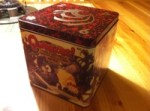
Quarriors! Box

Quarriors!

The more games fail to live up to expectations as “the next Dominion“, the more people seem to want to make one. It’s not necessarily a fair way to judge a game, though; Can’t it succeed or fail by its own merits? Quarriors! owes a very obvious debt to Dominion, but its most notable strengths and flaws are unique to this game.

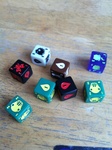
In short, Quarriors! takes the idea of a deck-building game and turns it into “dice-building”. Many elements translate from cards to dice pretty naturally: Players draw their “hand” of dice from a bag rather than a deck (making shuffling much faster!) and discard them on the table. Each turn, the player can buy one more die from the common pool and add it to their discard pile, and when the bag runs empty, all the discarded dice are mixed back in.

Quarriors! Setup with dice and cards in the middle of the table.

The game mechanics are elegantly built around the strengths and weaknesses of dice. For example, powers that let players manipulate the draw pile won’t work, but the discard pile is available for interaction. Also, since dice can’t hold as much information as cards, so each type has a reference card sitting in the middle of the table with a full description. The dice that go along with each card have a distinct color, making them easy to identify quickly. Cleverly, each color of dice has three corresponding cards (only one of which will be available per game) with different costs or special powers, meaning that the game can provide a good deal of variety without needing thousands of costly dice. In fact, publisher WizKids has done a great job of providing quality components (including a cool die-shaped tin for a box) at the price of a normal game. My only complaint, and it is a serious one, is that all three cards for a given die have exactly the same art, making it difficult to identify a given game’s setup quickly.

Being a dice game, Quarriors! obviously has a lot more randomness in it than Dominion. The game is designed around this, with a shorter play time and a theme of summoning creatures to do battle. Surprisingly, the rules for working with these creatures feel to be in the spirit of Dominion. After being played, they immediately attack the other creatures in front of all opponents equally. Any creatures that survive for one round around the table are scored and then discarded, eventually being shuffled back in to the bag. It’s the first balanced fighting system I’ve seen in a deck-building game, and I really appreciate the fact that creatures automatically attack all opponents equally, since deck-builders seem to do better without directed attacks. I also like the way that this game’s resource (“quiddity”, which is basically a quantity of magic) is used both for the “action” and “buy” phases of a turn. It requires quiddity to deploy monsters for battle, but that reduces the amount of buying power left afterwards. It’s as elegant, and potentially as tense, as Dominion’s “one action then one buy” rule.

Some of the dice in Quarriors!For all the clever ideas though, it feels like a lot of the gameplay was not fully thought through. There is potential interaction between the different types of dice, but the powers have a lot less subtlety than Dominion. Most abilities just increase the stats of a creature, which means that the exact combination of dice a player acquires isn’t as important as it should be. There is some strategy in deciding which and how many spells to mix with the creatures, but for the most part, a player won’t go wrong in simply buying the strongest creature possible. Since the more expensive creatures are generally higher on all stats and score more points, if one player gets an early chance to buy something like a Quake Dragon, the rest of the game feels more like a formality than a real competition. And since the rolls determine the strength of the dice, there is no card that can’t potentially be bought on the first turn, even though the average player won’t get it until past the halfway point. Quarriors! officially ends at a very low point score, apparently so that games won’t last long enough for the randomness to become frustrating, but the result of that is that players have almost no chance to catch up to the person who got a lucky start. There is an endgame mentality almost from the first roll. I generally play to a slightly higher point total. It’s still a fast game with a lot of luck, but at least then there is some chance that a player who spends time building a strategic set of dice will be rewarded. Even so, Quarriors! would require major revisions to change the fact that the first player to buy a Dragon usually wins.

All in all, Quarriors! offers a strange mix of strategy and randomness that is a little unsatisfying. Clever play is possible, but rarely matters more than luck. The game is light and fast, but it can take some focus to evaluate the multiple powers of each card and refer back to the middle of the table for information not on the dice themselves. Basically, to truly appreciate it you need to be able to follow somewhat complex timing rules, but prefer theme and randomness over heavy games. It is a very clever design, and everyone should enjoy playing it a few times. Long-term, though, the variety of setup options don’t keep the game from feeling somewhat repetitive and arbitrary.

Grade: B-

(Note: The images in this article come from Board Game Geek. For more information about each one, including the photographer, they all link back to the original.)

Obits – Moody, Standard and Poor (Music Review)

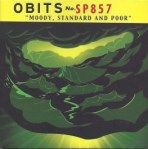
Moody, Standard and Poor cover

Obits - Moody, Standard and Poor

When the Obits’ first album I Blame You appeared in 2009, it was a breath of fresh air. Two years later, their follow-up Moody, Standard and Poor is much like a second breath of that exact same fresh air. It’s as good as the first one in many ways, but just doesn’t feel nearly as vital.

It’s kind of strange to complain about the album sounding too similar to anything, given how unique the band’s sound is. A bass-heavy, blues-informed garage band, they have a punk energy but the clean sound and slightly abstract lyrics of an indie blues band. Singer Rick Froberg has an intense scream that demands attention, but the taut, frequently-evolving music is what sticks in the listener’s mind. The Obits deserve comparisons to Boston in their accomplishment of creating a distinctive, immediately recognizable sound on their debut.

If anything, Moody, Standard and Poor dials down the musical intensity slightly and explores slightly wider ground lyrically, but this is so subtle that it’s hard to tell if it was intentional. That may be a fertile direction for future Obits albums, but in this one, it just sounds like a collection of second-best songs from the same session as I Blame You. It’s even shorter than that album, at a slim 35 minutes.

The similarities mean that the sound is still great, at least. There isn’t a single minute of filler, and the new songs are welcome. They range from the introspective and (slightly) slow-paced “New August”, which takes time to build a groove, to the angry “No Fly List”, which proves that the band can incorporate punk rock intensity when they want. The mostly instrumental “Spot the Pikey”, with surf riffs leading up to an almost-bored group reciting the song title, has a sense of humor not previously shown.

There are definitely multiple possibilities for evolution in the group’s future. Obviously, it will still sound reminiscent of these past albums, and in some ways it’s unfair to punish them for having developed such an original sound already. But it will be necessary for the Obits to recapture the thrill of discovery and claim the excitement that their style deserves.

Grade: B-


Rebecca Skloot – The Immortal Life of Henrietta Lacks (Book Review)

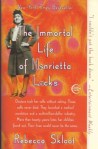
The Immortal Life of Henrietta Lacks cover

Rebecca Skloot - The Immortal Life of Henrietta Lacks

Henrietta Lacks was a poor black woman who died of an unusually aggressive cancer in 1951. So aggressive, in fact, that a sample taken from her became the first line of “immortal” cells scientists were able to curate, still growing and being used in research today. This cell line, known as “HeLa”, has been grown so extensively that the statistics sound impossible to believe, and they’ve been vital to many of the major medical advances over the past half century. For all their importance, though, the cells were taken without Henrietta’s knowledge, and the Lacks family didn’t even learn about this for more than twenty years after Henrietta’s death. The story of HeLa is well-known throughout the medical world, but author Rebecca Skloot brings this to the common reader by recognizing that the personal stories and ethical quandaries are just as rich a topic as the scientific marvels.

The Immortal Life of Henrietta Lacks is written in a deceptively simple style, with an accessibility and sometimes glibness that makes it feel like a very long magazine article. Beneath this simple appearance, though, Skloot manages to take the reader in many unexpected directions and humanize an abstract concept. This is a rare, and much-needed, style of science writing.

The biggest contribution to “HeLa literature” is the unprecedented access Skloot got to the woman’s family and friends. Opening with a vibrant portrayal of Henrietta’s life (and a surprisingly disturbing account of her death), the book quickly establishes its sympathies and draws the reader in. After that, it’s free to jump around between a wide array of topics and times: The progress of the HeLa line through the scientific community contrasts with the unchanging state of the poor Lacks family, while Skloot’s present-day interest in the story brings her in touch with both groups. Skloot herself is a character in the book, her white, scientific, atheistic perspective being completely at odds with these people who still don’t understand what a “cell” is and are afraid to trust doctors even when they desperately need care. Don’t expect this to be just a dry, clinical book. Though there are chapters devoted to the scientific side, by the end, it is clear that the main story is that of the Lacks’ family’s journey towards closure with their mother’s legacy and recognition from the scientific community.

It’s a fascinating story, especially with all the factors intertwined. Debates and scandals within the medical community come up regularly, side-by-side with advances that sound like science fiction and the daily concerns of normal people. Harvesting Henrietta’s cells without her knowledge was only the first of many ethical lapses that appear in the story of HeLa, and they couldn’t have been better paced if this were a work of fiction. In fact, the revelations about what researchers may be doing with your tissue samples at this very moment will shock and outrage many readers. There are no easy answers to these still-unresolved questions, but this book does a great service by bringing them to popular attention.

The Lacks’ family is poor, uneducated, and most modern readers will be surprised by how close they still are to their subsistence farming roots. (In fact, the details it reveals about their lives feel like awkward breaches of privacy at times. Skloot is quick to reassure us that they asked her to bring the whole story to light, and I haven’t found anything on the internet to dispute that.) It is no small task making them come across as relatable characters to even privileged readers, but this book even makes conspiracy stories (Johns Hopkins kidnaps black children for experiments!) understandable from their point of view. That family would normally not belong in a book that also focuses on the elite scientists doing cutting-edge work, but the story of HeLa connects them both. In fact, all science can be tied to real life. This is something that we often forget, but Skloot’s writing brings the everyday relevance of science into focus.

Grade: B+